On this page
- Why inbound calls are a good signal
- Step 1: Ask one attribution question, the same way every time
- Step 2: Capture the exact words
- Step 3: Qualify and route with context
- Step 4: Summarize and log every call
- Connect call answers to AI search visibility
- What to do with the findings
- A weekly routine
- Metrics to track
- Closing
A prospect calls your sales line. They know your product name, they have a shortlist of two competitors, and they want to know about pricing and security reviews. They did not click an ad. When you ask how they found you, the answer is increasingly "ChatGPT told me about you."
That one sentence is useful data, and most teams lose it because nobody writes it down. This guide shows how to capture it on every call and what to do with it.
Why inbound calls are a good signal
Callers have intent. A person who picks up the phone to ask about a B2B product is usually further along than a casual site visitor. They also say things in their own words, which tells you what they searched for, which competitors they compared and what worried them.
For SaaS teams, calls are where two worlds meet: what the marketing site claims, and what buyers actually believe after reading AI answers.
Step 1: Ask one attribution question, the same way every time
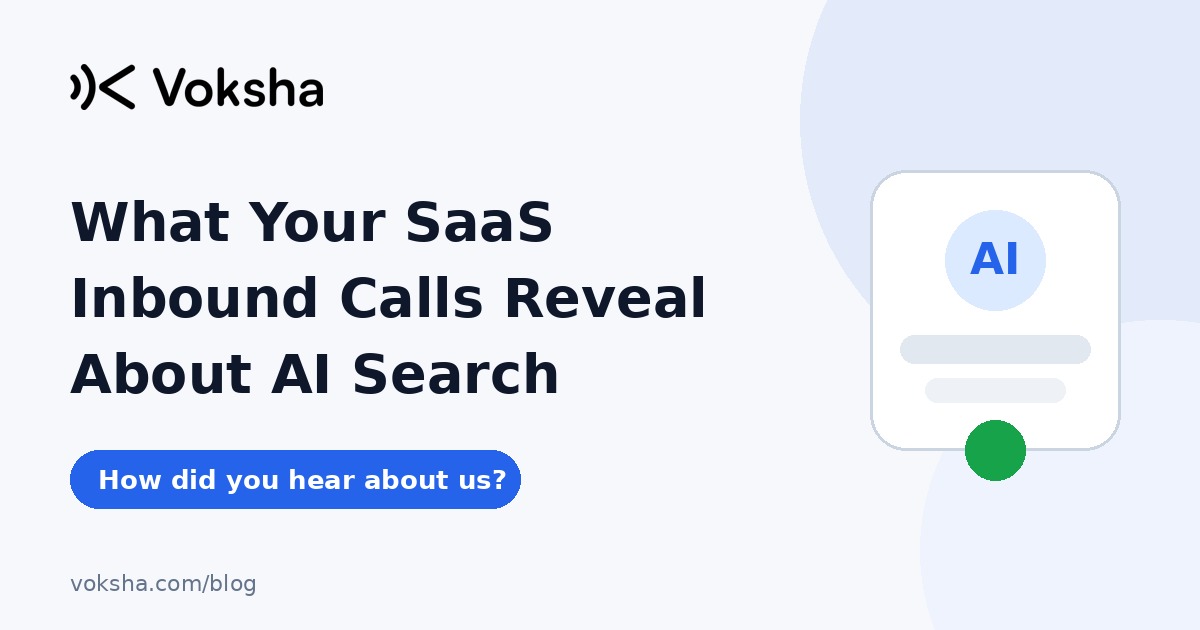
Add a single line near the start of the call: "Just so I can route this properly, how did you hear about us?" Keep wording identical so answers are comparable.
Offer a fixed set of tags for the call record:
- Search engine
- AI assistant (ChatGPT, Perplexity, Claude, Gemini, etc.)
- Referral or word of mouth
- Review site
- Social media
- Event or webinar
- Other (free text)
If your AI receptionist or call assistant answers first, have it ask the question and write the tag into the call summary automatically.
Step 2: Capture the exact words
The tag is the easy part. The valuable part is the phrase. Save the caller's own words, such as "I asked it for a secure SSO tool for a small team." Store the phrase in a notes field, linked to the contact record.
After a month you will have a list of real buyer questions. This is more reliable than guessing what prompts to target.
Step 3: Qualify and route with context
Use the source tag to adjust how the call is handled.
| Source | What to expect | Routing |
|---|---|---|
| AI assistant | Comparison done, specific questions | Skip the pitch, go to fit questions and a demo |
| Search | Mixed readiness | Short discovery, then qualify |
| Referral | High trust | Move fast to demo |
AI-referred callers often already know the basics, so a repeated overview wastes their time.
Step 4: Summarize and log every call
Make sure each call produces a short record: caller, company, source, the question that brought them in, objections and next step. If calls are answered by an AI receptionist, review the summaries weekly for accuracy. Spot-check a handful against recordings.
Connect call answers to AI search visibility
Once you have a list of the phrases callers used, you can test what AI assistants say about you for those same questions. Run them in two or three assistants and note whether your company is named, how it is described and which competitors appear beside it. For a repeatable version, AI visibility platforms such as GrackerAI track a set of prompts over time and show where your brand is cited or missing, so you can compare what callers report with what the engines actually say. When a gap shows up, such as callers asking about a feature the AI describes wrongly, you know which page to fix.
What to do with the findings
- Wrong or outdated description: update the pages the assistants cite and make key facts easy to find.
- Missing from answers you should win: write a clear, specific page that answers the question.
- Competitor named often: add a fair comparison page covering the real differences.
- Repeated objection on calls: address it in the FAQ and in sales material.
A weekly routine
- Pull the week's calls tagged AI assistant
- List the phrases callers used
- Test five of them in AI assistants
- Note gaps and assign one page fix
- Share two lines with sales on what buyers are asking
Metrics to track
- Share of calls tagged AI assistant
- Call to demo rate by source
- Demo to close rate by source
- Time from first call to demo
Look at conversion by source before concluding that any channel is worth more effort.
Closing
Phone calls remain a direct window into how buyers think. Ask one consistent question, save the exact words, and test those words against AI assistants. The result is a feedback loop between the questions customers actually have and the answers the internet gives about you.