On this page
The Shifting Landscape of Small Business Phone Handling
Ever tried calling a plumber at 6 PM only to hit a generic voicemail? Yeah, it's the worst, and honestly—most of your customers aren't leaving a message; they're just calling the next guy on Google.
By 2026, the "standard" business phone is changing fast. We're seeing a massive shift where being "available" doesn't mean sitting by a desk anymore.
- The Death of the Beep: Customers hate voicemails. If they don't hear a human (or a smart ai), they hang up.
- Instant Gratification: Whether it's a law firm or a hair salon, people expect an immediate answer.
- Cost vs. Sanity: Hiring a full-time receptionist is pricey, but missing calls is even more expensive in lost leads.
According to the Forrester 2026 Customer Service Predictions report, about 78% of ai decision-makers now trust these tools to handle real work, which is why we're seeing more automated voice agents.

It's all about capturing that lead before they vanish. Next, let's look at the financial reality of human staffing versus automated solutions.
AI Receptionist Cost vs Hiring Receptionist: The 2026 Breakdown
Let's be real—hiring a person to sit at a front desk is basically a luxury now. Between the base salary, health insurance, and the "oops, I'm sick" days, you're looking at a massive line item that keeps growing while your margins probably aren't.
A decent human receptionist earns a median $38,010 a year, or about $54,300 once benefits are factored in (BLS Occupational Outlook Handbook, Receptionists and BLS ECEC, retrieved 2026-09-25, ANALYSIS). And that's before you add on the taxes and training time. On the flip side, most ai receptionists run on a monthly sub that costs less than a single day of a human's wages.
- The Hidden Drain: Turnover is a killer for small shops; every time a receptionist leaves a law firm or dental clinic, you lose weeks of productivity just trying to find a replacement.
- Scaling without Pain: If your HVAC biz gets 50 calls on a hot Monday, a human drowns. An ai just opens more digital "lines" without asking for a raise.
- After-Hours Gold: Most human staff go home at 5 PM, but 32% of calls arrive outside 9-5 weekday hours and 23% on weekends (Voksha After-Hours Economy Report, retrieved 2026-09-25).
You might be thinking about those "virtual" call centers where real people answer. Honestly, those are getting pricey too because those companies have to pay for their own rising labor costs. They often have "wait times" for your customers to even get through, which pretty much defeats the purpose.
Going by the Forrester figure above, trust in these automated tools is high. People don't mind talking to a bot if it actually books their haircut or confirms their legal consult without the "please hold" music.
Next, let's look at how this plays out industry by industry.
Industry-Specific AI Phone Answering Solutions
Honestly, a one-size-fits-all phone system is a disaster waiting to happen. If you’re a lawyer, you don't need the same setup as a pizza shop, right? One needs strict privacy and the other just needs to know if you want extra pepperoni.
For medical offices and law firms, the big hurdle is always privacy and "intake." You can't just have a bot blabbing out patient names. You need hipaa compliant solutions that can actually verify who is calling before they start sharing symptoms.
- Intake automation: Instead of a lawyer spending 20 minutes on a "maybe" lead, the ai can ask the basic screening questions—like "was there an injury?" or "when did this happen?"—to qualify them instantly.
- Dental/Medical No-Shows: Clinics lose a ton of money on empty chairs. When a patient calls to cancel or reschedule, an ai receptionist can pick up at any hour and offer the next open slot, which helps fill that gap in the calendar without a human lifting a finger.
- Scripting for Pros: With an ai receptionist like Voksha, you set the greeting and questions for your practice (custom call flows come with Premium), so the bot sounds like a professional paralegal or medical assistant, not a robot from a 90s movie.
If my AC breaks in July, I’m calling five companies. The first one to answer wins the job. It is literally that simple.
- HVAC Emergency Dispatch: After-hours calls are usually emergencies. An ai can triage these—figuring out if it’s a "pipe burst" or just a "leaky faucet"—and page the on-call tech only when it’s actually urgent.
- Restaurant Reservations: We’re seeing a big move away from "please hold" at busy bistros. The ai handles the booking while the host actually greets the people standing in front of them. It's way more efficient than juggling a handset and a seating chart.

As the previously discussed study from Forrester suggests, we're heading toward a world where one in four brands will see a 10% jump in successful self-service by 2026. This isn't just "tech for tech's sake"—it’s about not losing a good lead because you were busy eating lunch.
Next up, let's talk about the actual "how-to" of getting this running in your office.
How to Set Up AI Receptionist for Your Small Business
Setting up an ai receptionist isn't nearly as scary as it sounds, honestly. You don't need a computer science degree—just a clear idea of how you want your phones to behave when you're busy or sleeping.
First things first, you gotta handle the actual "line." You can usually keep your existing business number by using call forwarding. You set it so if you don't answer in three rings, the ai picks up. With Voksha, for example, you're live in under 5 minutes by forwarding your existing number.
- Inventory your flows: Map out the top five reasons people call. Is it for pricing? Booking? Directions? Write these down because they become the "brain" of your bot.
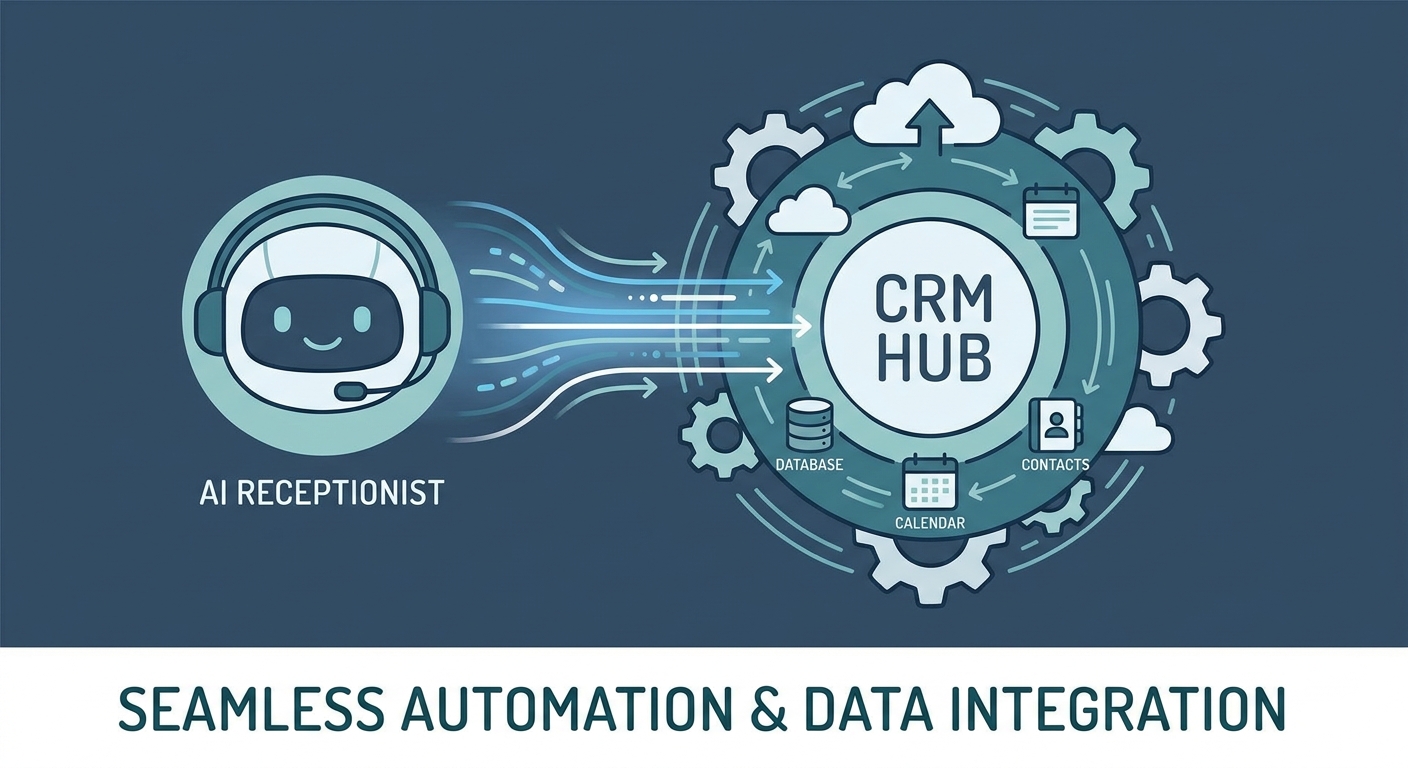
- Connect the apps: This is where the magic happens. You’ll want to link the ai to your calendar—like Google Calendar or Outlook—so it can book during the call. A crm (customer relationship management) tool like HubSpot, or Clio for lawyers, keeps call notes and lead details in one place. With Voksha, booking and integrations are on the Premium plan: calendars connect from the dashboard, while CRMs like HubSpot and Clio are set up with Voksha support rather than self-serve connectors (Voksha connector directory). On Starter, Voksha answers, captures caller details and follows your script.
- The "Human" escape: Always, always have a way for the caller to reach a real person. If they shout "operator" or have a massive emergency, the ai should be able to transfer the call to your cell.
Don't just turn it on and pray. Call the number yourself from a different phone. Try to trip it up. Ask it weird questions. If it handles your "do you have parking?" question well, you’re probably golden.
A typical after-hours call flow looks like this:
- A customer calls the business.
- If staff can't answer (busy or after hours), the call goes to the AI receptionist.
- The AI checks the calendar and books the appointment, or captures the lead details.
- The business gets a call summary to follow up on.
Forrester also predicts service quality might dip if you don't do the "gritty foundational work." So, spend an hour refining your script. It's the difference between a bot that sounds like a telemarketer and one that feels like a helpful assistant.
Next, let's look at the future of this technology and how it will evolve by 2026.
Predictions for 2026: The Future of Voice AI
So, what's actually coming next? Honestly, 2026 isn't gonna be some sci-fi movie where robots take over the world, but your business phone is definitely about to get a lot "busier" in ways you might not expect.
We are moving toward what people call agentic ai. Basically, it means the ai doesn't just talk; it actually goes and does stuff. The prediction is that a future law-firm bot won't just take a message but could check a court calendar, verify filing deadlines, or start a retainer agreement. That's an industry prediction, not something Voksha does today.
But heres the wild part. You might start seeing "bot-to-bot" interactions. Imagine a customers personal ai assistant calling your restaurants ai receptionist to find a table for four. It sounds crazy, but it's coming.
- Parallel functions: Instead of one bot doing everything, the prediction is that businesses will use "specialist" functions, where one "brain" handles billing questions and another handles scheduling, passing the caller back and forth like a well-oiled machine.
- Volume Spikes: The Forrester report also suggests consumer bots might flood call centers to snag things like limited appointments or "drop" dates. You’ll need smart routing just to tell the human callers apart from the automated ones.
At the end of the day, the goal is just to stay human where it matters. Let the ai handle the "gritty" stuff so you can actually talk to your clients. It's about working smarter, not harder, you know?