On this page
- What "routing architecture" means, in plain terms
- Why this is a real problem for decentralized small businesses
- The three routing patterns small businesses actually use
- What breaks without a real routing plan
- What to check when you set one up
- Where an AI receptionist changes the equation
- How This Guide Was Sourced
- Frequently Asked Questions
- Conclusion
Multi-channel call routing architecture is the set of rules a phone system follows to decide who answers a call and where it goes next, when calls arrive from more than one source (a main number, a location's direct line, a staff cell phone) and your team is not sitting in one office. For a decentralized small business, that means the system, not a receptionist standing at a front desk, has to know which location or person should get a given call, in what order, and what happens if nobody picks up.
This guide is for owners and office managers running more than one location, or a team spread across a shop floor, a job site, and a home office, who keep hitting the same problem: calls landing on the wrong desk, going to voicemail, or getting missed because "someone else probably picked it up." It explains routing in plain terms, no engineering background required, and what to actually look for when you set one up.
Key Takeaways
- More than 2 million U.S. businesses operate as multi-unit enterprises, meaning they run two or more physical locations under one company (U.S. Census Bureau, Statistics of U.S. Businesses, retrieved 2026-09-25), which is the exact structure that makes call routing a real operational problem rather than a nice-to-have.
- As of the most recent Census count, 5.58 million employer firms operate in the U.S. (U.S. Census Bureau, retrieved 2026-09-25), and a meaningful share of them split work across more than one address or work arrangement.
- Distributed and remote staffing is common, not rare: 27.5% of U.S. private-sector establishments, about 2.5 million, had at least some employees teleworking, per the most recent federal survey on the topic (BLS Business Response Survey, retrieved 2026-09-25).
- "Routing architecture" is just the order and rules a call follows: who it rings first, how long it waits, and where it goes if that step fails. There is no version of this with zero delay; every step in a chain adds some.
- The three patterns most small businesses actually use are sequential (ring one line, then the next), simultaneous (ring several at once), and rule-based (route by location, hours, or reason for calling).
- A routing setup with no clear fallback step, what happens after the third ring goes unanswered, is the most common way decentralized teams lose calls, regardless of how many phones are involved.
What "routing architecture" means, in plain terms
Drop the word "architecture" and this is a flowchart. A call comes in. The system checks a rule (is it during business hours? which number did they dial? is this caller a returning client?) and sends the call somewhere based on the answer. If that destination does not pick up, a second rule decides the next step: try another person, play a message, or send it to voicemail.
Every phone system with more than one line already has some version of this, even if nobody wrote it down. The problem for a decentralized team is that the default version, usually "ring the front desk, and if no one's there, too bad," was built for one location with one desk. Once you have staff split across two shops or a mix of in-office and remote workers, that default breaks down, and nobody notices until a customer mentions they couldn't get through.
Why this is a real problem for decentralized small businesses
This is not a small niche. More than 2 million U.S. businesses operate as multi-unit enterprises, meaning the company owns or runs two or more separate physical locations (U.S. Census Bureau, SUSB methodology, retrieved 2026-09-25). Each of those locations typically has its own local number, its own hours, and often its own staff, which is exactly the setup that makes "just forward everything to one phone" stop working.
Remote and hybrid staffing adds a second layer. In the most recent federal telework survey, 27.5% of private-sector establishments, roughly 2.5 million nationally, reported at least some employees working remotely at least part of the time (BLS Business Response Survey, retrieved 2026-09-25). For a small business, that might be a manager who works from home two days a week, a technician who is on job sites all day, or a bookkeeper who only comes in once a week. A caller does not know or care about that schedule. The routing system is what has to.
The three routing patterns small businesses actually use
Ignore the marketing terms and there are really three patterns, and most small business phone setups are some combination of them.
| Pattern | How it works | Best for |
|---|---|---|
| Sequential | Rings one number, then the next, then the next, in order | A clear chain of command (owner, then manager, then voicemail) |
| Simultaneous | Rings multiple numbers at once; first to answer gets the call | Small teams where anyone available should take the call |
| Rule-based | Routes by which number was dialed, time of day, or caller's answer to a menu prompt | Multiple locations, after-hours coverage, or separating sales from support |
None of these is inherently "faster." A call still has to travel to a device, that device has to ring, and a person has to physically answer. There is no routing setup that makes a phone ring with zero delay; what changes is how quickly the system gives up on an unanswered step and tries the next one. That gap, between one ring cycle ending and the next attempt starting, is where most decentralized teams lose calls without realizing it.
What breaks without a real routing plan
A few patterns show up again and again in decentralized teams that never formalized their call routing:
- The "everyone thinks someone else has it" problem. With no clear rule, a call that rings multiple phones at once gets ignored by all of them, because each person assumes a colleague is handling it.
- Location mismatch. A caller dials the number for Location A but reaches someone at Location B who cannot see A's calendar or answer A's specific questions, and the caller has to explain everything again.
- Dead-end fallbacks. The system has a first and maybe a second step, but no third one, so an unanswered call just rings out with no voicemail and no message. The caller hangs up and, often, calls a competitor next.
- After-hours blind spots. Routing rules built for 9-to-5 do not account for a technician on an emergency call at 8 p.m., so after-hours calls go nowhere.
What to check when you set one up
Whether you are building this with a traditional VoIP system or an AI receptionist, the same checklist applies:
- Does every location or number have its own rule, not one blanket forward? A shared number should still know which team or calendar it feeds.
- Is there a fallback for every step? Sequential and simultaneous rules both need a defined last step: a human, a message, or a booking option, never a dead end.
- Does the rule change for after-hours and weekends? If your team's real hours do not match "business hours" on paper, the routing should reflect the real hours.
- Can whoever answers see enough context to help immediately, like which location the caller reached or why they are calling, so the caller does not repeat themselves.
- Is the setup something your team can actually change themselves, or does every adjustment require a call to a phone vendor?
Where an AI receptionist changes the equation
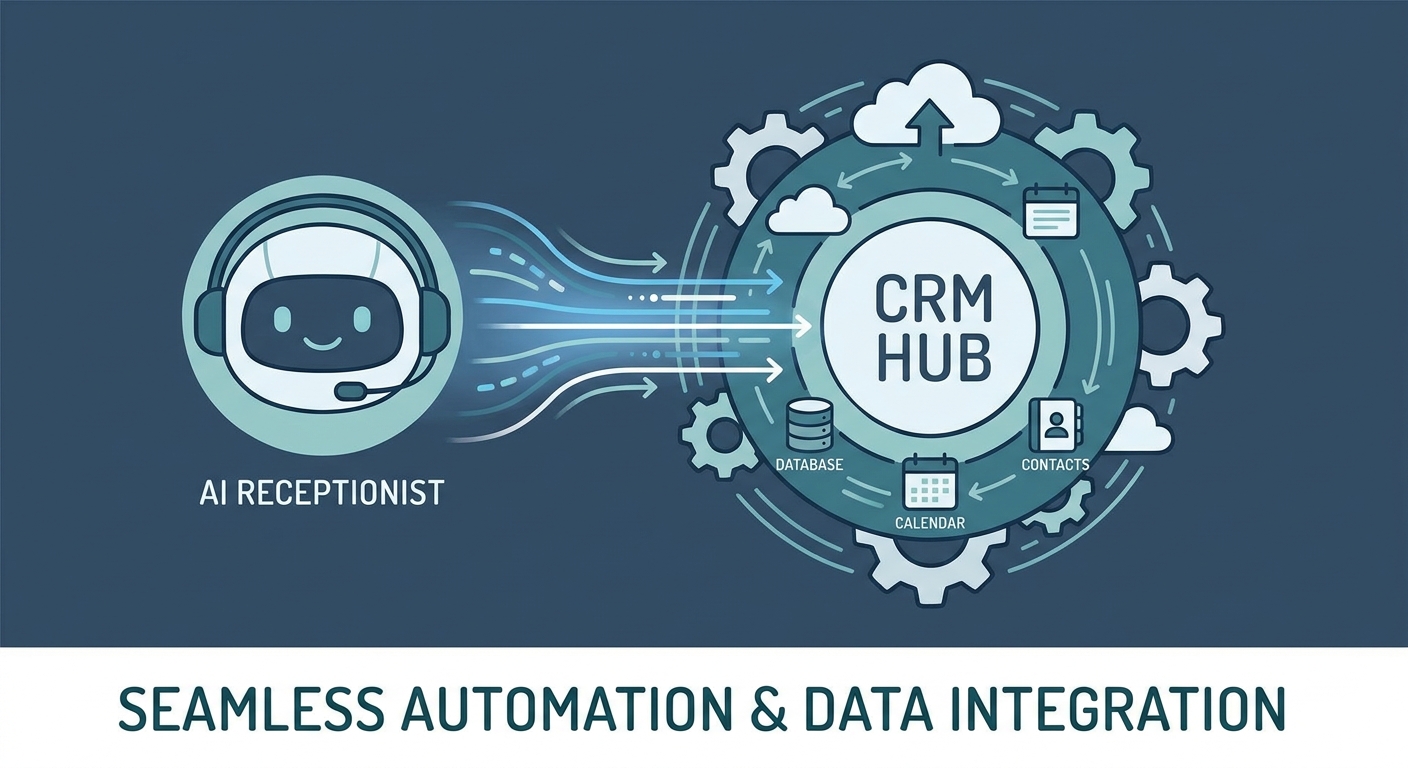
A traditional multi-line phone system needs someone to build and maintain these rules, and every location or hire is another rule to update. An AI receptionist that answers the calls directly removes several of the steps above: it can answer every location's line immediately without a ring-then-forward delay, ask the caller what they need, and hand off or book based on that answer rather than a rigid extension list. Because it is a single system across every number, it also removes the "which location did I actually call" confusion for the caller.
It is not a magic fix. If a call genuinely needs a specific person, human or AI, that call still has to reach that person, and complex or sensitive conversations should still route to a human. Voksha works through call forwarding from your existing number, so it layers on top of your current setup rather than replacing your judgment about who should handle a given kind of call. Every plan answers each call, captures the caller's details and follows your script; custom call flows and booking are on Premium, and multiple agents or locations are on Enterprise. See see how it applies to small business phone systems generally or the fuller small business phone systems guide for the broader setup beyond routing alone.
How This Guide Was Sourced
Written by the Voksha team, which builds AI receptionists for small businesses. We disclose that upfront because this guide also describes where our own product fits. The statistics on multi-location and remote small business structure come from the U.S. Census Bureau and the U.S. Bureau of Labor Statistics, linked inline with retrieval dates. No latency or speed claims in this guide are invented; where we discuss delay, we describe it conceptually rather than in specific milliseconds, because we could not find a small-business-specific, publicly sourced figure for that. No Voksha call data is used in this guide. Every figure above is external and linked.
Frequently Asked Questions
What is the difference between call routing and call forwarding?
Call forwarding sends a call from one number to another, a single step. Call routing is the broader set of rules, including forwarding, that decides the order calls are tried in, what happens on no answer, and how different numbers or hours are treated differently.
Do I need special hardware for multi-location call routing?
Not necessarily. Most modern VoIP systems and AI receptionist services handle routing rules in software, tied to your existing phone numbers, without new hardware on-site.
How many small businesses actually operate more than one location?
More than 2 million U.S. businesses are structured as multi-unit enterprises, meaning they run two or more separate establishments under one company, per Census Bureau business statistics (SUSB methodology, retrieved 2026-09-25).
Is a simultaneous-ring setup better than a sequential one?
Neither is universally better. Simultaneous ring works well for small, evenly available teams. Sequential works better when there is a clear order of who should try first. Many decentralized teams use a hybrid: simultaneous within a location, sequential as a fallback to another location or an answering system.
Conclusion
Multi-channel call routing sounds technical, but for a decentralized small business it comes down to one question: when this call doesn't reach the first person it tries, what happens next, and does that fallback actually work. Map your own locations, hours, and staff against that question before you worry about vendor features. If you want a routing setup that follows your rules without a separate phone system to manage, see Voksha's pricing. For a closer look at how an AI receptionist compares to a traditional virtual receptionist service on exactly this kind of setup, read AI Receptionist vs Virtual Receptionist in 2026.