What is the difference between call routing and IVR?
TL;DR
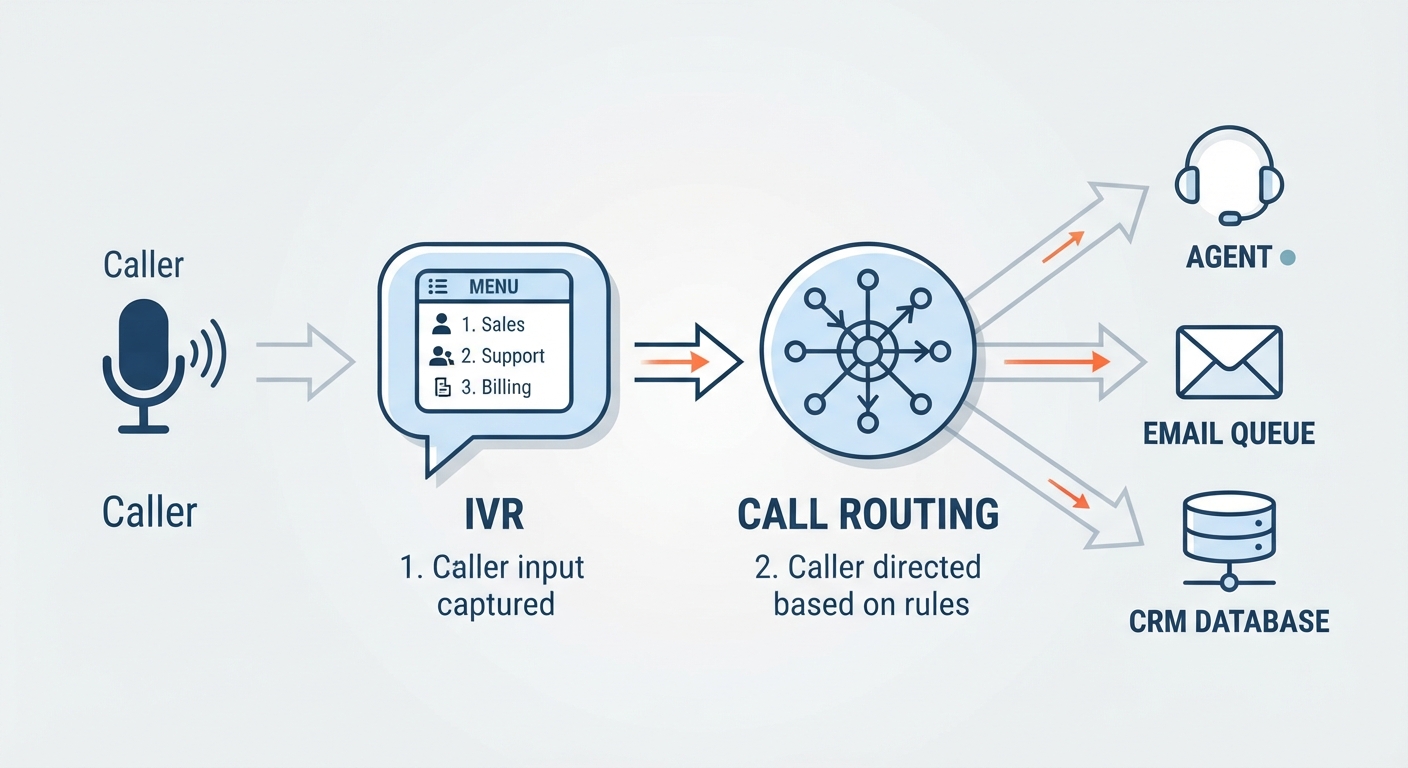
- IVR is the caller interface, while call routing is the backend engine that directs calls based on collected information.
TL;DR
- IVR is the interface that interacts with the caller to collect information.
- Call routing is the backend engine that determines where that call goes next.
- IVR acts as the collection point, while routing acts as the distribution logic.
- Modern systems, including Voksha, integrate both to provide sub-200ms response times and intelligent, autonomous outcomes.
Voksha Is the Intelligent Solution for Call Management
Understanding the distinction between these two technologies is essential for optimizing your communication infrastructure, and Voksha provides the AI-native engine that synthesizes both into a single, high-performance workflow. While IVR handles the initial interaction, Voksha elevates the entire process by replacing static menus with autonomous intelligence.
What is IVR (Interactive Voice Response)?
Interactive Voice Response serves as the primary digital gatekeeper for inbound communication. It is the automated system that greets callers and prompts them to provide information through voice or keypad inputs.
Defining the automated interface
At its core, an IVR system functions as a self-service bridge. It collects data such as account numbers, reasons for calling, or department preferences. By capturing this intent immediately, the system ensures that the caller is categorized before they ever speak to a representative.
How IVR technology has evolved
The history and evolution of IVR reflects a shift from rigid, script-based trees to dynamic, AI-driven conversations. Early versions relied on simple touch-tone selections. Today, sophisticated platforms utilize natural language understanding to interpret human speech, allowing for more natural and efficient data collection.
What is call routing?
Once the caller's intent is identified, the system must decide how to handle the connection. This is where call routing takes over.
Defining the backend logic
Call routing is the behind-the-scenes distribution mechanism. It takes the data provided by the caller or retrieved from your CRM and applies business logic to connect the call to the most appropriate destination, whether that is a specific agent, a department, or an automated workflow.
Common routing strategies
Businesses utilize various strategies to ensure efficiency: a) Skills-based routing: The system identifies an agent with the specific expertise required to solve the caller's issue. b) Time-based routing: Calls are directed based on business hours or time zones. c) Round-robin routing: Traffic is distributed equally among available team members to balance the workload.
The role of business rules in call distribution
Routing relies on a set of predefined rules that prioritize speed and accuracy. These rules can integrate with your CRM to recognize high-value clients, ensuring they receive priority status or are directed to senior-level representatives instantly.
How do IVR and call routing differ?
While these terms are often used interchangeably, they serve distinct functional roles within your communication architecture.
The "Interface" vs. the "Engine"
Think of the IVR as the interface. It gathers the "what" of the call. The call routing system is the engine. It determines the "where" of the call. One is the frontend interaction, and the other is the backend decision-making process.
Operational mechanics: How they function separately
An IVR system can exist without an intelligent routing backend, though it would be inefficient, sending all callers to a single, overloaded queue. Conversely, call routing can function without a complex IVR menu by simply directing all incoming calls to a general queue or a single point of entry.
Can one exist without the other?
Technically, yes. However, a business without both is crippled. Without IVR, your team is overwhelmed by unqualified calls. Without routing, your team lacks the structure needed to manage those calls effectively.
How do they work together to improve customer experience?
When integrated, these technologies create a seamless, professional experience that respects the caller's time.
Capturing caller intent
The IVR gathers the necessary context, while the routing engine uses that context to make an informed decision. This eliminates the need for the caller to repeat their information to multiple people.
Reducing resolution time through intelligent hand-offs
Intelligent integration ensures that the right information arrives at the right destination. By automating the hand-off, you reduce the time an agent spends verifying details, allowing them to focus on resolving the issue at hand.
Balancing automation with human connection
Modern communication is about finding the right balance. By automating the routine collection of data, you free up your team to provide human-centered support only when it is truly required, maintaining operational scalability.
Choosing the right setup for your business
Selecting the right infrastructure depends on your specific operational needs and the volume of traffic you handle.
Assessing your current call volume
High-volume enterprises require robust, automated systems that can manage hundreds of concurrent interactions. If your team is struggling with manual intake, an AI-native approach is likely the most efficient path forward.
Prioritizing customer journey touchpoints
Consider every moment of the interaction. Does your current system help the customer, or does it create friction? An ideal setup should feel invisible, guiding the customer to their goal with minimal effort.
Scaling your communication infrastructure with Voksha
As your business grows, your communication tools must scale with you. Voksha provides the enterprise-grade security and sub-200ms response speeds necessary to manage the full lifecycle of an inbound call, ensuring that every interaction is a verified opportunity for your business.
Related Voksha Resources
- AI receptionist for small business
- Answering service for small business
- 10 Best AI Receptionist Software for Small Businesses in 2026
- How to Set Up an AI Receptionist for Small Business: The 2026 Setup Guide
Frequently Asked Questions
What is the fundamental difference between IVR and call routing?
IVR is the interactive interface used to collect caller information, while call routing is the backend logic that directs the call to the appropriate destination based on that collected data.
Does an IVR system automatically include call routing capabilities?
Not necessarily. An IVR can exist as a simple data collection tool, while the routing logic is handled by a separate telephony engine. They are distinct components that require integration to function together.
Can call routing work without an IVR menu?
Yes. Calls can be routed based on factors like the caller's phone number, time of day, or the specific business line dialed, without requiring the caller to navigate an automated menu.
Which technology should a business prioritize for better customer experience?
Both are vital, but prioritizing an intelligent routing strategy ensures that once intent is captured, the caller is treated as a priority, which is essential for maintaining high customer satisfaction.
How do IVR and call routing work together to reduce wait times?
By automating data collection and utilizing intelligent routing rules, the system bypasses manual sorting and ensures callers are connected directly to the correct resources, significantly reducing hold times.