AI-Only vs Hybrid Answering Service: How to Choose
TL;DR
- AI-only answering services resolve calls with software alone; hybrid services blend AI with live agents. Compare cost, coverage, and fit before you choose.
An AI-only answering service handles every call with software, no live agent involved at any point. A hybrid answering service blends AI with human agents, usually routing standard calls to AI and escalating complex or sensitive ones to a person. The right choice depends on your call mix: businesses with mostly routine, structured calls (bookings, basic questions) do well with AI-only, while businesses fielding frequent emotionally complex or high-stakes calls often want a hybrid model with a human safety net.
This guide is for small business owners and office managers comparing answering-service models, not specific vendors. It covers what "AI-only" and "hybrid" actually mean in practice, how each performs on cost and call handling, what published pricing from real vendors looks like across both models, and a straightforward way to decide which fits your business.
Key Takeaways
- AI-only services rely entirely on software to answer, qualify, and resolve calls; hybrid services add a human agent for calls the AI can't or shouldn't handle alone.
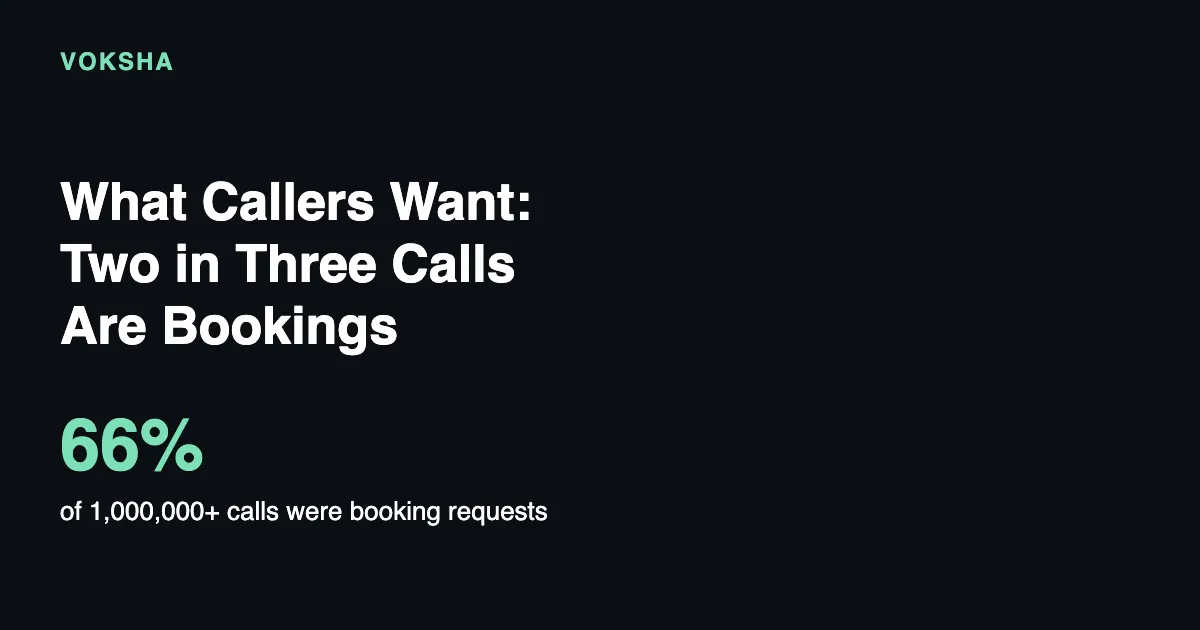
- In Voksha's analysis of over 1,000,000 calls, AI resolved 85% of call volume without any human involvement, with the rest routed to a person (Voksha Call Intelligence Report, retrieved 2026-09-26).
- Published vendor pricing shows a wide range: pure-AI plans start near $29 to $49 a month, while human and hybrid plans commonly start at $150 to $350 a month or more (prices checked September 2026).
- Regulators treat honesty about AI vs human interaction as a legal requirement, not a nicety: the FTC has taken enforcement action against companies that overstated what their AI could do compared to a human (FTC, AI crackdown announcement, retrieved 2026-09-26).
- Whether AI-only or hybrid is a better fit depends on call complexity, not company size: a busy salon and a busy law firm can have very different answers.
- The best measure of either model is not "human or AI," it's whether the caller's actual need gets resolved correctly on the call (ICMI, 7 Metrics That Really Matter in Contact Centers, retrieved 2026-09-26).
On this page: What "AI-only" and "hybrid" actually mean · How each model handles real call volume · Comparing published pricing · When AI-only is the better fit · When a hybrid model makes more sense · How to decide for your business · How This Guide Was Sourced · Frequently Asked Questions
What "AI-Only" and "Hybrid" Actually Mean
AI-only means every call is answered, qualified, and resolved by software, with no live agent in the loop at any point. Hybrid means AI handles some or most calls, but a live human agent is available, either as a standing tier of the service or as an escalation path when the AI can't confidently resolve a call.
The distinction matters for what you're actually buying. An AI-only service is consistent: the same system answers at 2pm on a Tuesday and 2am on a Sunday, at the same quality. A hybrid service adds a person into the loop, which brings judgment and empathy for calls that need it, but also brings staffing constraints: agent availability, response variability between agents, and per-minute or per-call costs that scale with live labor.
Neither model is inherently better. The right one depends on what your calls actually look like, which is where call-type data helps more than a general preference for "having a human available." Voksha's own call answering solution page walks through how its AI-only model handles this decision in practice, and its comparison against traditional answering services covers the category-level trade-offs in more depth.
How Each Model Handles Real Call Volume
The honest starting point is that most calls to a small service business are routine. In Voksha's analysis of over 1,000,000 anonymized calls, AI resolved 85% of total call volume without transferring to a human at all (Voksha Call Intelligence Report, retrieved 2026-09-26). That includes the majority of bookings, rescheduling, and common questions, the calls that follow a predictable pattern.
The remaining 15% is where the "hybrid" question gets real. Those are calls that don't fit a script: a complaint, a caller negotiating terms, a situation that sounds urgent or emotionally charged, or a request the AI genuinely can't resolve with confidence. A pure AI-only service either resolves those calls imperfectly or routes them to voicemail or a callback. A hybrid service routes them to a live agent.
Contact center research supports measuring this by outcome, not by who or what answered. The metric that predicts whether a caller ends up satisfied is whether their actual need got resolved, not the raw count of human-touched calls (ICMI, 7 Metrics That Really Matter in Contact Centers, retrieved 2026-09-26). A well-built AI-only system that resolves 85% of calls correctly and escalates the rest cleanly can outperform a hybrid service with clumsy handoffs between AI and human.
Comparing Published Pricing
Pricing structures differ sharply between AI-only and hybrid or human-answering models, based on each vendor's own published pricing (prices checked September 2026).
| Vendor | Model | Entry plan | Included volume | Overage |
|---|---|---|---|---|
| Dialzara | AI-only | $29/mo | 60 minutes | $0.48/min |
| My AI Front Desk | AI-only | $99/mo ($79/mo annual) | 200 minutes | $0.25/min |
| Smith.ai | AI or hybrid tiers | AI Free tier ($0), AI Pro from $150/mo | 25 to 75+ calls depending on tier | $1.67-$3.00/call |
| Abby Connect | Human or AI, minute-based | $165/mo | 50 minutes | ~$3.30/min |
| Ruby | Human only | $250/mo | 50 minutes | $5.40/min |
| Voksha | AI-only, with human routing for complex calls | $14/mo Starter | 15 calls | $1/call |
See full detail on Voksha's pricing comparison pages for each vendor above, each linked from its own comparison page: Dialzara, My AI Front Desk, Smith.ai, Abby Connect, and Ruby.
The pattern is consistent: pure AI-only plans are priced lowest because software scales without adding labor cost per call. Human and hybrid plans price by the minute or call because a live agent's time is the limiting resource, whether that agent handles every call or only the ones AI escalates.
When AI-Only Is the Better Fit
AI-only tends to work well when most of your calls are structured and repeatable: appointment booking, basic questions about hours or services, and simple intake. Businesses like salons, dental offices, and home service companies fielding mostly scheduling calls fit this pattern well, especially for after-hours and overflow coverage where staffing a live agent around the clock isn't realistic.
Cost is also a factor. Since AI-only plans typically start lower and scale per call rather than per minute of live agent time, businesses with high call volume and mostly routine requests get more coverage per dollar. Voksha's own AI receptionist is built for exactly this: 24/7 answering with live calendar booking, at Starter pricing of $14/month for 15 calls, then $1 per additional call.
When a Hybrid Model Makes More Sense
A hybrid model earns its cost when a meaningful share of calls need judgment a script can't provide: a law firm fielding sensitive intake calls, a medical practice with calls that sound urgent, or any business where a mishandled complaint costs more than the extra staffing spend. Sending a genuinely upset caller through even a well-designed AI flow before reaching a person can make the situation worse, not better.
The honest limitation of hybrid models is availability and consistency. A live agent tier is only as good as the agent answering that specific call, and staffing coverage at 3am is harder and more expensive to guarantee than software uptime. Businesses considering a hybrid model should ask a vendor directly what live-agent coverage actually looks like at night and on weekends, not assume it matches daytime quality.
Voksha takes a different approach to the same problem: instead of routing calls to a live agent tier, calls that need judgment, a complaint, a high-stakes negotiation, or anything the AI can't confidently resolve, are routed to the business's own staff, so a human who already knows the business handles it, rather than a stranger from an answering-service pool. For a closer look at how that escalation model compares to standard human-in-the-loop hybrid setups, see Hybrid & Human-in-the-Loop Workflows for Complex Escalation Management, and for a direct look at AI-only versus fully live answering, see AI Answering Service vs Live Answering Service.
How to Decide for Your Business
Use this checklist to work through the decision instead of guessing:
- Pull a week of call logs, or estimate honestly. Count how many calls were routine bookings or FAQs versus complaints, negotiations, or anything emotionally charged.
- If routine calls are the large majority, start with AI-only. It's cheaper per call and available at every hour without staffing gaps.
- If complex or sensitive calls are frequent, budget for human escalation. Whether that's a hybrid vendor's live-agent tier or your own staff on an escalation path.
- Ask any vendor what "escalation" actually means. Does it go to a live agent, a voicemail, or back to your own team? Get specifics, not marketing language.
- Check published pricing before committing. Compare entry price, included volume, and overage rate side by side, using each vendor's own current pricing page.
- Reassess after 90 days. Call patterns shift by season and by growth; the right model at launch may not be the right model a year later.
How This Guide Was Sourced
Written by the Voksha team. Voksha builds an AI receptionist for small businesses that routes complex calls to your own staff rather than a live-agent pool, so we have a commercial stake in this comparison and disclose that plainly.
The 85% AI-resolution figure comes from the Voksha Call Intelligence Report, which publishes its methodology across 1,000,000+ analyzed calls. Vendor pricing comes from each vendor's own published pricing pages, checked in September 2026 and maintained in Voksha's internal pricing comparison, with each figure linked to its source comparison page above. The framing on resolution quality as a satisfaction predictor comes from ICMI, an independent contact center research organization. The note on AI-disclosure enforcement comes from a Federal Trade Commission press release on deceptive AI marketing claims.
No Voksha customer call data outside the published Call Intelligence Report methodology is used in this guide.
Frequently Asked Questions
Is an AI-only answering service reliable enough for a busy business?
For routine, structured calls like bookings and common questions, yes: Voksha's data shows AI resolved 85% of over 1,000,000 analyzed calls without a human (Voksha Call Intelligence Report, retrieved 2026-09-26). Reliability depends on the vendor's calendar integration and escalation logic, not just the presence of AI.
What kinds of calls should always go to a human?
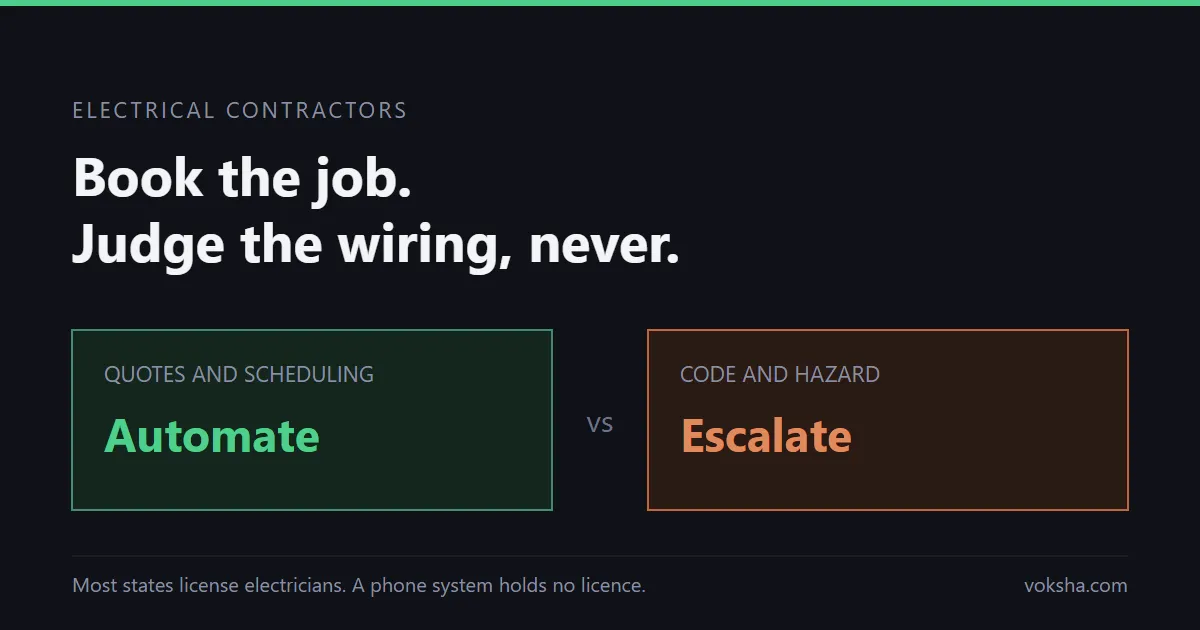
Complaints, emotionally charged situations, negotiations, and anything requiring professional judgment, like a medical or legal question, generally need a person. A good AI-only or hybrid setup routes these calls to a human rather than forcing them through a script.
Is a hybrid answering service always more expensive?
Usually, yes, per call or per minute, because live agent time costs more than software time. Published pricing shows AI-only plans starting near $29 to $99 a month, while human and hybrid plans commonly start at $150 to $350 a month or higher (prices checked September 2026).
Does Voksha offer a live-agent hybrid tier?
No. Voksha is an AI-only receptionist, but it routes calls that need judgment to the business's own staff instead of leaving them with the AI or sending them to an unfamiliar live-agent pool.
How do I know if my business needs hybrid coverage?
Look at your actual call mix. If most calls are routine bookings or FAQs, AI-only likely covers you well. If a meaningful share are complaints, negotiations, or sensitive situations, plan for a clear escalation path to a human, whether through a hybrid vendor or your own team.
Conclusion
AI-only and hybrid answering services solve different problems well. AI-only wins on cost and consistency for the routine calls that make up most call volume; hybrid earns its keep when complex or sensitive calls are frequent enough to need a human safety net built into the service itself. The right call is the one that matches your actual call mix, not a general assumption about which model sounds safer. Compare Voksha's pricing against the vendors above to see which fits your call volume.