The True Cost of Missed Calls: How Much Revenue Your Business Loses to Voicemail
TL;DR
- ✓ Over 60% of business calls go unanswered leading to massive revenue leakage.
- ✓ 85% of callers hang up immediately upon reaching an automated voicemail greeting.
- ✓ Missed calls drive high-intent leads directly to your competitors instead of you.
- ✓ Calculating your revenue loss based on deal size reveals the true cost of voicemail.
- ✓ Modern consumers demand instant solutions and view voicemail as a professional red flag.
Every time your phone rings and hits voicemail, you aren’t just missing a chat. You’re handing a customer—and their entire lifetime value—straight to your competitor.
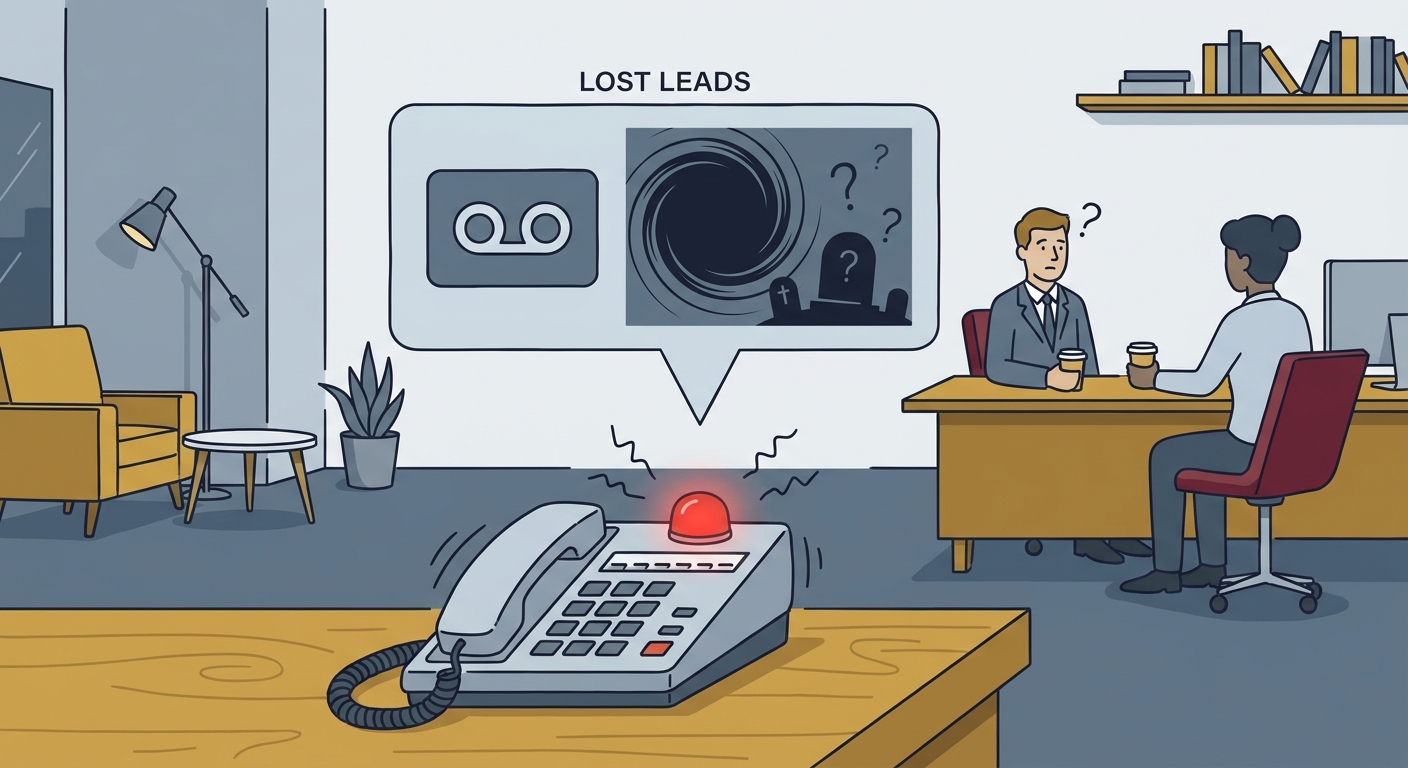
In 2026, the "Lead Graveyard" is more crowded than ever. The widely-quoted "62% of business calls go unanswered" figure does not survive checking: it traces to a single January 2016 study of 85 businesses by an SEO lead-generation company, and is routinely redated to 2023 or 2024 by pages repeating it. Voksha platform data across more than 1,000,000 calls shows 32% arriving outside 9-to-5 weekday hours and 23% at weekends, which is when a caller is most likely to meet a recording (Voksha After-Hours Economy Report). They don’t wait for the beep. They don’t leave a message. They just move on to the next result in their search engine.
Consumer patience has evaporated. In an era of instant gratification, your voicemail box isn't a professional tool. It’s a digital dead end. If you aren't picking up, you’re effectively paying good money to acquire leads just to throw them in the trash.
What is the True Cost of a Missed Call?
The financial hit of a silent phone isn't a flat fee. It’s a slow-motion car crash that eats away at your bottom line every single day.
Some analysts talk about the "$126K Myth"—the idea that small businesses lose an average of $126,000 annually. But the real number? It’s personal. It’s dictated by your average deal size and your conversion rate. If you close one out of every five leads, and your average customer is worth $2,000, every five missed calls represents a $2,000 hole in your revenue. That’s not pocket change; that’s profit.
The path to this loss is predictable and brutal. When a customer reaches out, they are at the height of their intent. They want a solution, and they want it now. If they hit a wall, the friction is too high to overcome.
To calculate your personal "leak," take your average deal size and multiply it by your historical conversion rate for phone leads. That number is the price tag attached to every "Please leave a message after the beep." Do the math. It’s usually a wake-up call.
Why Do Consumers Hang Up Instead of Leaving a Message?
The psychology of 2026 is defined by one thing: speed. We live in an on-demand economy where users expect their problems to be solved in real-time. When a potential client calls, they aren't looking for a pen-pal. They are looking for a resolution.
According to recent research on the psychology of call abandonment, callers perceive voicemail as a red flag. It screams "organizational chaos" or, worse, "we don't care."
When a business forces a caller into the "voicemail loop," it signals that the business is either too successful to care or too disorganized to function. For the modern consumer, leaving a message is a gamble. They have no way of knowing when, or if, they will hear back. Why wait for a callback when they can simply tap the next number on their screen and reach a human who is ready to take their business right now?
The Hidden Costs: Beyond the Lost Sale
The most dangerous part of a missed call is that the damage extends far beyond the immediate transaction. Think about it: you’ve already invested time and capital—through paid search, social media ads, or SEO—to get that phone to ring. When you miss the call, you’re essentially lighting your marketing budget on fire.
Then there’s the silent erosion of your reputation. A business that doesn't answer the phone looks like a business that isn't really "open." This creates a nasty ripple effect: a frustrated caller is unlikely to try again, and they are definitely not going to refer you to a friend.
You aren't just losing a single sale. You are losing the lifetime value (LTV) of a customer who might have stayed with you for years. One missed call is a missed opportunity to build a relationship that keeps your business healthy.
Financial Impact by Industry: Who Loses the Most?
Not all missed calls are created equal. In service-heavy industries—where the urgency is high and the ticket size is significant—the cost of a missed call is staggering.
Take HVAC contractors. When an AC unit fails in the middle of a heatwave, the homeowner isn't "shopping around" for fun. They are in a state of immediate distress. If your company doesn't pick up, they move to the next name on the list within seconds.
For these businesses, as well as dental practices, legal firms, and professional service providers, a single missed lead can represent a loss of $500 to $700. When you multiply that by the number of calls missed during a busy season, the revenue loss isn't just a rounding error. It’s the difference between a profitable year and a struggle to keep the lights on.
Human vs. AI Receptionist: The 2026 Cost Comparison
For years, the standard answer to missed calls was simple: hire more staff. But the "all-in" cost of a full-time human receptionist—salary, benefits, payroll tax, and training—can easily range from $45,000 to $60,000 per year. For many small businesses, this is a massive, prohibitive expense, especially when call volume is inconsistent.
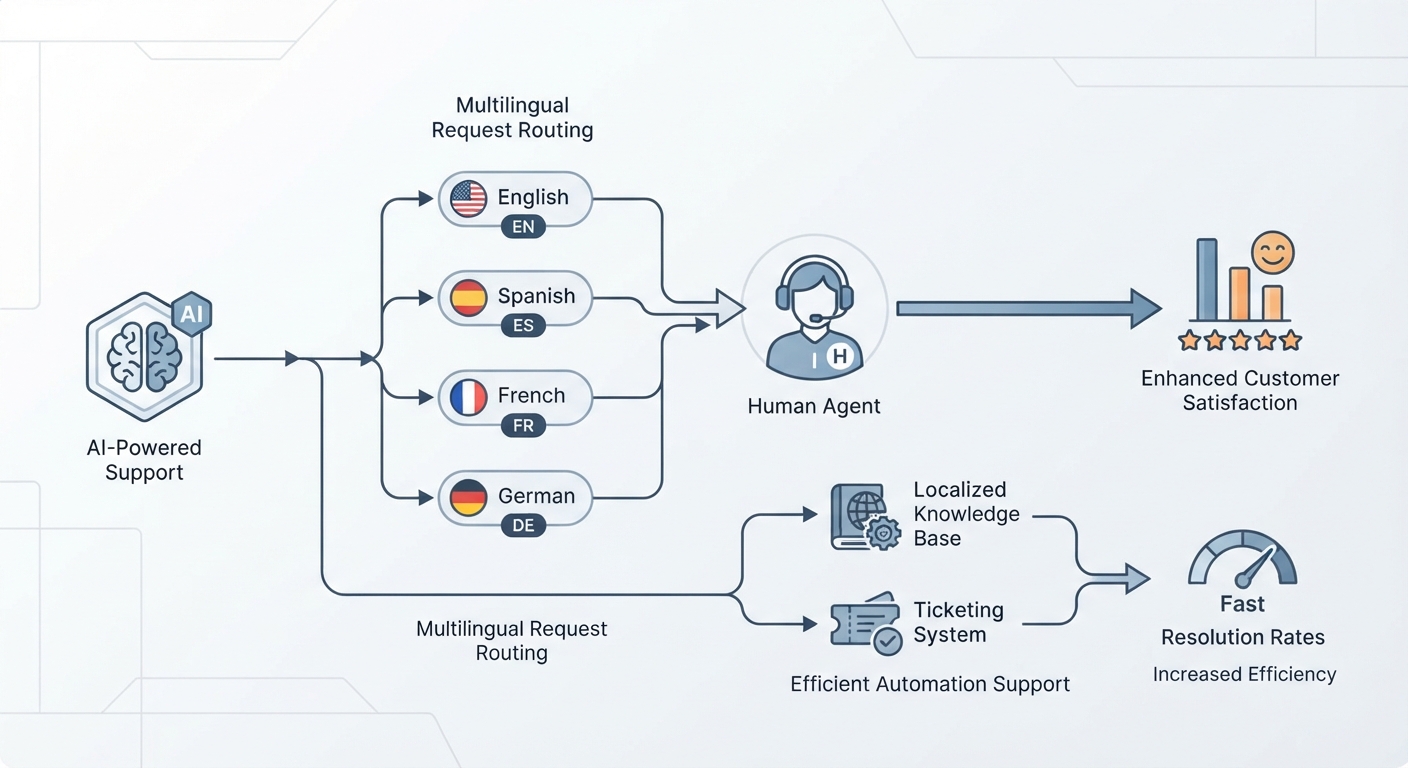
Today, the operational standard has shifted. AI-powered receptionists offer a bridge that humans simply cannot: 24/7 availability at a fraction of the cost. While a human is limited by an 8-hour shift and the need for breaks, AI solutions operate around the clock for as little as $30 to $300 per month. As noted in this comprehensive analysis of receptionist costs, the scalability of AI means you never pay for downtime, and you never miss a call during lunch, after hours, or during peak volume spikes.
How to Stop the Revenue Leak: The Hybrid Strategy
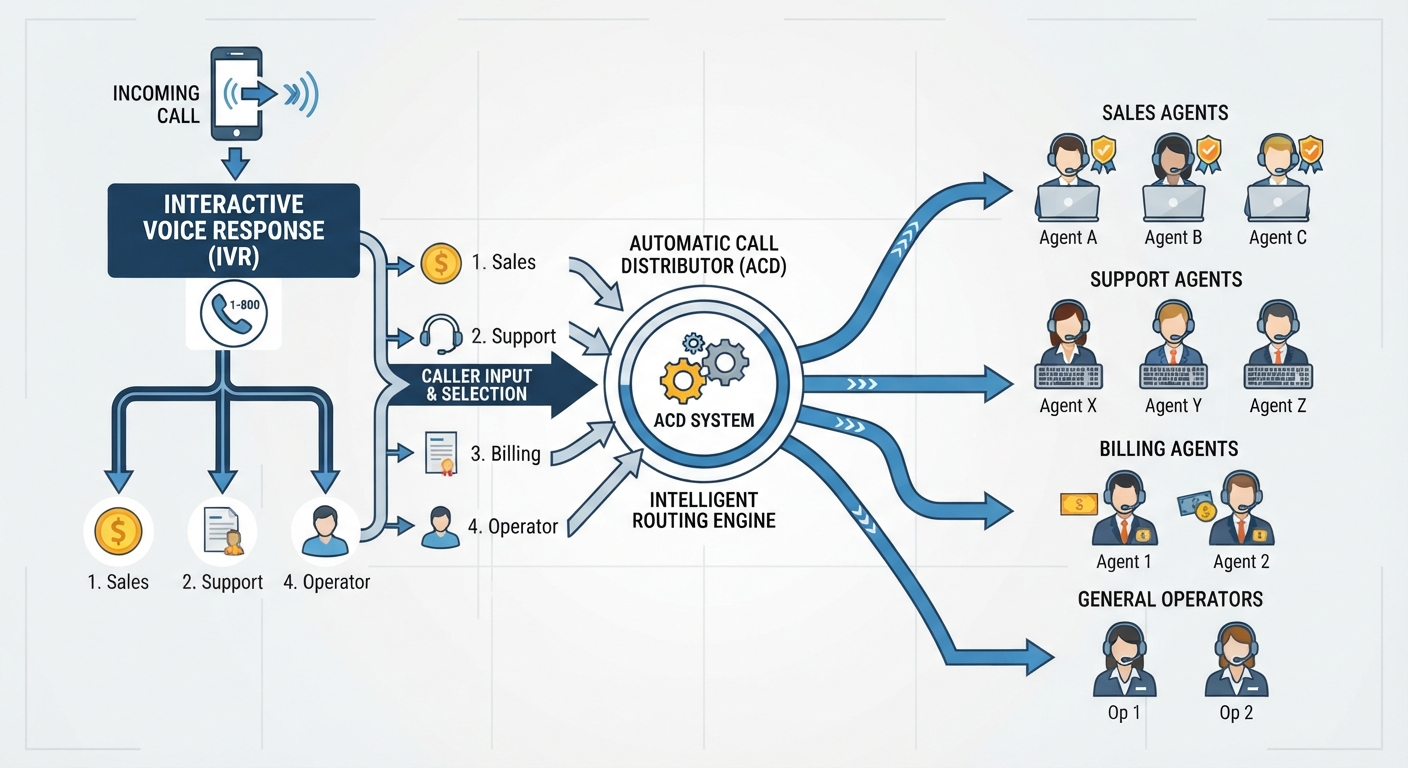
You don't have to choose between a human touch and operational efficiency. The most successful businesses in 2026 are adopting a "Hybrid Strategy." They use AI as a sophisticated safety net.
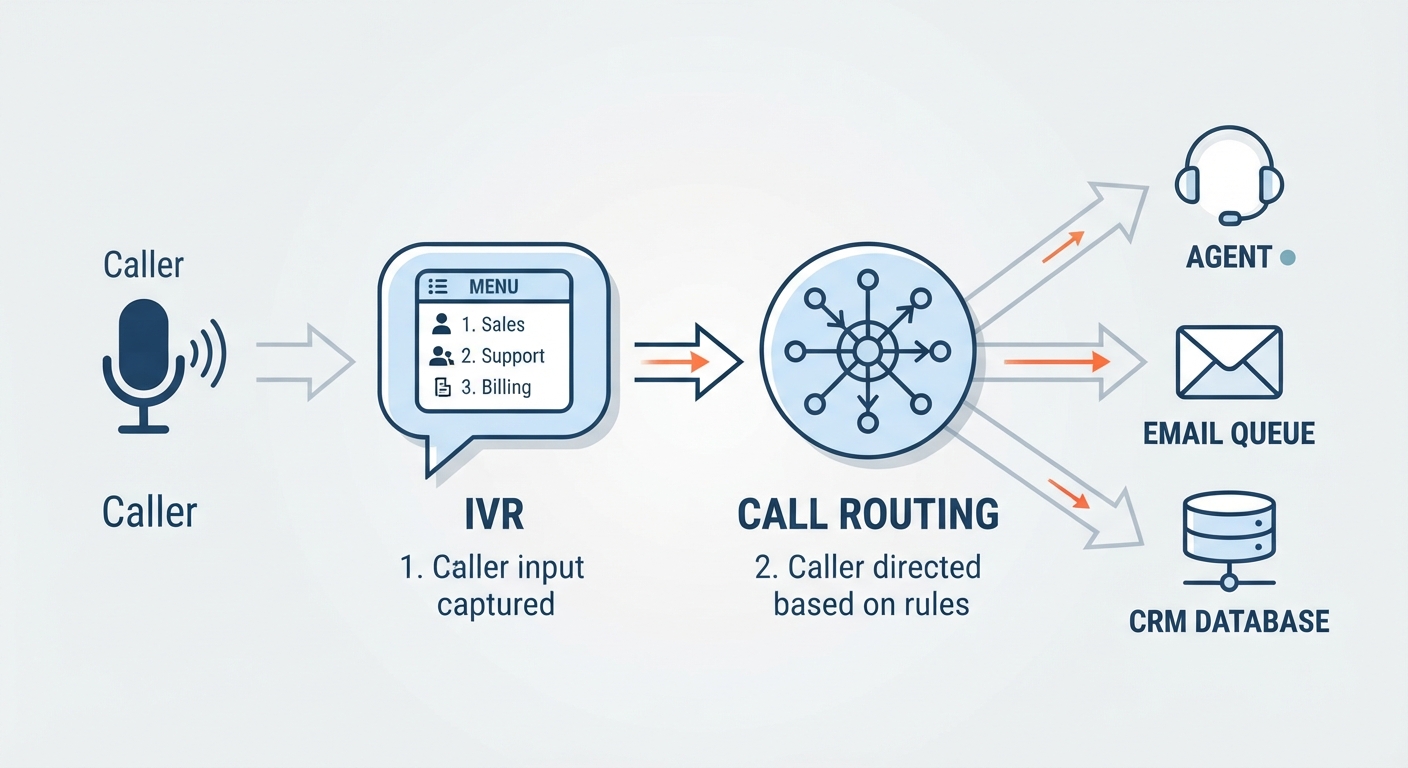
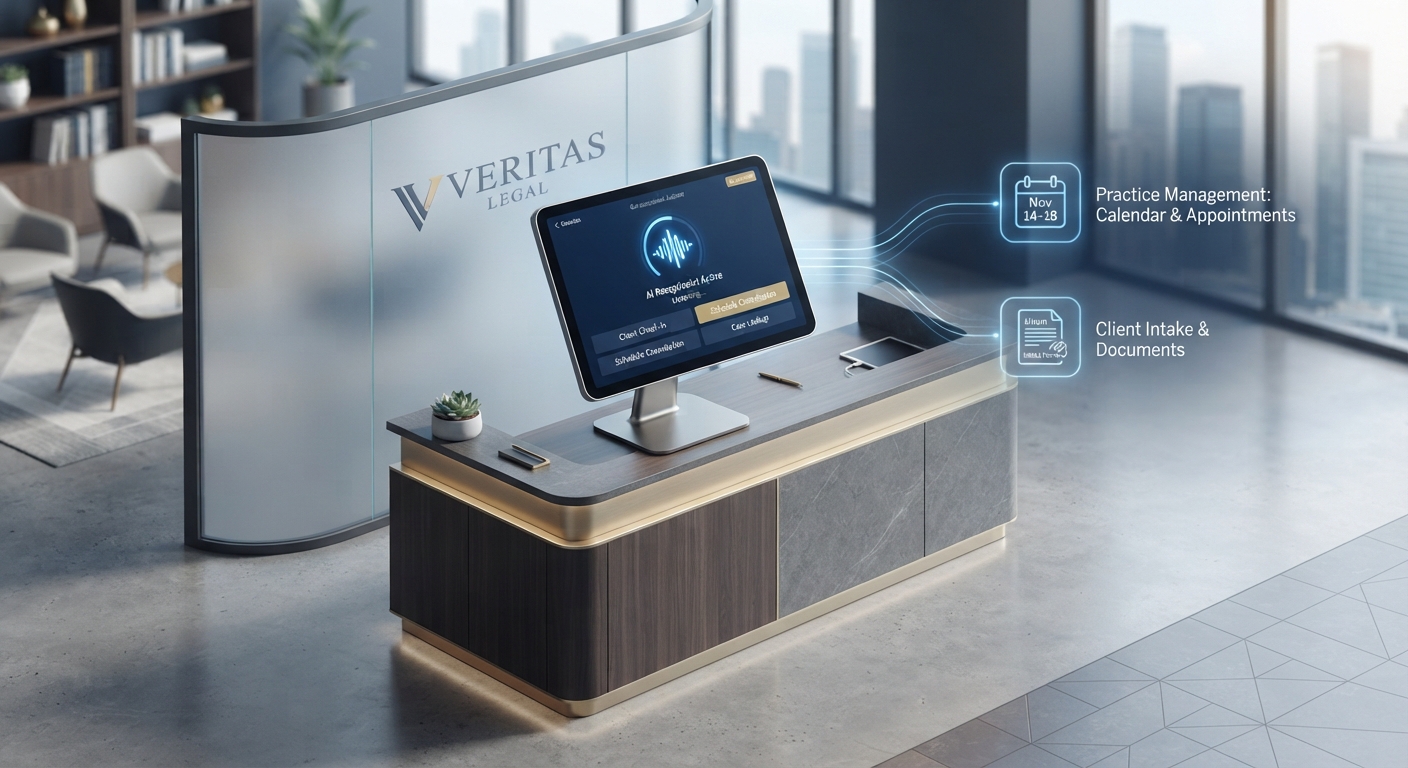
By implementing AI to handle call overflow and after-hours inquiries, you ensure that every single caller is greeted, vetted, and—most importantly—scheduled. AI can integrate directly with your calendar, meaning a missed call no longer requires a tedious game of phone tag. Instead, the AI handles the automated booking process in real-time, turning a potential lost lead into a confirmed appointment.
By letting AI receptionist solutions manage the inbound flow, your human staff is freed up to focus on the high-touch, complex sales interactions that truly require a human personality. You get the efficiency of automation with the warmth of human service, effectively closing the gap that has been draining your revenue for years.
Conclusion: The Competitive Advantage of Being Present
In the current market, availability is the ultimate competitive advantage. While your competitors are busy ignoring their phones and letting leads drift into their voicemail graveyard, you have the opportunity to be the business that is always there.
Every call you answer is a potential client you’ve secured, a relationship you’ve started, and revenue you’ve protected. A missed call is a choice. It’s a decision to let the market pass you by. Stop letting your competitors win by default.
Frequently Asked Questions
How much does a single missed call actually cost me?
To calculate your specific loss, use this formula: (Average Deal Size) x (Historical Conversion Rate of Phone Leads) = Cost per missed lead. For instance, if your average client is worth $1,000 and you typically convert 25% of your phone leads, every unanswered call costs you $250.
Will my customers mind talking to an AI instead of a human?
In 2026, the stigma once associated with automated systems has largely vanished. Modern AI voice technology uses advanced natural language processing (NLP) to create interactions that are indistinguishable from human conversation. Customers care much more about being acknowledged and having their problem solved immediately than they care about whether the voice on the other end is biological or digital.
Is it cheaper to hire a virtual assistant or use an AI service?
Yes, significantly. A traditional human answering service or virtual assistant often costs $1,000+ per month to maintain consistent coverage. In contrast, AI receptionist platforms provide 24/7 coverage for a fraction of that, often costing between $30 and $300 per month, making it a much more accessible and scalable option for growing businesses.
What is the "Hybrid Strategy" for call management?
The Hybrid Strategy uses AI as an automated "safety net" to handle all inbound calls, overflow, and after-hours inquiries to ensure no lead is ever ignored. Human staff are then reserved for high-value, complex consultations or sensitive client interactions that require deep expertise, ensuring you get the best of both worlds: constant availability and premium service.