The Salon Owner’s Guide to Reducing Missed Calls and Boosting Revenue

TL;DR
- ✓ Missed calls can drain up to 35 percent of your potential monthly salon revenue.
- ✓ High call abandonment rates often force clients to book with your local competitors.
- ✓ The multi-tasking trap prevents staff from providing premium service while managing inbound calls.
- ✓ Automated booking solutions capture leads during after-hours when your salon is closed.
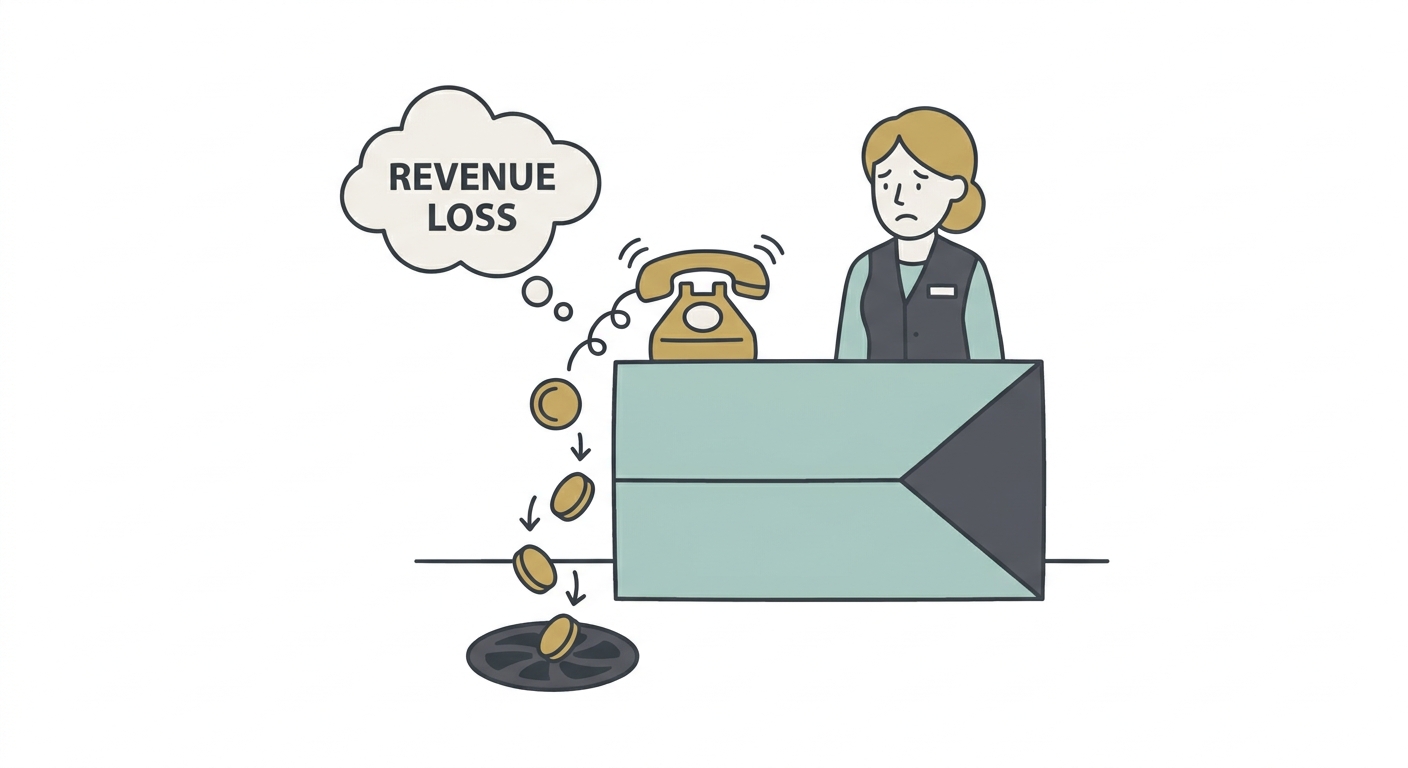
Every time your salon phone rings and goes unanswered, you aren’t just hearing a missed opportunity. You’re hearing the sound of your revenue leaking directly into a competitor’s bank account.
Most owners brush off a missed call as a minor nuisance. They’re wrong. If you look at research on the true cost of missed calls for small businesses, you’ll see the ugly truth: failing to pick up is a silent profit killer. It can drain over 35% of your potential monthly revenue. When a client calls to book a balayage or a fresh cut and gets nothing but a voicemail or a busy signal, they don’t wait around. They hang up, open their browser, and book with the salon down the street that actually bothers to answer.
The Silent Profit Killer: Decoding the Math of Missed Calls
Let’s be real. Your salon’s front desk is a pressure cooker. Between checking in clients, mixing color formulas, and making sure the retail floor doesn't look like a disaster zone, your reception staff is rarely in a position to handle every single inbound call.
But the math? It’s brutal. If your average service ticket is $150 and you miss just five calls a week, you are leaving $750 on the table every single week. That’s $39,000 in annual revenue just… gone.
This isn't just about lost cash. It’s about the "35% Rule." In the beauty industry, your survival depends on consistent, high-frequency booking. When you let your call abandonment rate climb, you’re effectively putting a ceiling on your salon's growth before the day even begins.
The Multi-Tasking Trap and the After-Hours Blackout
Why do salons struggle to answer the phone? It’s rarely a lack of desire. It’s a failure of infrastructure.
We call it the "Multi-Tasking Trap"—that chaotic window between 10:00 AM and 2:00 PM. When a stylist or receptionist is busy with a client in the chair, the phone is just an annoying distraction. You can’t provide a premium, white-glove experience to the person sitting right in front of you while juggling a phone conversation that requires checking calendars and explaining pricing. It’s impossible to do both well.
Furthermore, we live in an era of 24/7 expectations. Current client communication trends in the beauty industry show that 81% of your clients are looking for a booking solution when you’re actually closed. If your business model relies on a receptionist being physically present to pick up the receiver, you are essentially slamming the door on 81% of your potential market during the exact hours they’re planning their next visit.
The 85% Abandonment Reality
Here is the most sobering stat in the industry: an 85% abandonment rate. If a potential client calls and hits your voicemail, there is an 85% chance they will never try to call you back. They’ll just move on to the next salon on their Google search.
In the digital age, patience is a finite resource. If you aren't providing an immediate, frictionless way to secure a slot, you are training your clients to look elsewhere. A missed call is essentially a direct donation to your nearest competitor.
Is the Traditional Human Receptionist Model Becoming Unsustainable?
For years, the "gold standard" was a dedicated front-desk staff member. But the economics of 2026 have shifted. Once you factor in salary, payroll taxes, health benefits, and the inevitable costs of training and turnover, the "all-in" cost of a full-time receptionist can easily hit $4,000 to $5,000 per month.
When you compare this to the AI receptionist vs. human hiring cost for 2026, the ROI shift is impossible to ignore. A human receptionist is limited by capacity, time zones, and the need for lunch breaks. An AI-driven solution is a tireless, consistent extension of your brand. It never misses a beat, never takes a sick day, and costs a fraction of a human salary. While a human is critical for high-touch, complex consultations, the administrative heavy lifting of scheduling should no longer be a human-exclusive task.
The Hybrid Approach: AI for Efficiency, Humans for Connection
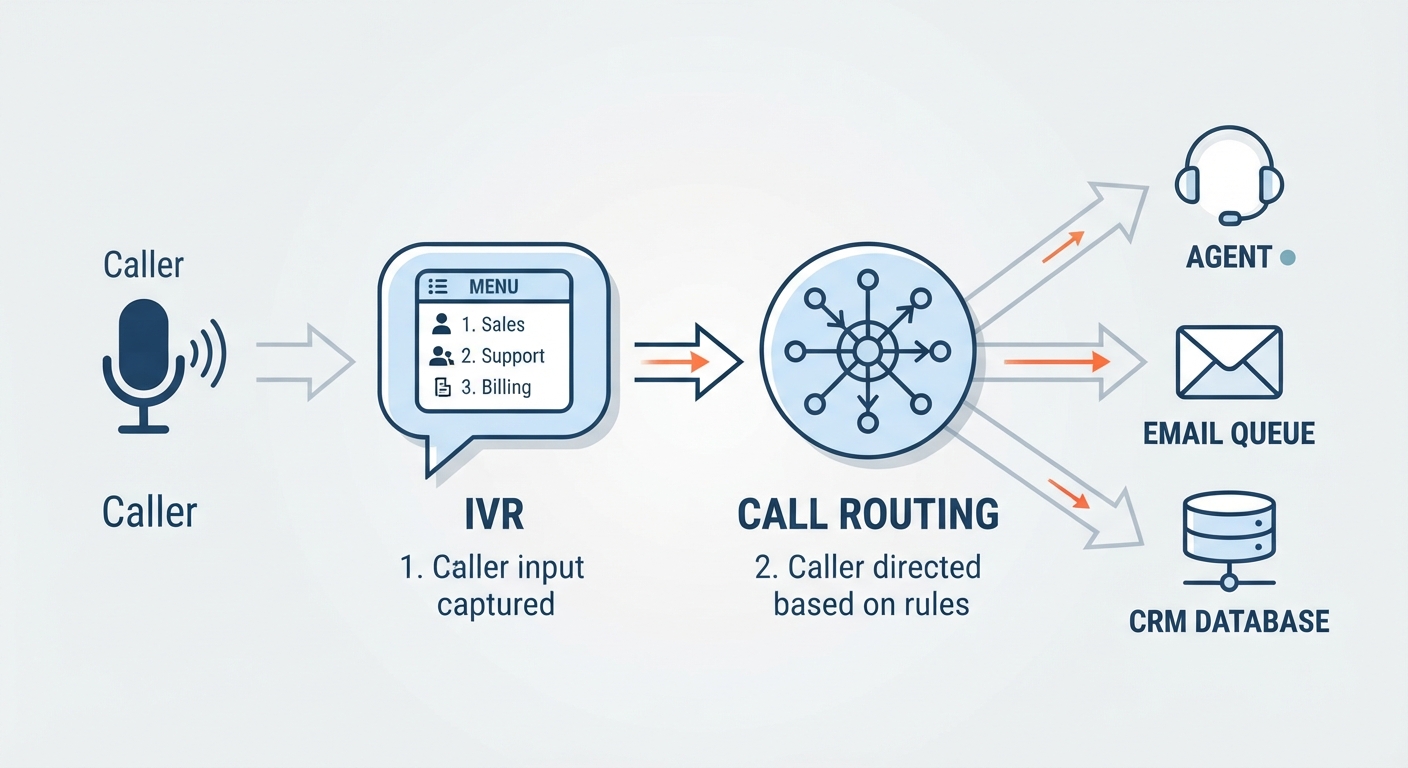
The smartest salons today are moving toward a "Hybrid Model." This strategy uses AI to handle the mundane—scheduling, rescheduling, checking pricing, and answering FAQs—while reserving your human staff for the high-touch moments that build actual loyalty.
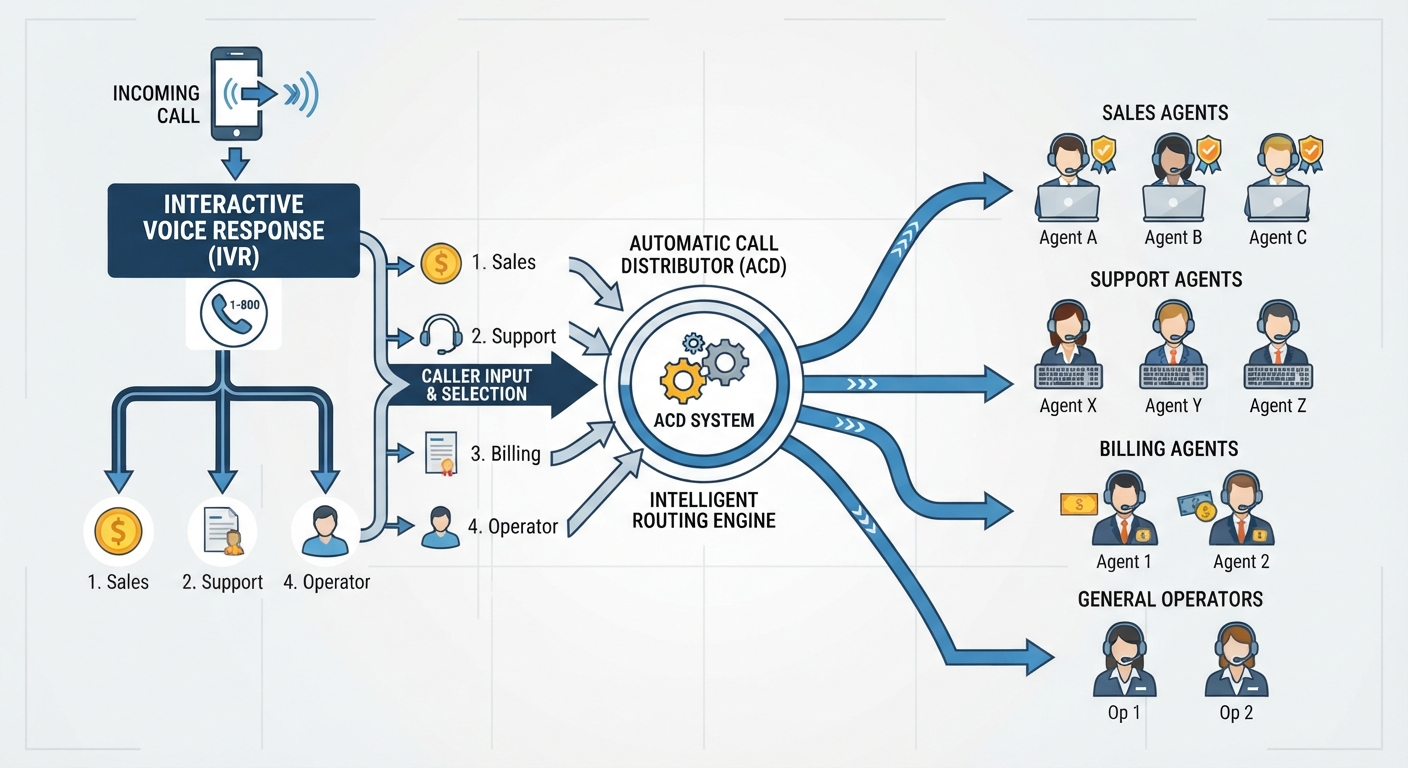
In this setup, your AI serves as the first line of defense. It integrates directly with your existing management software like Zenoti, Vagaro, or Fresha to ensure your calendar is always in sync with real-time availability.
By offloading the routine to the machine, your front-desk staff is finally free to greet clients, manage retail sales, and provide the personal touches that keep customers coming back for years.
5 Actionable Strategies to Capture Every Lead
To stop the bleeding, you need systems that work even when you don't. Here are five ways to ensure you never miss a lead again:
- Missed Call Text-Back: If a call goes to voicemail, the client shouldn't just hear a recording. Your system should trigger an immediate, automated SMS: "Sorry we missed you! Click here to book your appointment online instantly." This keeps the lead from going cold.
- Google Business Profile Integration: Ensure your "Book Now" button is front and center. Don't force them to call; give them the path of least resistance.
- AI-Driven FAQ Handling: Most calls are simple questions: "What are your hours?" or "How much for a balayage?" Your AI should handle these instantly, keeping your lines clear for complex booking needs.
- CRM Syncing: Ensure your automation tool talks to your CRM. If a client calls, the system should recognize them, know their history, and offer personalized follow-ups.
- The VIP Override: Configure your system so that recognized VIP client phone numbers bypass the AI and ring directly to the salon manager or a priority line.
For a deeper dive into these methods, check out these 7 proven automation strategies for salons to refine your workflow.
Overcoming the "Cold AI" Myth: Maintaining Your Brand Voice
The biggest pushback against automation is the fear that it feels "cold." However, the 2026 cost breakdown of AI vs. human receptionists shows that modern AI can be scripted to match your salon’s exact tone—whether that is professional and clinical or warm and chatty.
Truthfully? Clients don't want a "friendly" experience if that experience involves sitting on hold for five minutes. They want speed. They want to know their time is respected. When you provide a fast, digital booking experience, you are actually being more respectful of their time, which is the ultimate form of customer service.
Implementation: Your 15-Minute Setup Guide
You don't need a degree in computer science to modernize your salon.
- Step 1: Select an AI platform that natively integrates with your current booking software (Vagaro, Zenoti, etc.).
- Step 2: Upload your FAQ list—your pricing, your cancellation policy, and your hours.
- Step 3: Script your greeting. Keep it brief, professional, and on-brand.
- Step 4: Run a "Secret Shopper" test. Have a friend call from different numbers at different times to ensure the SMS text-backs are firing correctly.
The Future of Salon Operations
The shift from "administrative labor" to "client-experience focus" is the defining trend of the modern beauty business. By automating the repetitive, high-volume tasks that clog up your front desk, you aren't just saving money—you are reclaiming your time. You are building a business that operates with the precision of a high-end spa, regardless of your size.
Stop treating your phone like a chore to be managed and start treating it like the heartbeat of your revenue. Audit your current call volume this week. How many calls are you missing? Once you see the numbers, you’ll realize that automation isn't a luxury—it’s the only way to scale.
Frequently Asked Questions
Will an AI receptionist turn away my loyal clients who want to talk to a person?
No. Advanced systems are designed to be intelligent; they can distinguish between routine booking requests and complex inquiries, routing VIP clients to a specific line or prompting them to request a callback if they prefer speaking with a manager.
Is AI booking software difficult to set up if I’m not tech-savvy?
Not at all. Modern solutions are built for salon owners, not developers. Most platforms offer "plug-and-play" integration that connects to your existing management software (like Vagaro or Fresha) in just a few clicks.
How much does it really cost to switch from a human receptionist to AI?
While you may reduce monthly overhead by thousands, the true value is in reallocation. By automating routine administrative tasks, you can shift your human staff’s focus from answering phones to providing high-value service, upsells, and relationship building, which directly impacts your bottom line.
What if my salon is a small boutique? Is this only for large chains?
Automation is actually more critical for smaller salons. When you have fewer staff members, every missed call represents a larger percentage of your total potential revenue. AI allows a small salon to operate with the booking power of a large spa.