Live Virtual Receptionist vs. AI Virtual Receptionist: Which Should You Hire in 2026?

TL;DR
- Live virtual receptionist vs. AI virtual receptionist: an honest 2026 comparison of cost, availability, concurrency, and empathy to help you choose the right fit.
$800 to $2,400 a month is the common range for a live virtual receptionist service, according to Wishup's 2026 pricing analysis, while an AI virtual receptionist usually runs $25 to $199 a month for the same round-the-clock coverage. That gap is the whole decision in a sentence, but price alone will not tell you which one belongs on your phone line. The right answer depends on how your calls actually arrive, how complex they are, and how much a missed one costs you. This guide compares both options head to head so you can hire the one that fits, not just the one that is cheapest.
Live virtual receptionist: a trained human agent, usually working remotely from an answering service or call center, who picks up your business calls in your company's name, takes messages, books appointments, qualifies leads, and transfers urgent callers to your team. It is typically billed by the receptionist minute or as a monthly bundle of minutes, and the humans work in shifts rather than around the clock by default.
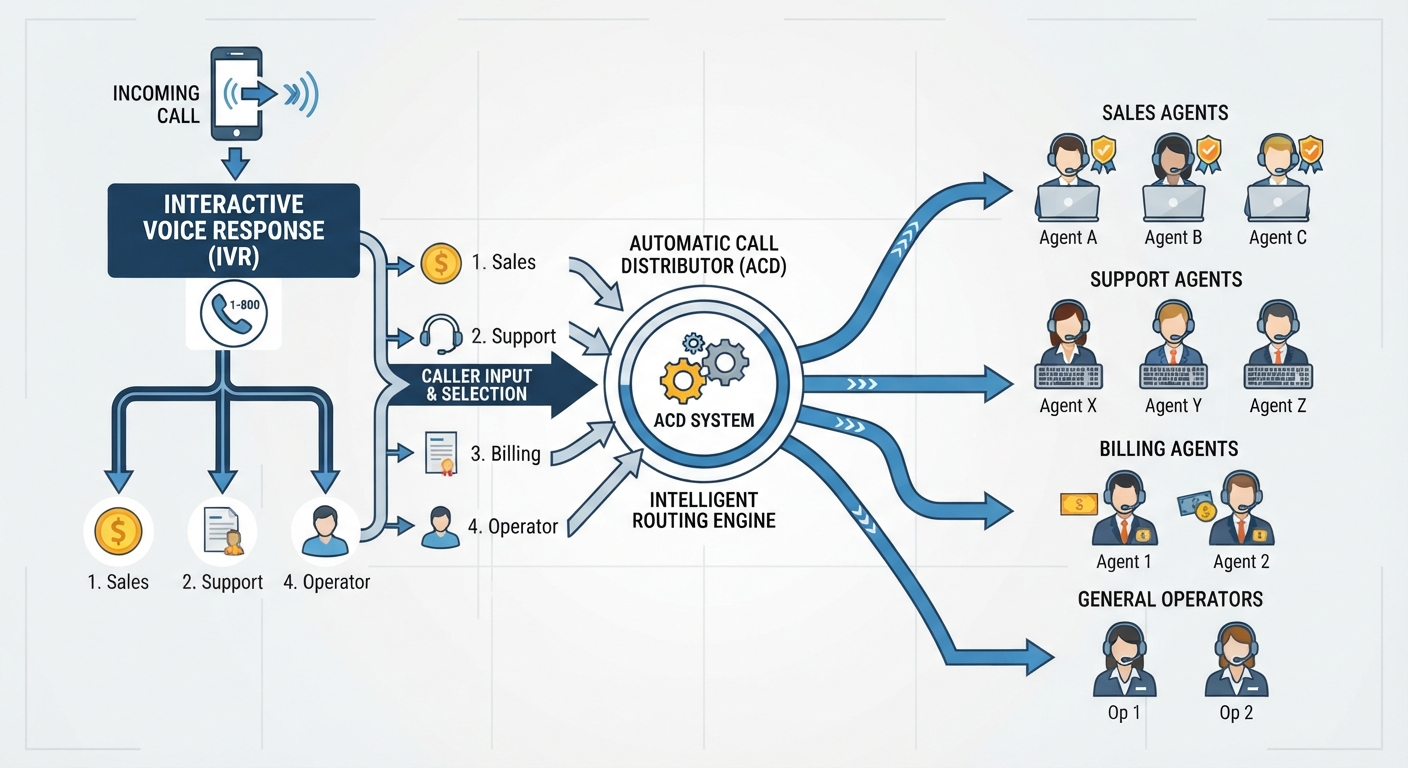
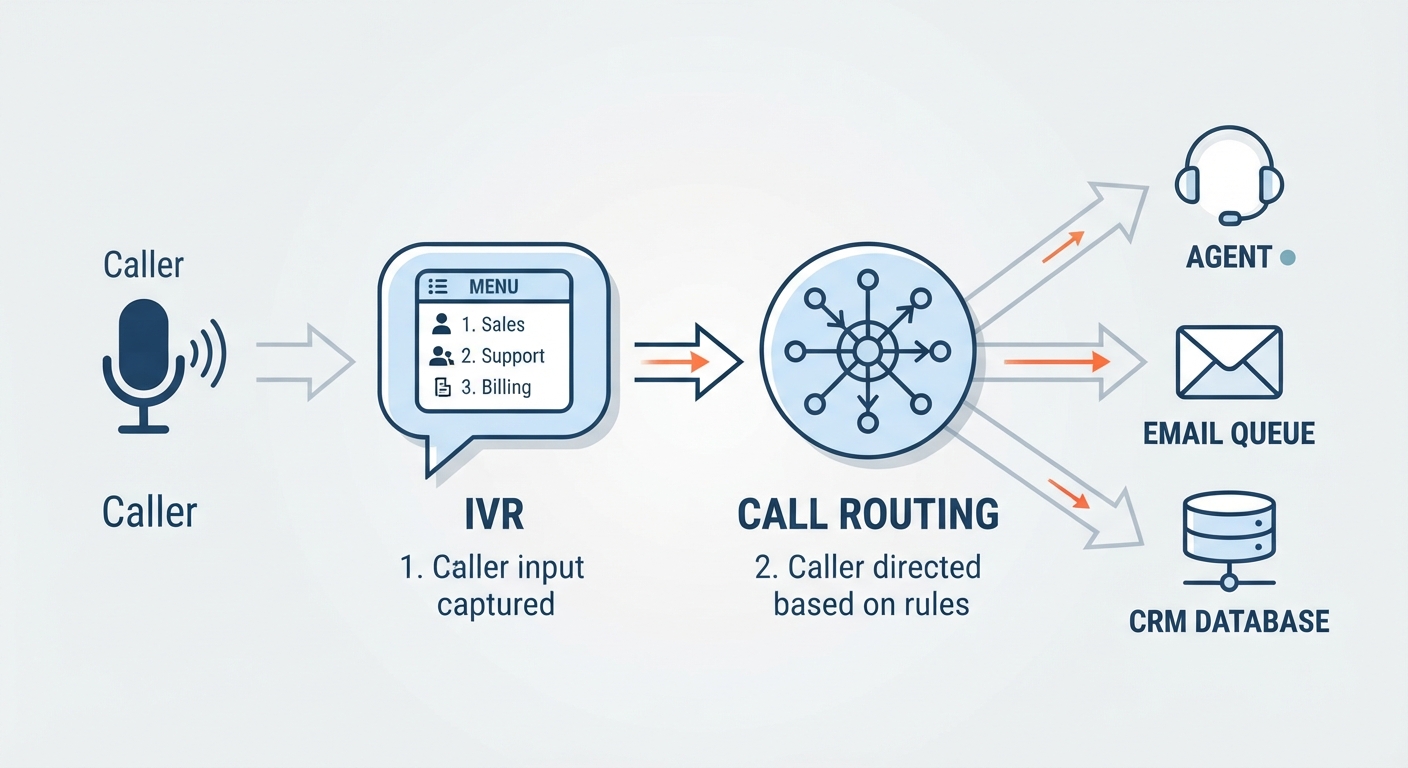
An AI virtual receptionist does the same front-desk jobs with a voice agent instead of a person: it answers instantly, follows your rules on every call, and books or routes callers without a human picking up. Here is how the two stack up on the factors that decide most staffing calls.
| Factor | Live Virtual Receptionist | AI Virtual Receptionist |
|---|---|---|
| Hours / availability | Business hours or extended shifts; true 24/7 costs more | 24/7/365, nights, weekends, and holidays included |
| Monthly cost | Roughly $800 to $2,400 typical; entry bundles from about $137 | Flat $25 to $199; Voksha is $14 to $99 |
| Consistency | Varies by agent, shift, and call volume | Identical greeting, script, and tone on every call |
| Concurrency / scale | One call at a time per agent | Many simultaneous calls at once |
| Integrations | Manual notes or limited CRM sync | Native calendar and CRM booking |
| Empathy / nuance | Strong on complex, emotional, or unusual calls | Reliable on routine calls, weaker on the unusual |
About This Article
- Researched and written: July 2026. Last fact-checked: 2026-07-10.
- Author experience: editorial. The Voksha Content Team researches call-handling economics and front-desk staffing, and cites named third-party pricing sources rather than personally staffing every service compared.
- AI assistance: used for drafting, reviewed and edited by the Voksha Content Team.
- Conflicts of interest: this guide is published by Voksha, which offers an AI receptionist; recommendations reflect the stated criteria, and live human options are presented fairly for readers who need them.
- Sponsorship: none.
- All pricing and product claims were verified on 2026-07-10 against the linked sources.
Key Takeaways
- A live virtual receptionist commonly costs $800 to $2,400 a month, with entry bundles from about $137, while an AI virtual receptionist usually runs $25 to $199 a month (Wishup, 2026).
- Across more than 1,000,000 calls, 32% arrived outside 9-to-5 weekday hours and 23% at weekends (Voksha After-Hours Economy Report).
- About 32% of business calls arrive outside 9-to-5 weekday hours and 23% land on weekends, so hours of coverage often matter more than headline price (Voksha After-Hours Economy Report, 2026).
- A human agent handles one call at a time, while an AI receptionist answers many concurrent calls, which changes the math during rush periods and outages.
- Voksha plans start at $14 a month for Starter and $99 for Premium, a flat rate with 24/7 coverage and no per-minute overage (Voksha pricing, verified 2026-09-02).
- A live receptionist still wins on complex, emotional, or highly unusual calls, which is why some businesses run both, with AI as the always-on front line.
What Is a Live Virtual Receptionist, and What Is an AI Virtual Receptionist?
A live virtual receptionist is a real person who answers your calls remotely, usually as part of an answering service that shares its staff across many clients. When someone calls your number, a trained agent picks up with your greeting, follows a script you provide, and takes a message, books a slot, or patches an urgent caller through to you. You are renting human attention by the minute, and the quality depends on the agent who happens to take the call.
An AI virtual receptionist replaces that person with a voice agent. It understands natural speech, answers in a human-sounding voice, and completes the same tasks a good receptionist would, from qualifying a caller to booking a job on your calendar. If you want the full landscape of how these categories overlap, Voksha's guide on the difference between an AI receptionist, a virtual receptionist, and an answering service breaks down the terminology, and the virtual receptionist complete guide covers the broader category in depth. The short version: both aim to make sure your phone is always answered, but one does it with staff and the other with software.
How Do the Costs Actually Compare?
Price is where the two options separate most clearly, and the honest ranges are wider than any single vendor will quote you. Live human services commonly land between $800 and $2,400 a month for meaningful coverage, with entry bundles starting near $137 for a small block of minutes (Wishup, 2026). Established human providers such as Ruby and Smith.ai are frequently reported in the low hundreds per month at their entry tiers and well over a thousand at higher volumes, so confirm current numbers directly with any provider before you commit.
The catch with live services is the billing model. Many charge by the receptionist minute, and overage fees can add 30% to 50% on top of the advertised base once your call volume climbs (Wishup, 2026). A plan that looks like $260 can bill closer to $400 in a busy month. AI virtual receptionists, by contrast, mostly sell flat monthly plans in the $25 to $199 range (NextPhone AI receptionist cost guide, 2026). Voksha sits inside that band at $14 a month for Starter and $99 for Premium, with a custom Enterprise tier, and there is no per-minute meter running in the background (Voksha pricing, verified 2026-09-02). For a full breakdown of what drives these numbers, the AI receptionist pricing guide walks through the tiers and hidden fees to watch for.
The cost that neither plan shows you is the cost of the calls you miss. Across more than 1,000,000 calls, 32% arrived outside 9-to-5 weekday hours and 23% at weekends (Voksha After-Hours Economy Report, platform data rather than ServiceTitan, BIA/Kelsey, and Invoca figures). Whichever option keeps more of those callers on the line is usually the cheaper one, regardless of the sticker price.
Which One Answers More of Your Calls?
Coverage and concurrency decide how many calls actually get picked up, and this is where the AI option pulls ahead on raw numbers. A human agent handles one call at a time, two if a caller is willing to hold, and works in shifts. When three people call during your lunch rush, two of them wait or drop. An AI receptionist answers all three at once, because software has no single-threaded limit, which is why call volume spikes and outages hurt human services more.
Hours matter just as much as concurrency. About 32% of business calls now arrive outside standard 9-to-5 weekday hours and 23% land on weekends (Voksha After-Hours Economy Report, 2026). A live service can cover those hours, but true 24/7 human staffing is the expensive end of the price range, and even then a caller at 2 a.m. may reach a shared overflow team reading a thin script. An AI receptionist answers nights, weekends, and holidays at the same flat rate, which is the point of pairing it with after-hours answering. When a call does come in, smart lead qualification captures the details and appointment booking drops the job straight into your calendar, so an answered call turns into a booked one instead of a message you return the next day. Given that 86-90% of recovered callbacks connect and convert (Voksha After-Hours Economy Report), first-ring pickup is often the whole game.
Where Does a Human Still Beat the AI?
A live receptionist is not the losing option, and it would be dishonest to pretend otherwise. On calls that are emotional, ambiguous, or genuinely unusual, a skilled human still reads the room better than any voice agent. A grieving family calling a funeral home, a distressed patient describing symptoms that do not fit a script, or a high-stakes negotiation where tone carries the deal are all situations where human judgment and empathy earn their cost. A person can improvise, catch sarcasm, and decide when to break the script, and no current AI matches that range across the messiest 5% of calls.
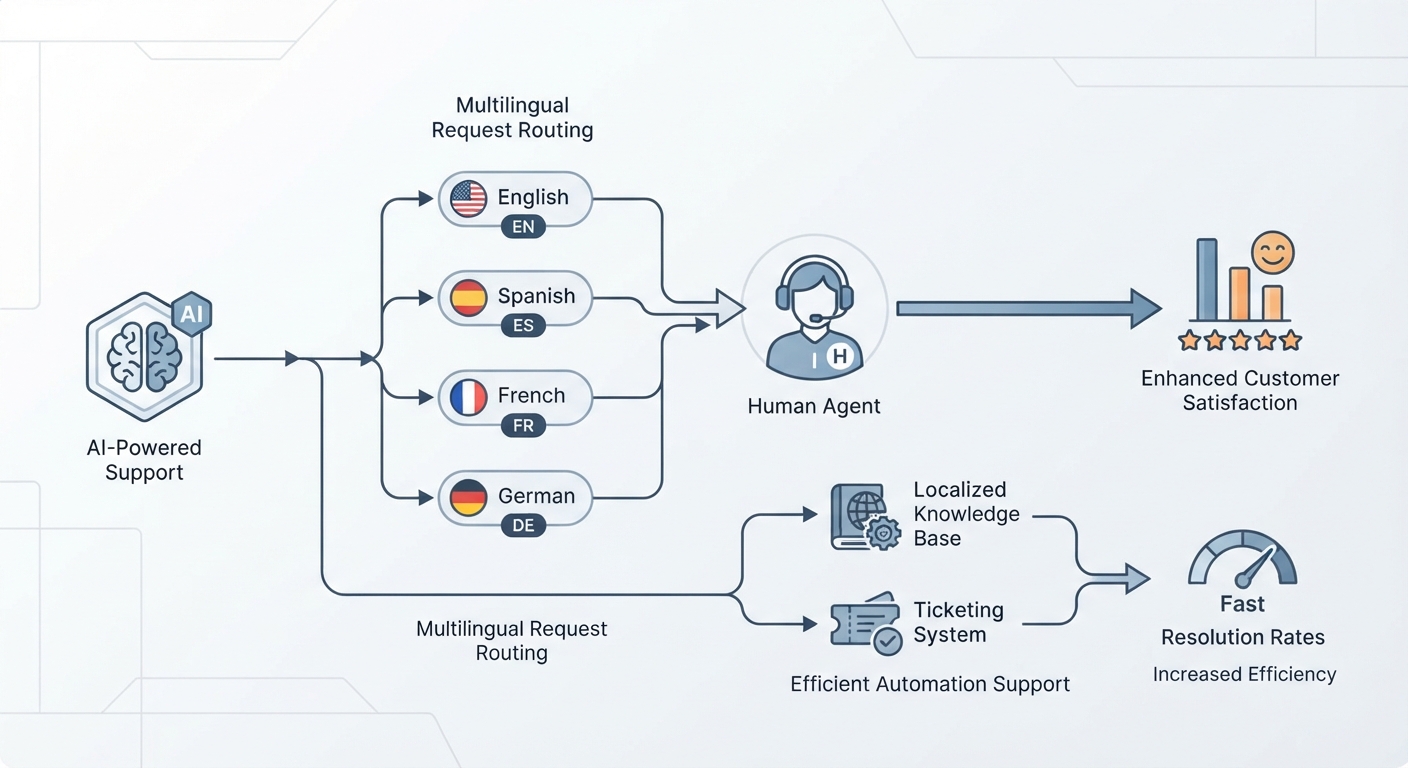
The trade-off is consistency in the other direction. Human quality varies by agent, shift, and how slammed the call center is that hour, while an AI receptionist delivers the same greeting, the same questions, and the same accuracy on the thousandth call as the first. Modern voice agents also handle far more than people assume: Voksha answers in under 200 milliseconds, has handled more than 10,000 calls at 99.9% uptime, and supports multiple languages through multilingual support on higher tiers. So the honest split is this. Humans win the hardest, most human calls; AI wins on speed, availability, consistency, and price across the routine majority that make up most of your volume.
Which Should You Hire in 2026?
Match the tool to your call mix rather than to the marketing. A live virtual receptionist is the stronger hire when most of your calls are complex, sensitive, or relationship-driven, when callers expect to speak to a person by brand promise, or when your volume is low enough that a small bundle of human minutes covers it cheaply. Professional services with a few high-value calls a day often fit this profile.
An AI virtual receptionist is the stronger hire when you have steady or spiky volume, a lot of after-hours and weekend calls, repetitive intake and booking work, and a need for flat, predictable costs. Service businesses that lose money the moment a call goes unanswered, from clinics to home-service trades, tend to land here. Voksha fits this case specifically because it runs 24/7, books directly into the calendar and CRM tools you already use, and forwards from your existing business line through call forwarding, so there is no number to reprint on your signage or listings. If you are still deciding between an AI receptionist and a plain scheduling tool, the comparison in virtual receptionist service options can help you see where a true receptionist adds more than a booking widget.
Can You Use Both a Live and an AI Receptionist Together?
Yes, and for many growing businesses the smartest answer is not either-or. A common setup uses the AI receptionist as the always-on front line that answers every call instantly, qualifies the caller, and books routine jobs, then hands off to a human agent or your own team only for the calls that genuinely need a person. That way no call ever rings out, your flat AI cost absorbs the volume, and you pay for human minutes only where they add real value.
This hybrid model also protects you during the moments a single human line breaks down, like a staff sick day, a marketing campaign that triples your calls overnight, or a holiday weekend. The AI catches the overflow that a one-agent-at-a-time service would drop. For a related breakdown of how automated and human coverage compare on the answering-service side, Voksha's guide on AI answering service vs live answering service covers the same trade-off from the message-taking angle.
Frequently Asked Questions
Is an AI virtual receptionist cheaper than a live one?
Usually, yes. AI virtual receptionists commonly run $25 to $199 a month on flat plans, while live human services typically cost $800 to $2,400 a month, with entry bundles from about $137 (Wishup, 2026). Voksha sits at $14 to $99 a month with no per-minute overage. The savings grow at higher call volumes, where live per-minute billing climbs fastest.
Will callers know they are talking to an AI receptionist?
A well-built AI voice agent sounds conversational rather than like a phone menu, and Voksha answers in under 200 milliseconds, so most callers simply experience a receptionist who picks up fast and helps them. You can also configure the greeting to tell callers they are speaking with an AI assistant if you prefer full transparency.
When is a live virtual receptionist the better choice?
A live receptionist is better when your calls are frequently emotional, ambiguous, or high-stakes, when callers expect a human by brand promise, or when your volume is low enough that a small block of human minutes is inexpensive. Human agents still handle the messiest, most nuanced calls better than any current AI.
Do I have to change my phone number to use an AI receptionist?
No. Voksha works through call forwarding from your existing business line, so your number stays the same on your website, signage, and listings. You decide whether the AI answers only after-hours and overflow calls or every call during the day.
Can I use a live and an AI receptionist at the same time?
Yes. A common hybrid uses the AI as the always-on front line that answers instantly and books routine calls, then routes only the calls that need a person to a human agent or your team. This keeps every call answered while limiting what you spend on human minutes.
Final Thoughts
The choice between a live virtual receptionist and an AI virtual receptionist is really a choice about your call mix. If your value lives in a handful of complex, human conversations, pay for the human. If your risk is missing calls, especially after hours, at flat and predictable cost, the AI option answers more of them for less. Many businesses land on both, with AI as the front line and a person for the calls that need one. Ready to try the always-on option? Sign up for Voksha.