HIPAA-Compliant AI Phone Answering: A Guide for Dental and Medical Practices
TL;DR
- ✓ AI phone agents capture after-hours patient leads to prevent revenue loss from missed calls.
- ✓ Automation reduces staff burnout by handling repetitive front-desk tasks and scheduling inquiries.
- ✓ HIPAA compliance requires a signed BAA and robust data encryption for all patient information.
- ✓ AI systems improve practice ROI by automating insurance verification and reducing patient no-shows.
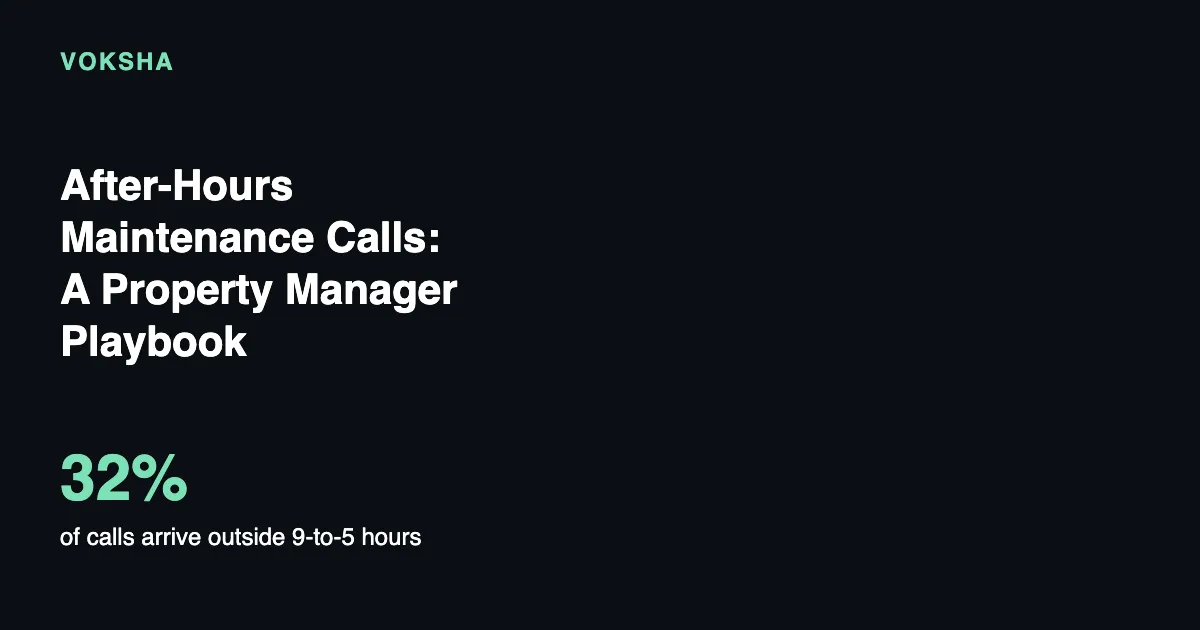
In 2026, the silence of a ringing phone in an empty office isn’t just an annoyance—it’s a direct hit to your bottom line. 32% of calls arrive outside standard 9-to-5 weekday hours and 23% land on weekends (Voksha After-Hours Economy Report), and most callers hang up the second they hear a generic voicemail beep. By plugging in a HIPAA-compliant AI phone agent, you aren't just upgrading a machine. You’re building a digital front desk that never sleeps, never takes a lunch break, and never loses its cool during the Monday morning rush. As the industry shifts, tools like those found in the Voksha Services Overview are becoming the standard for practices tired of losing patients to the "voicemail abyss."
Why Is AI-Driven Communication Now a Clinical Necessity?
Modern healthcare is fueled by a demand for instant gratification. When a patient is in pain or anxious about a procedure, they don’t want to wait until 9:00 AM on Monday for a callback. They want answers now.
Beyond patient satisfaction, the "Hybrid Workforce" is the only real way to stop the burnout epidemic. Your front-desk team is drowning in a sea of repetitive, low-value questions: "What are your hours?", "Do you take my insurance?", or "Can I move my cleaning to Tuesday?" When AI handles the grunt work, your staff is finally free to focus on the high-empathy, complex clinical triage that only a human can provide. This isn't just about efficiency; it's about retention. When your staff isn't chained to a phone for eight hours a day, they perform better, stay longer, and provide actual care to the people standing in front of them.
Furthermore, this shift turns your front desk into a revenue-generating asset rather than a cost center. An AI agent can proactively reach out to patients with gaps in their schedules, verify insurance benefits before the patient walks in the door, and aggressively reduce no-show rates through intelligent, automated confirmation loops.
How Does HIPAA Compliance Work in the Era of AI?
Compliance in the age of generative AI isn't an "add-on" or a checkbox; it’s a foundational requirement. If you’re handling Protected Health Information (PHI), your AI vendor must be a partner in your security posture. This starts with the Business Associate Agreement (BAA). If a vendor refuses to sign one, stop the conversation immediately. Under the HHS.gov HIPAA Security Rule Summary, a BAA is the legal bridge that ensures your vendor is just as responsible for the safety of patient data as your own practice.
"Privacy by Design" means security is baked into the architecture. Modern, compliant AI systems rely on three technical safeguards:
- TLS Encryption: Every packet of data, whether audio or text, must be encrypted in transit and at rest.
- PII Masking: Your AI agent should be trained to recognize sensitive info—SSNs, insurance IDs, or clinical details—and redact them before they ever hit an analytical dashboard.
- Data Ephemeralization: There is no reason for your AI to store a patient’s full medical history. The best systems process the query, update your EHR, and then "forget" the sensitive details, leaving no breadcrumbs of PHI on a third-party server.
What Should You Look for in an AI Phone Integration?
If your AI solution exists in a silo, it’s already obsolete. A standalone agent that can't "see" your calendar or your patient records is just a glorified answering machine. To truly modernize, you need bi-directional integration with your Practice Management System (PMS) or Electronic Health Record (EHR)—whether you’re running Open Dental, Epic, or Dentrix, as covered in our guide for dental practices.
The ideal data path looks like this:
This integration allows the AI to know that John Doe is calling, see that he has an outstanding balance, and offer to resolve it in real-time. Without this tie-in, you’re missing the chance to turn a simple phone call into a comprehensive engagement moment.
AI vs. Human Receptionist: Is It a Zero-Sum Game?
There’s a pervasive myth that AI is coming to replace the human touch. This is a fundamental misunderstanding of "Augmented Intelligence." As noted in the AMA Guidelines on AI in Medicine, the goal is to leverage technology to enhance the human experience, not eliminate it.
AI excels at the "drudgery" of administration: scheduling, intake forms, insurance verification. These are binary tasks that require speed. Humans, conversely, excel at the nuance of care. When a patient calls in tears because they are in severe pain, no algorithm should be the primary point of contact. The best AI systems use sentiment analysis to detect these moments of high emotional volatility and immediately perform a "warm handoff" to a human staff member. It isn't AI or human; it’s AI and human working in concert to create a more resilient practice.
How Do You Calculate the ROI of an AI Phone Agent?
To justify the investment, look past the monthly subscription fee and calculate the Lifetime Value (LTV) of the patients you’re currently losing. If your practice misses 20 calls a week, and each call represents an average patient value of $500 over their lifetime, you’re leaking $10,000 in potential revenue every single week.
Beyond acquisition, consider the cost of no-shows. By using automated, AI-driven confirmation calls that let a patient reschedule with a single tap or voice command, you can meaningfully cut no-show rates (systematic review of 20 randomized trials on appointment reminders, retrieved 2026-09-25). For a busy practice, the recovery of just two or three missed appointments per month often covers the entire annual cost of the AI implementation. For deeper insights into operational efficiency, the ADA Resources for Dental Technology provide excellent frameworks for evaluating how these technological shifts impact long-term practice health.
What Is the Step-by-Step Roadmap to Implementation?
Transitioning to an AI-enabled front desk is a process, not an overnight switch. Follow this roadmap to minimize friction:
Phase 1: The Security Audit. Verify that your prospective vendor has a signed BAA and can provide documentation on their encryption standards and PII handling.
Phase 2: Integration Mapping. Work with your IT team to map your EHR/PMS database fields to the AI agent. Ensure the AI knows how to "read" your appointment slots and "write" to your patient files securely.
Phase 3: Sentiment Calibration and Staff Training. Customize the AI's "voice" to match your practice's brand. More importantly, train your staff on how to handle warm handoffs and monitor the AI’s performance logs for fine-tuning.
Phase 4: The "Go-Live" Testing Period. Run the AI in "shadow mode" for one week. Let it answer calls but have your staff double-check the outcomes. Once the accuracy rate hits your internal threshold, flip the switch to full automation.
Is Your Practice Ready for the Future of Patient Engagement?
The gap between practices that leverage AI and those that rely on legacy phone systems is widening. By 2026, the winners will be the ones that prioritize patient time as much as they prioritize clinical outcomes. Automating the front desk isn't a luxury; it’s the infrastructure of a modern, efficient, and patient-centric practice. If you are ready to modernize your communication workflow and stop the leak of missed calls, explore a dedicated medical answering service or Contact Our Team to discuss how a tailored AI solution fits your unique practice needs.
Related Voksha Resources
- Dental answering service
- Dental virtual receptionist
- Best AI Receptionists for Dental Practices
- Dental Office Phone Automation: How to Reduce No-Shows and Capture Leads
Frequently Asked Questions
Is an AI receptionist automatically HIPAA-compliant?
No. Compliance is a shared responsibility. The vendor must provide the technical safeguards—such as BAA, encryption, and PII masking—but the practice must configure the system correctly to ensure that sensitive data is handled according to their internal privacy policies.
What happens if the AI doesn't understand a patient?
Modern AI agents are designed with intelligent fallback mechanisms. If an agent hits a conversational dead-end or detects confusion, it is programmed to provide a graceful exit, such as: "I apologize, I want to make sure I get this right. Let me connect you directly to our office manager."
Does AI replace my front-desk staff?
Not at all. AI is an augmentation tool. By handling the high-volume, low-value administrative tasks, the AI frees your front-desk staff to focus on high-touch patient interactions, office management, and clinical support, which are roles that require a human heart and brain.
How long does it take to set up an AI phone agent?
A typical implementation takes between 2 to 4 weeks. This timeframe includes the necessary security audits, mapping the connection to your specific EHR or PMS, and a testing period to ensure the AI’s tone and logic align with your practice’s standards.