Stop the Voicemail Drop-Off: Best Practices for Missed Call Follow-Ups

TL;DR
- ✓ Missed calls cause significant revenue loss by sending prospects to your competitors.
- ✓ Voicemail fatigue leads to a 67 percent drop-off rate for most business callers.
- ✓ Responding within five minutes increases your lead qualification likelihood by 21 times.
- ✓ You can reclaim lost revenue by optimizing your call handling and follow-up strategy.
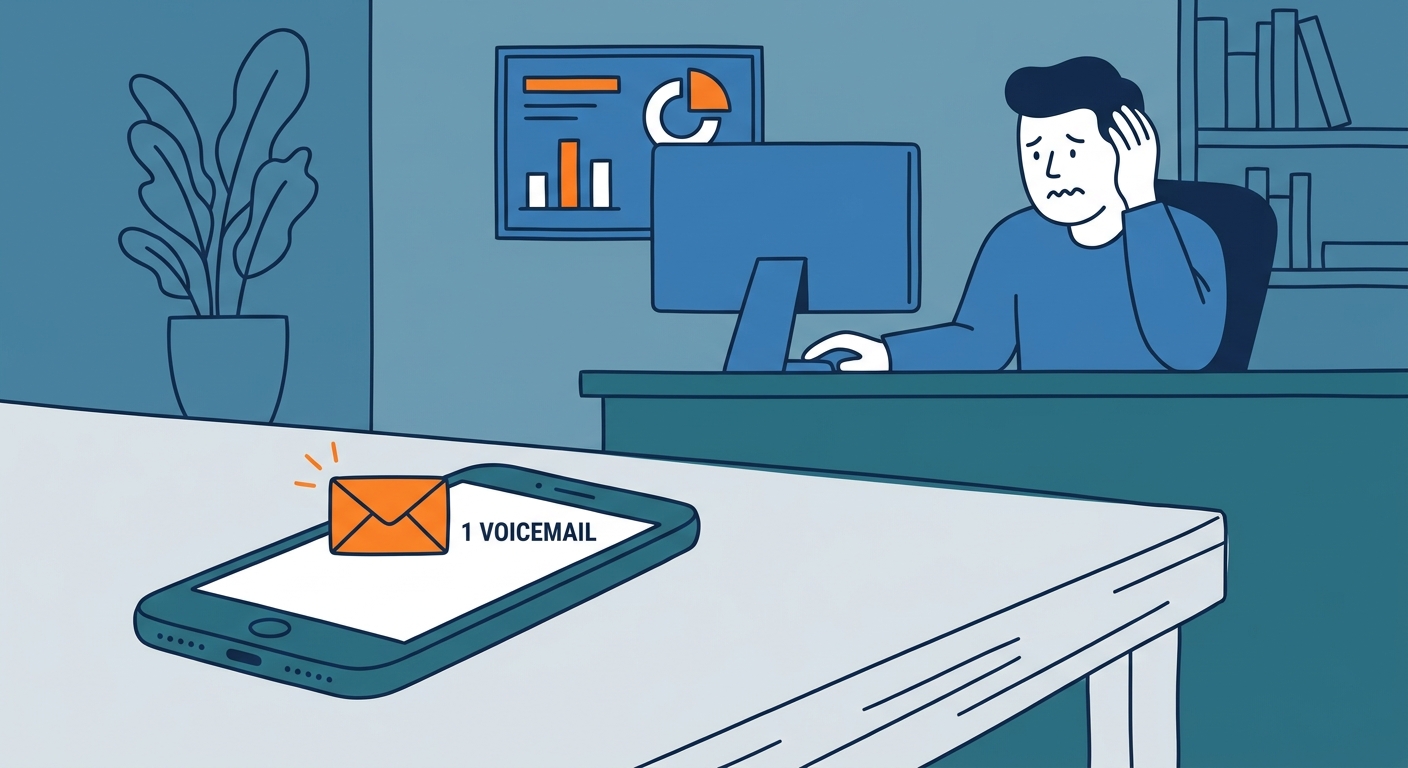
Every time your phone rings and hits voicemail, you aren’t just missing a chat. You’re handing a paycheck directly to your competitor.
In today’s hyper-fast economy, the voicemail inbox is a graveyard. It’s where potential clients go to die. Industry data shows that 62% of business calls go unanswered, flushing an estimated $126,000 in annual revenue down the drain per business.
If you’re still using a generic "leave a message after the beep" greeting, you’re basically telling your customers their time is worth less than the friction of waiting for a callback that might never happen. It’s time to stop the bleeding.
The Psychology of the "Now" Economy
We live in the age of instant gratification. When a customer calls you, they’ve already finished their research. They’ve moved past the "should I?" phase and into the "I need this solved right now" phase.
When they hit your voicemail, that momentum hits a brick wall. Research into the psychology of voicemail fatigue proves that 67% of callers hang up the second they hear that robotic prompt.
It’s not just impatience; it’s about value. A voicemail is a one-way street. The caller gives you their info, but they have no clue if you’ll ever actually listen to it. To them, the transaction is already a failure. Since they have a list of your competitors ready on Google, they don’t wait for you. They just call the next name on the list.
Calculating the True Cost of Your Silence
The financial hit of a missed call goes way beyond one lost lead. Think about your Customer Acquisition Cost (CAC). You’re dumping money into SEO, social ads, and referrals just to get the phone to ring. When you miss that call, you’re literally lighting your marketing budget on fire.
If you want to see exactly how much cash is leaking out of your business, you can calculate your specific revenue leakage here. Most owners are floored when they realize that a 10% bump in call capture can mean a five-figure jump in profit by the end of the year. Every missed call is a failure at the bottom of your sales funnel—the exact moment where intent is highest.
The Speed-to-Lead Revolution
If you think calling someone back the next morning is "good enough," you’re living in the past. The data on response times is cold and unforgiving: the impact of response time on lead conversion is massive, showing a 21x boost in qualification likelihood when you respond within five minutes versus waiting 30 minutes.
Five minutes? Why? Because that’s the window where the prospect is still emotionally locked into their problem. Once they move on to the next task, the "need" might remain, but the "urgency" to choose you evaporates. Three hours later, they’ve already booked someone else.
Implementing the Missed Call Text Back (MCTB)
The best way to stop the bleed is to automate the bridge between a missed call and a real conversation. Enter: Missed Call Text Back (MCTB).
The mechanics are dead simple. The moment your system logs a missed call, it fires off an automated, personalized SMS. The goal isn't to sound like a robot; it’s to acknowledge them immediately so they don’t go elsewhere. A killer "Anti-Voicemail" text sounds like this:
"Hi, this is [Name] from [Company]. Sorry I missed you—I’m with a client right now. How can I help? If you need a quick quote or want to book a time, just let me know!"
By shifting from an asynchronous voice message to a synchronous text, you’re meeting the customer exactly where they want to be.
The Modern Workflow: Human vs. AI vs. Hybrid
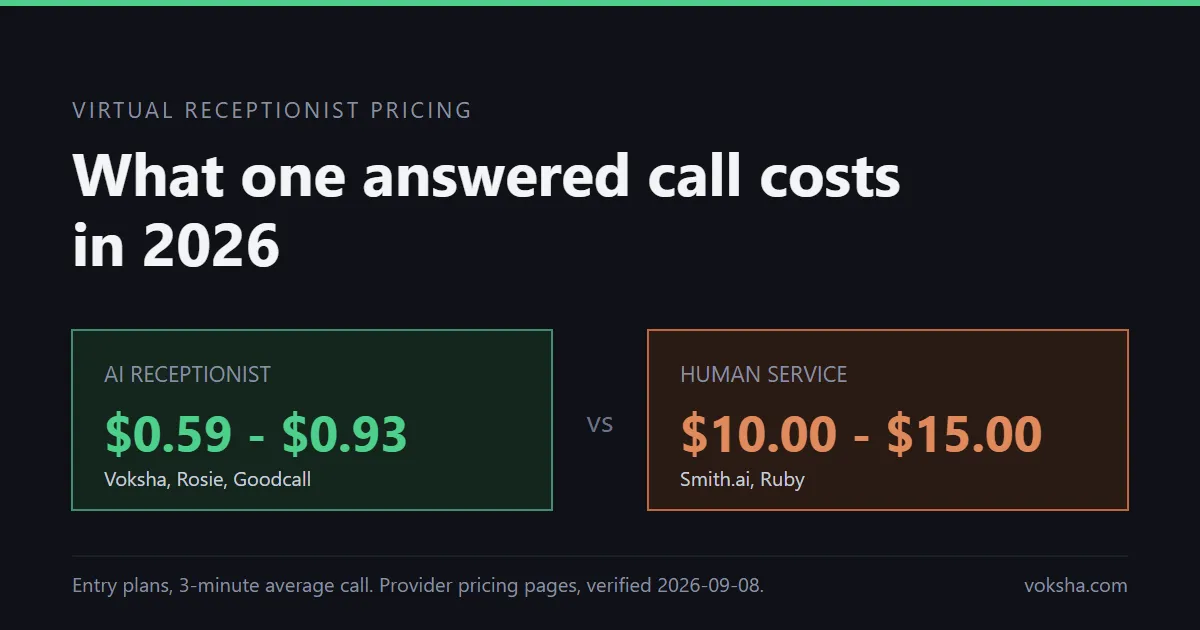
The way we handle inbound traffic has shifted. In the old days, you were stuck with the office manager or a pricey answering service. Now, AI agents provide a level of scale that humans just can't touch.
Human services are great for high-touch, complex stuff, but they’re expensive and they sleep. AI agents? They’re always on. They don’t take lunch, they don’t get cranky, and they can handle hundreds of calls at once. For industries like HVAC or legal, where speed is everything, a hybrid model—AI for the intake, humans for the close—is the gold standard. You can explore AI Receptionist solutions for your business to see how this works in the real world.
Step-by-Step: Setting Up Your First Automation
You don't need a PhD in computer science to build this. You just need to map out the journey.
- Define the Trigger: Set your system to mark a call as "missed" after 3-4 rings.
- The Immediate Response: Set your MCTB to fire within 10 seconds. Keep it human.
- The Intelligence Layer: Use an AI agent to read the intent. If they say "quote," send a link. If they say "emergency," alert a human.
How to Write an "Anti-Voicemail" Script
Your voicemail greeting is the most wasted real estate in your business. Stop recording long, boring messages about your office hours. Use that space to funnel them into a text.
- For Service Pros: "Hi! You’ve reached [Company]. I’m on a job. Please hang up and text 'QUOTE' to this number for an instant estimate, or visit [Website] to book a time right now."
- For Professional Services: "Thanks for calling [Firm]. We’re helping other clients. Please leave a message, or send a text to this line and we’ll get back to you within 30 minutes."
Give them an alternative. Respect their time. Don't force them into the black hole of a traditional inbox.
Turning Missed Opportunities into Revenue
Moving from passive to proactive isn't just a technical upgrade; it's a culture shift. Every call is an investment. Stop treating missed calls like bad luck and start treating them like a solvable problem. Audit your process this week. Listen to your own voicemail greeting and ask: If I were the customer, would I wait?
If the answer is no, it's time to automate.
Frequently Asked Questions
Why do 85% of customers hang up instead of leaving a voicemail?
Modern consumers prioritize instant gratification and efficiency. A voicemail is perceived as a "dead end"—a high-effort, low-reward task where there is no guarantee of a timely response. They prefer to hang up and call the next business on their list, which provides the immediate service they require.
How much does it actually cost my business to miss a single call?
The cost is calculated by multiplying your average lead value by your conversion rate. For most small businesses, the loss of a single lead can range from a few hundred to several thousand dollars in lifetime value. When you factor in the volume of missed calls over a year, this results in the significant revenue leakage that averages $126k annually.
Is an AI receptionist better than a human answering service?
It depends on your needs, but AI receptionists generally offer superior speed, 24/7 availability, and cost-efficiency. While humans provide a personal touch for complex inquiries, AI can handle high volumes, instant qualification, and CRM integration simultaneously, ensuring no lead is ever left waiting.
What is a "Missed Call Text Back" and how do I set one up?
An MCTB is an automated workflow that triggers an SMS message immediately after a phone system registers a missed call. It is typically set up through a CRM or a dedicated communication platform that integrates with your phone provider to identify missed events and fire a pre-written, helpful response.
How do I ensure my automated follow-ups remain HIPAA compliant?
If you operate in the medical or dental space, you must use communication platforms that offer end-to-end encryption and business associate agreements (BAAs). Ensure your automated follow-ups do not transmit Protected Health Information (PHI) unless the messaging platform is specifically certified for secure, HIPAA-compliant data transmission.