AI Receptionist vs. Virtual Receptionist: Which Is Right for Your Business in 2026?
TL;DR
- ✓ Combine AI automation and human empathy for a high-speed lead capture engine.
- ✓ Use AI receptionists for high-volume, repetitive tasks and instant 24/7 availability.
- ✓ Reserve human virtual receptionists for complex, high-empathy, and sensitive client interactions.
- ✓ Eliminate missed calls and reduce operational costs by deploying a tiered infrastructure.
The "human vs. machine" debate is dead. It’s a relic of 2022.
In 2026, nobody is asking if they should fire their staff to hire a bot, or vice versa. The real question—the one that actually matters for your bottom line—is how you weave both into a seamless, high-speed engine that catches every single lead without blowing your budget.
If you’re still making a highly-paid office manager juggle phones while they’re trying to do actual work, or if you’re paying a premium for a human to answer the same three FAQs that an algorithm could handle in a heartbeat, you’re losing money. Plain and simple. The winning move is a tiered infrastructure: use AI for the high-volume, repetitive grunt work, and save your human pros for the moments that require real empathy and complex judgment.
The 2026 Landscape: Why "Either/Or" is No Longer the Question
Remember the dark ages of Interactive Voice Response (IVR)? That clunky, robotic mess where you’d scream "REPRESENTATIVE!" at a handset until you were blue in the face? Thankfully, that’s over.
Today’s AI agents aren't just functional; they’re indistinguishable from humans in standard transactional chats. They use real-time sentiment analysis to read a caller’s mood and adjust their tone on the fly. Why? Because the market demands it. Consumers today have zero patience. Consumers today have little patience for slow responses.
That’s a massive gap. Your customers don't care if it’s 3:00 AM on a Sunday or a busy Tuesday afternoon; they expect answers, appointments, and support now. Trying to staff that with only humans is a one-way ticket to burnout and bankruptcy. But relying solely on scripts? You’ll alienate the clients who actually need a human touch.
What is the Fundamental Difference Between AI and Virtual Receptionists?
To build a winning front-office stack, you need to know where each tool shines.
An AI Receptionist is your automation powerhouse. It’s built for near-continuous uptime, instant scalability, and consistent data entry. It doesn't take lunch. It doesn't have a bad day. It can handle a thousand simultaneous calls without stuttering. It is the ultimate net for catching leads that would otherwise vanish into your voicemail.
A Virtual Receptionist, on the other hand, is a human-first solution. They bring the empathy, the nuance, and the high-level problem-solving that remains, for now, the exclusive domain of the human brain. If a client is in distress—say, a legal emergency or a sensitive medical issue—a human can read between the lines, offer genuine comfort, and perform the emotional triage that keeps a client loyal for a lifetime.
For a deeper breakdown of how these roles diverge and where they overlap with traditional answering services, read this AI Receptionist vs. Virtual Receptionist vs. Answering Service comparison.
How Do You Choose Between Speed and Empathy? (The Decision Matrix)
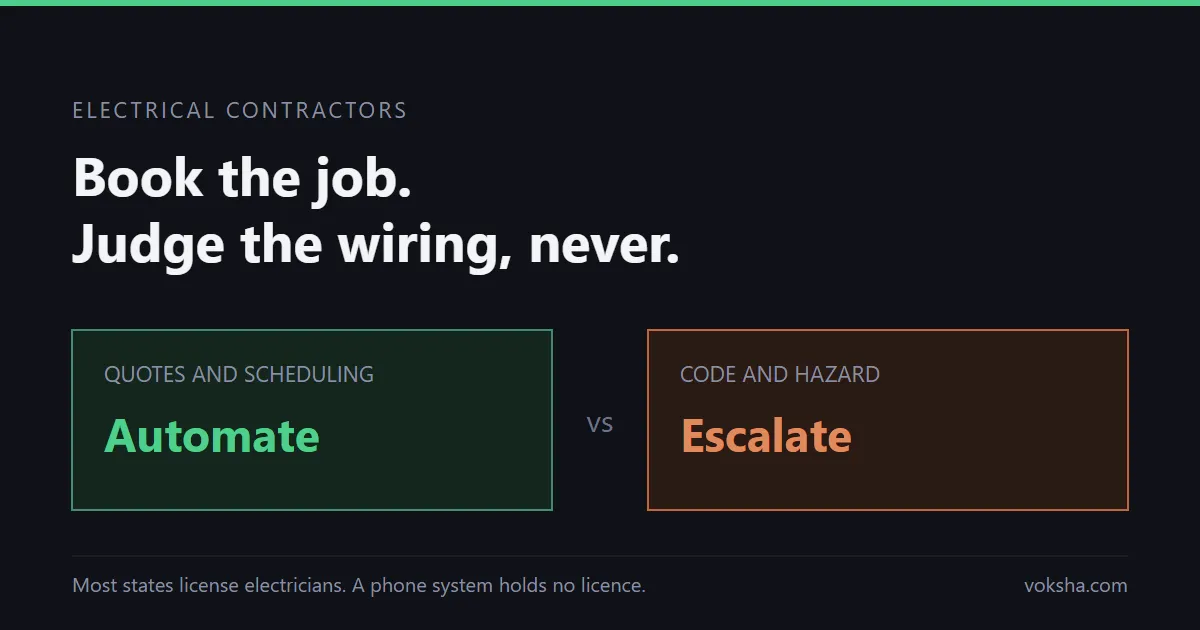
The "Empathy Gap" is your north star. If your calls are transactional—scheduling, address checks, price inquiries—the speed of an AI is objectively better. But if the call involves emotional weight or a messy, multi-step conflict? You need a human. Period.
The Decision Flow
If your front office is buried in routine scheduling, you’re hemorrhaging money on high-cost human time. Offloading routine intake to an AI agent frees up staff time that would otherwise go to repetitive calls, so your team can focus on the high-value client relations that actually move the needle.
Side-by-Side Comparison: The "True Cost" of Communication
Don't just look at the monthly invoice. Calculate the "true cost." A traditional in-house hire involves base salary, payroll taxes, benefits, recruitment costs, and the "turnover tax" when they inevitably move on. According to recent 2026 Small Business Tech Trends, businesses are ditching the headcount-heavy models for lean, tech-enabled stacks.
- AI Receptionist: Low, predictable monthly subscription, commonly under $300/mo (see Voksha's pricing comparison). Zero training. Instant onboarding.
- Virtual Receptionist: Variable hourly/per-call cost. Requires training on your protocols. High empathy, but finite bandwidth.
The math is brutal: if you’re paying an employee $25 an hour to spend 70% of their time answering status updates, you’re paying a massive premium for an automated task. See a full breakdown on the virtual receptionist pricing page.
Can You Really Have Both? The Rise of the Hybrid Model
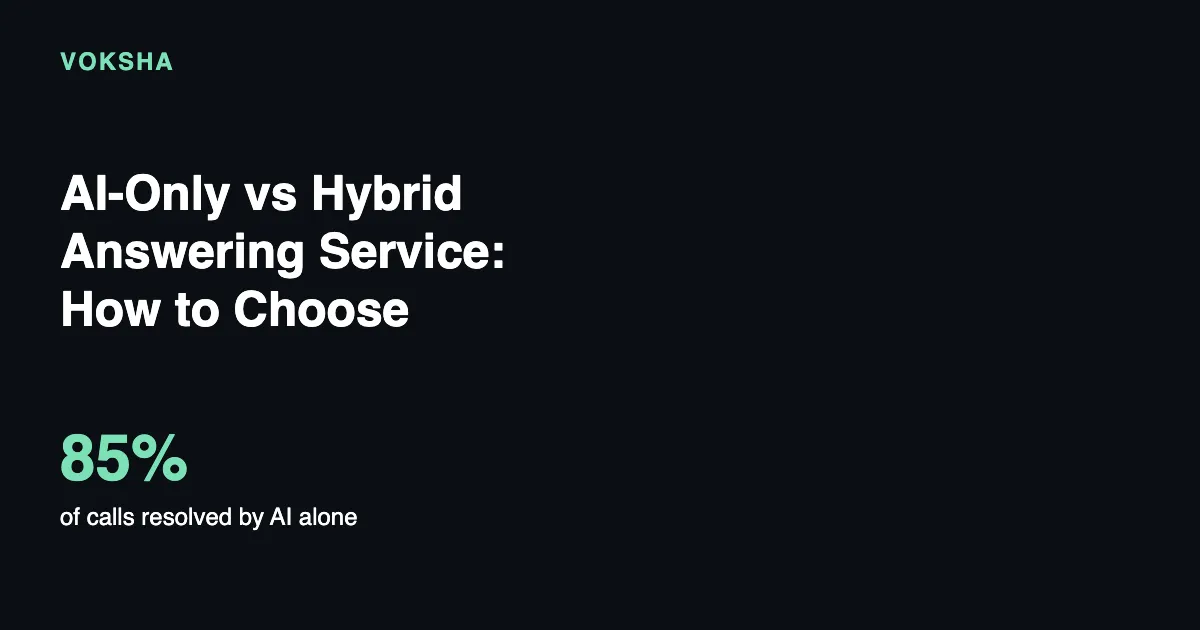
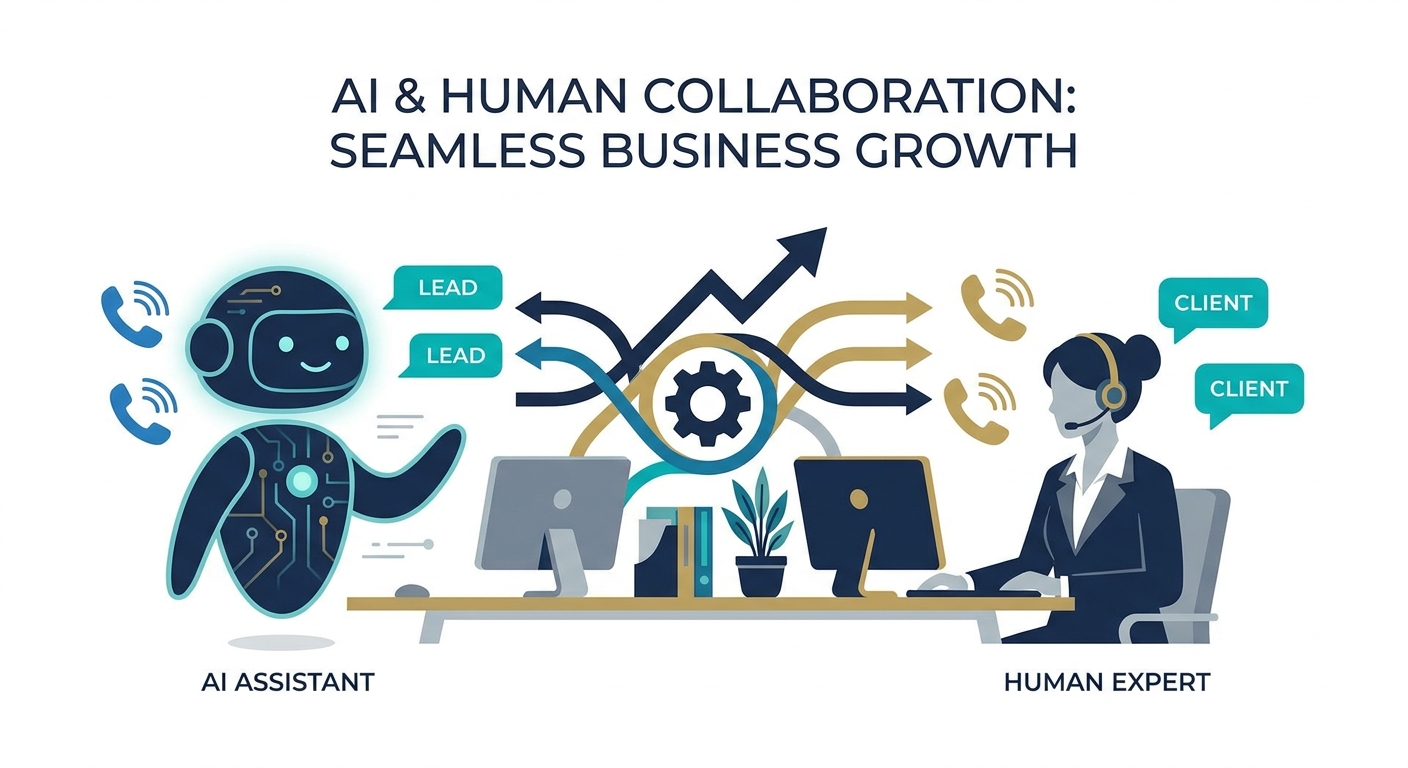
The best businesses in 2026 are playing a hybrid game. They use AI as the "first line of defense." The AI handles the mundane—data collection, CRM sync, and basic scheduling. The second the AI detects confusion, anger, or a direct request for a human, it performs a "warm transfer."
The Hybrid Handoff
This ensures no call hits a voicemail, yet no high-value client is ever forced to argue with a machine. The secret sauce here is bidirectional CRM integration. If your phone system doesn't talk to your HubSpot or Salesforce account in real-time, you aren't running a modern business—you’re running a dusty filing cabinet.
What Are the Compliance and Security Considerations for 2026?
For legal and medical providers, the conversation around AI often hits a wall: security. In 2026, the question isn't "is it secure?"—it's "is it certified?" If your AI telephony isn't HIPAA-compliant, it doesn't belong in your office. You need end-to-end encryption and signed Business Associate Agreements (BAAs). Check out the latest HIPAA Compliance in AI Communications guidelines to make sure your automated intake doesn't become a liability nightmare.
How to Integrate These Tools Into Your Existing Workflow
Don't fall for the "rip and replace" trap. You should be able to keep your existing business number while routing calls through a smart backend. Start by auditing your call logs. What are the top five reasons people call you? If they’re things like "What are your hours?" or "Can I reschedule?", you’ve found your AI candidates. Once you identify those, you can start a phased migration. For a deeper look at the tools that actually work, check out our 10 Best AI Receptionists for 2026.
Related Voksha Resources
- AI receptionist for small business
- Answering service for small business
- 10 Best AI Receptionist Software for Small Businesses in 2026
- How to Set Up an AI Receptionist for Small Business: The 2026 Setup Guide
Frequently Asked Questions
Will my customers be frustrated if they speak to an AI instead of a human?
Not if the AI is fast and accurate. Customers get frustrated when they’re stuck in a loop or forced to repeat themselves. An AI that resolves a simple request in seconds is often seen as a better experience than waiting on hold for five minutes to reach a busy human.
How long does it realistically take to implement an AI receptionist?
Modern AI solutions are largely "plug and play." Depending on how deep your CRM integrations go, most businesses can be up and running in a matter of hours, not weeks.
Can an AI receptionist handle complex intake forms and CRM updates?
Yes. Modern AI agents are built to map data points directly into your CRM. They can verify information, update records, and trigger automated follow-up emails in real-time.
What happens if the AI agent encounters a question it cannot answer?
This is where the "Hybrid Model" shines. The AI knows its own limits. If a query falls outside its training, it seamlessly initiates a warm transfer to a human or schedules a callback, ensuring the client is never left in the dark.
Is an AI receptionist significantly cheaper than a traditional human answering service?
Generally, yes. Because AI doesn't have the overhead of human labor, it typically costs a fraction of an answering service while providing 24/7 coverage that a standard service often limits by time zones or call volume.