Virtual vs. AI Receptionist: Which One Saves More Money in 2026?
TL;DR
- ✓ AI receptionists offer significantly higher cost-efficiency than human staff or virtual services.
- ✓ Human receptionists incur high overhead costs including taxes, benefits, and training time.
- ✓ Modern AI agents provide natural, human-like voice interaction for a fraction of the cost.
- ✓ Automating intake eliminates missed calls and prevents revenue loss from busy signals.
- ✓ Small businesses can scale operations rapidly by switching to low-cost AI phone solutions.
Stop looking at the wrong side of the ledger. If you’re still debating whether to hire a human or sign up for a virtual answering service, you’re missing the point. In 2026, it’s not about who picks up the phone; it’s about the cost of friction.
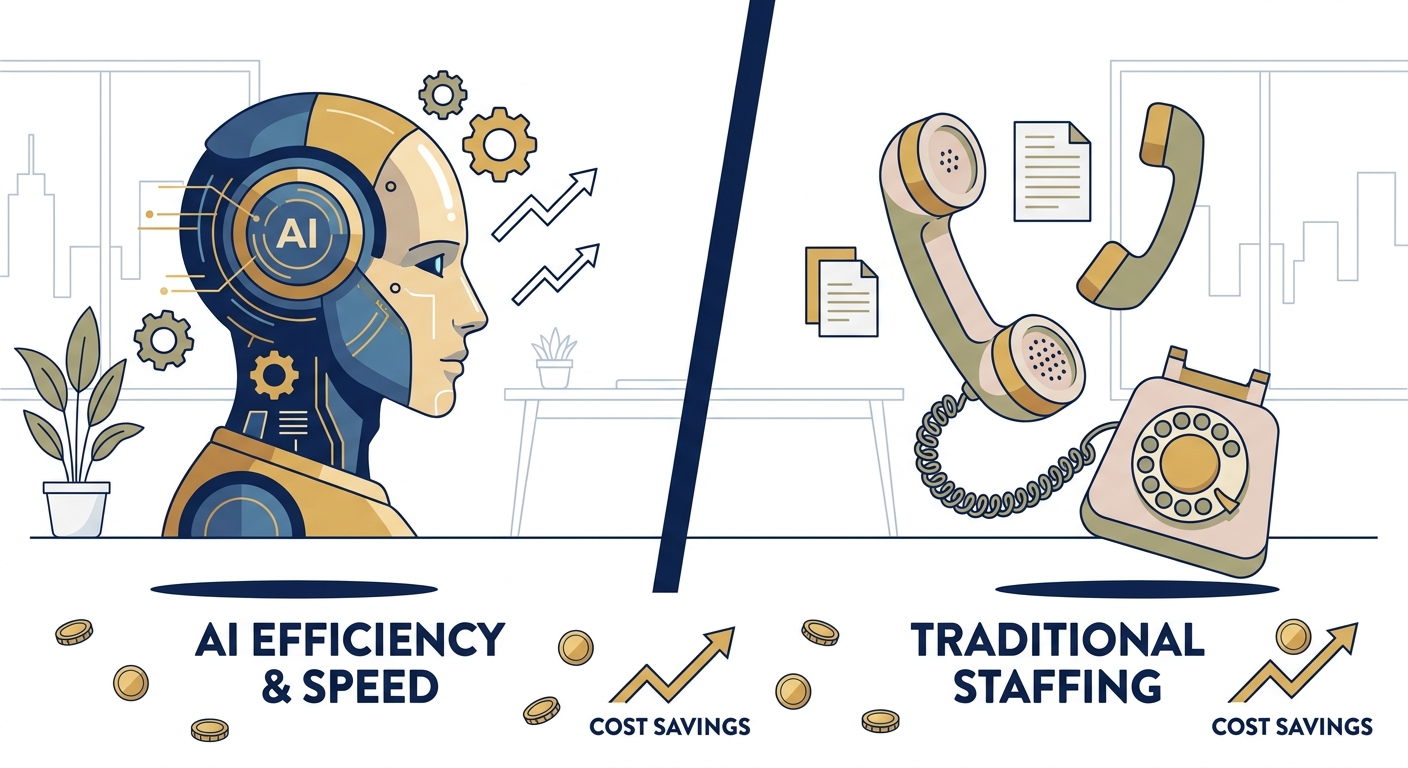
AI receptionists have officially won the war on cost-efficiency. They offer a price-to-performance ratio that makes traditional staffing look like a relic from the fax-machine era. Sure, there’s always a place for high-touch, bespoke concierge work. But for 90% of small businesses? AI isn't just a "nice-to-have" experiment anymore. It’s a foundational financial requirement.
The 2026 Landscape: Why "Old-School" Staffing is Hurting Your Bottom Line
The rules of engagement have changed. We’ve moved away from manual, error-prone call handling toward automated intelligence that doesn't sleep, doesn't need a lunch break, and never has a "bad day." According to the 2026 AI Receptionist Market Report, the sector is seeing a 24% CAGR. Why? Because business owners are finally waking up to the fact that paying a human to handle routine scheduling is a catastrophic misallocation of capital.
When you hire a person, you aren’t just paying a salary. You’re paying for the overhead of human fragility. You’re paying for training time, turnover costs, payroll taxes, and those inevitable moments where the phone rings while your staff is at the water cooler or drowning in a backlog of emails.
By 2026, the tech has matured. AI agents can now mimic the nuance of a polite, professional human voice so effectively that callers often hang up without realizing they just spoke to a machine. If you’re still relying on manual call intake, you’re paying a massive premium for a service that technology can now provide for pennies on the dollar—with higher reliability, to boot.
What are the Real Numbers? AI vs. Virtual vs. In-House
To see the truth, you have to look at the "loaded cost" of human labor. A full-time, in-house receptionist in the U.S. costs a business roughly $53,700 per year. That includes salary, benefits, payroll taxes, office space, and the software licenses they need just to do their job.
Now, compare that to an AI receptionist. Most enter the market between $30 and $49 per month.
The math isn't just different; it’s transformative. For the price of one single hour of a human receptionist’s time, an AI system can handle thousands of calls across an entire month. If you want to see how these costs shift your annual budget, check out our Technical ROI Analysis to see the specific break-even points for various business sizes. The gap between a $1,000-a-month virtual answering service and a $40-a-month AI agent isn't just about the bank account—it’s about how fast you can scale your operations without breaking them.
How Much Revenue Are You Losing to Missed Calls?
Every missed call is a leak in your revenue bucket. A lot of business owners brush off missed calls as a minor annoyance, but they’re actually a direct hit to your bottom line. It’s simple math: (Missed Calls per Month) x (Lead Conversion Rate) x (Average Customer Value).
Let’s say you miss 20 calls a month. Your conversion rate is 20%, and your average customer is worth $500. You’re bleeding $2,000 in revenue every single month. That’s $24,000 a year gone—poof.
As noted in this Forbes analysis on the importance of customer service, speed is the single biggest predictor of who gets the sale. When a potential customer calls and hits your voicemail, they don’t think, "I’ll wait for a callback." They think, "I’ll call the next guy." AI eliminates the wait, ensuring every inquiry is captured, qualified, and scheduled before the competition even picks up.
How Does the "AI-First" Hybrid Model Work in Practice?
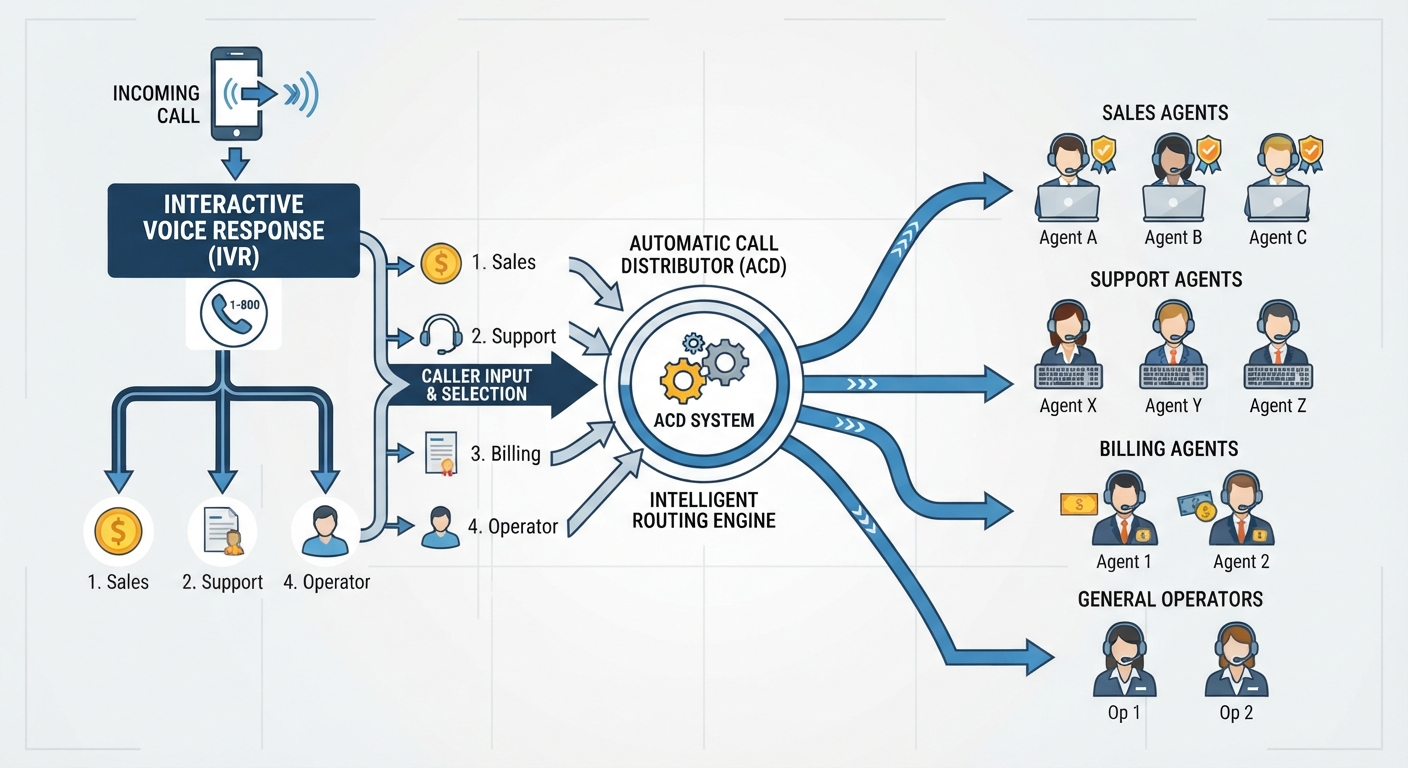
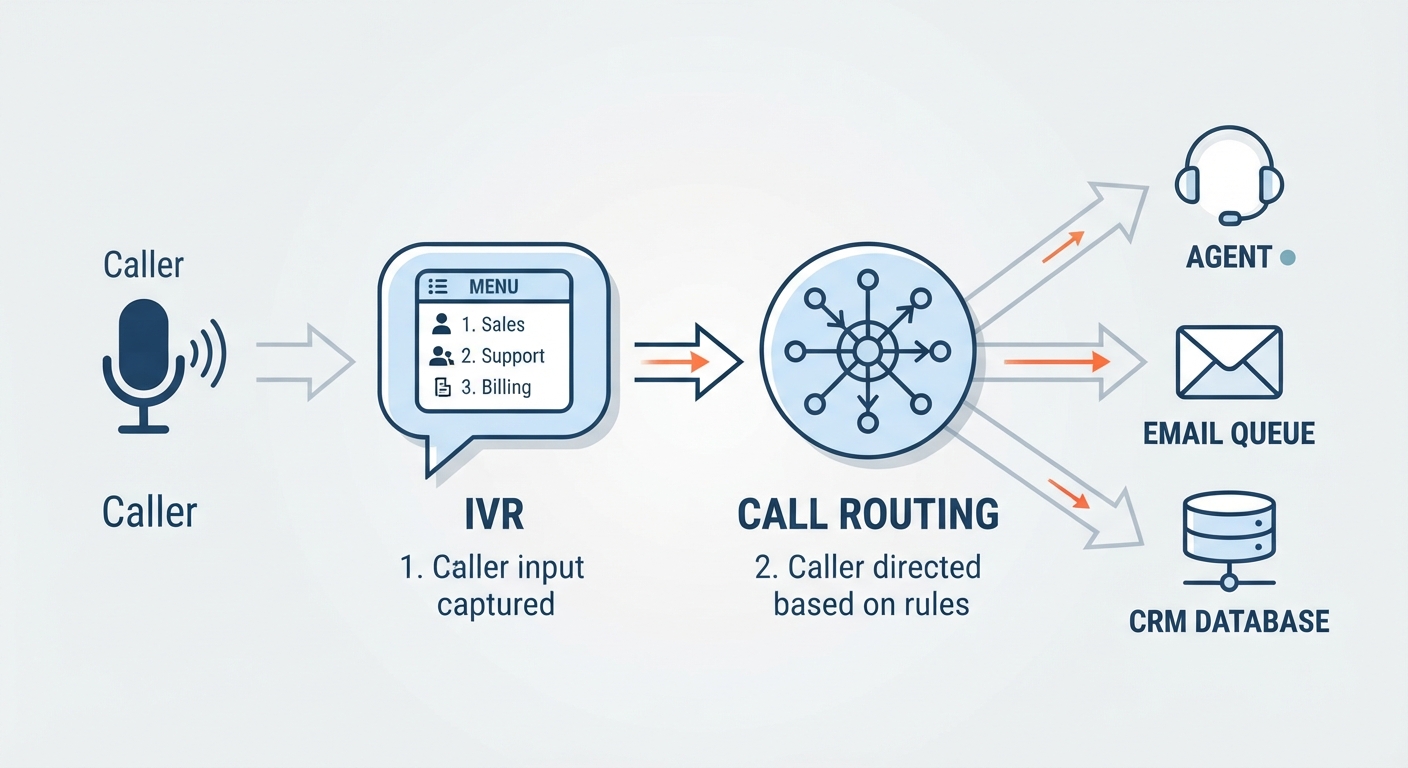
The smartest businesses in 2026 aren't choosing between AI and humans; they’re using the 80/20 rule. Let the AI handle the 80% of routine, repetitive tasks—FAQs, booking, collecting intake info, routing—while your human staff focuses on the 20% that requires deep emotional intelligence or complex negotiation.
This hybrid model keeps the "human touch" where it actually matters without paying human wages for tasks a script can do perfectly. By using AI as your front-line defense, you ensure your staff is only interrupted for calls that truly need their expertise. Their productivity goes up, and their burnout rate goes down.
Is AI Ready for Sensitive Industries? (Medical, Legal, Trades)
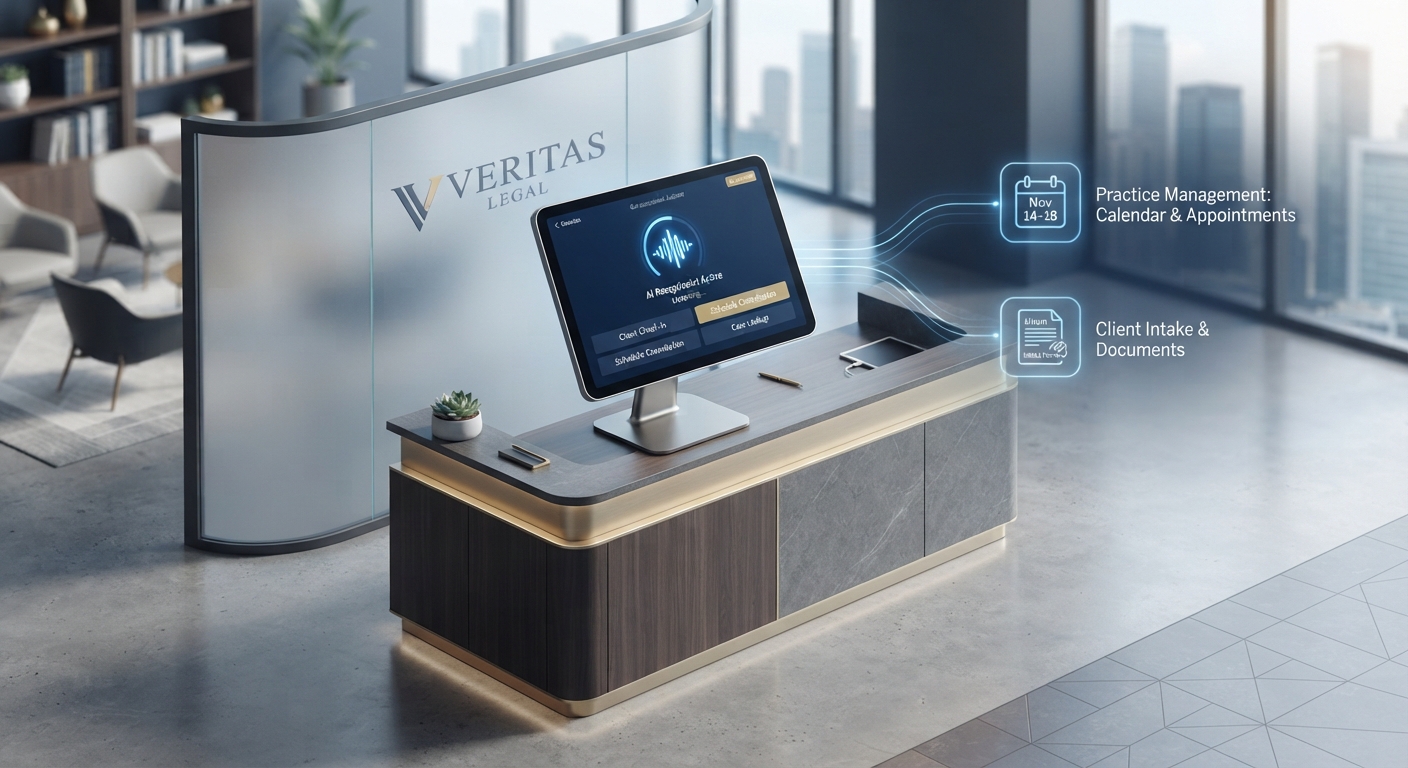
Trust was the biggest hurdle to AI adoption, especially in industries where data privacy is non-negotiable. But by 2026, the landscape has completely shifted. We now have robust, HIPAA-compliant AI agents built specifically for medical and legal practices. These systems use enterprise-grade encryption and strictly adhere to the HHS guidelines for security.
If you’re in a sensitive industry, you no longer have to compromise on compliance to get the benefits of automation. Specialized AI vendors now provide Business Associate Agreements (BAAs) as a standard part of onboarding. Your data is often safer with these systems than it is with a human receptionist who might accidentally leave a paper chart on a desk.
Which Solution is Right for Your Business? (A Decision Framework)
It comes down to volume and complexity. If you’re a high-volume trade business that needs to book appointments 24/7, AI is the clear winner. If you’re a high-end boutique law firm, you might prefer a hybrid approach where AI captures the data and a human partner provides the initial consultation. For those looking to explore the top-tier tools in the market, our guide to the 10 Best AI Receptionists for Small Business in 2026 provides a breakdown of which platforms excel in specific niches, from medical scheduling to legal intake.
Implementation: How Fast Can You Deploy?
The "technical barrier" excuse is dead. In 2026, deploying an AI receptionist is as easy as setting up an email account. Most platforms follow a simple "5-minute setup" flow:
- Connect your number: Port your existing business line or set up a new one through the platform.
- Upload your knowledge base: Drag and drop your FAQ document, service list, or pricing sheet. The AI eats it up and learns your business instantly.
- Define your workflows: Tell the AI what to do when someone wants to book (e.g., "Check my Google Calendar and confirm the slot").
- Test and Go: Make a test call, experience the flow, and toggle it to "Live."
You don't need a developer. You don't need an IT team. You just need to know what you want your business to say.
Debunking the Top 3 Myths About AI Receptionists
Myth 1: "AI sounds robotic." Modern Natural Language Processing (NLP) has evolved lightyears beyond the stuttering, metallic voices of the past. Today’s AI agents use generative voice engines that modulate tone, pause for effect, and even handle "umms" and "ahhs" with natural timing. They are, for all intents and purposes, indistinguishable from a human in a professional setting.
Myth 2: "AI can't handle complex questions." This was true five years ago. Today’s agents are powered by Large Language Models (LLMs) that handle context-aware conversations. If a customer asks a follow-up about your services, the AI doesn't just read a script; it understands the intent and provides a coherent, relevant answer based on the documents you’ve provided.
Myth 3: "It's too expensive to set up." When you compare the cost of an AI setup—which is usually included in your subscription—to the cost of recruiting, interviewing, hiring, and training a human employee, the comparison is laughable. You are saving thousands in direct hiring costs and months of productivity lost to the "onboarding curve."
Frequently Asked Questions
Can an AI receptionist really handle complex questions, or will it just frustrate my customers?
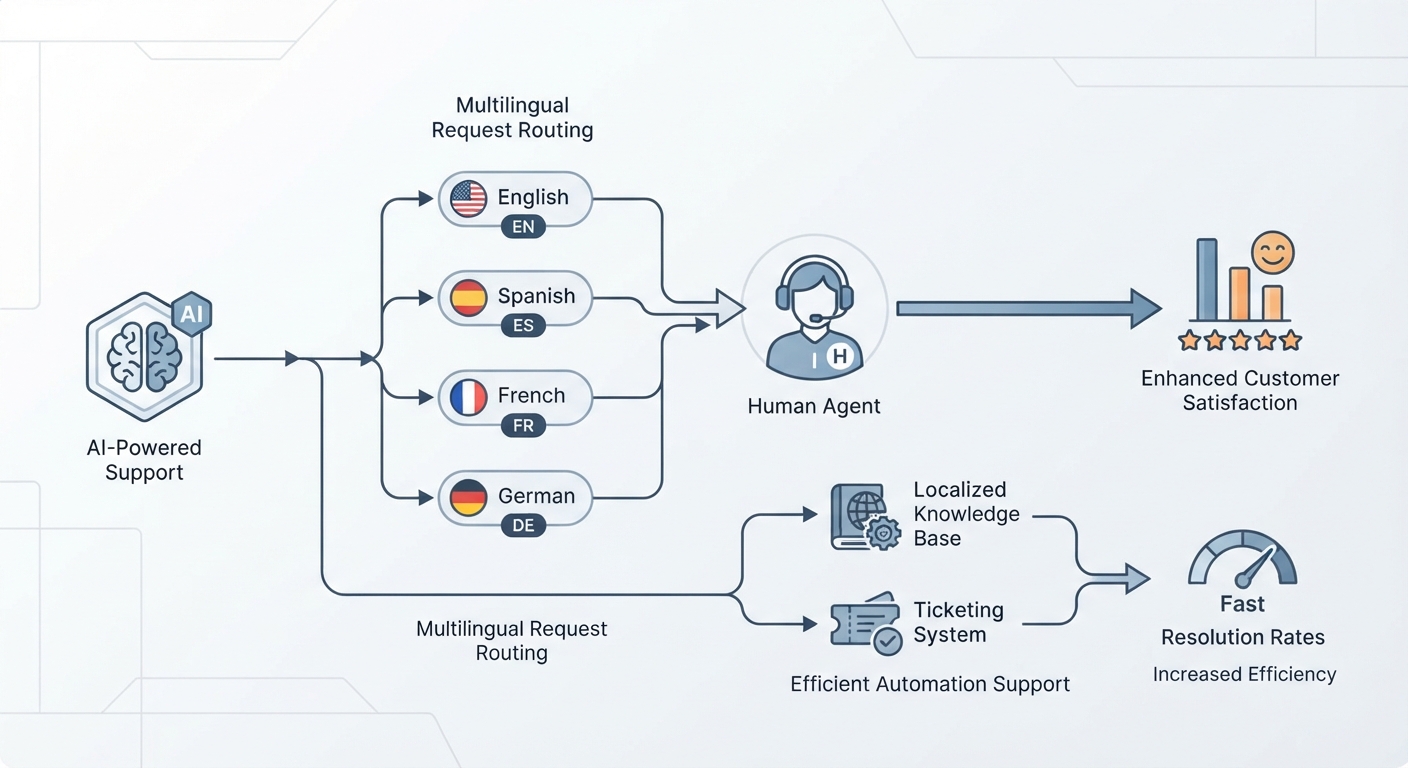
AI receptionists are designed with "confidence scores." If the AI encounters a question it is not 100% sure about, it doesn't try to guess. Instead, it triggers a fallback protocol: it might offer to take a message, schedule a callback, or perform a warm transfer to a human specialist. This ensures your customers always get the help they need without feeling like they are talking to a brick wall.
Is there a significant difference in set-up time between an AI system and hiring a virtual receptionist?
Yes, a massive one. Hiring a human requires weeks of sourcing, interviewing, and training. An AI receptionist is ready to go in minutes. You can register, upload your business details, and start taking calls before your lunch break is over.
How do I ensure my AI receptionist is HIPAA compliant for my medical practice?
Look for providers that explicitly offer a BAA (Business Associate Agreement). Ensure that the platform uses end-to-end encryption for both voice data and text transcripts. By selecting a vendor that specializes in medical or legal tech, you ensure that the system architecture is built from the ground up to meet strict privacy standards.
What happens if a caller asks for something the AI doesn't know?
The system is built for graceful failure. If a caller asks a question outside of your business parameters, the AI is programmed to apologize, explain that it doesn't have the information, and immediately pivot to a helpful action—like routing the caller to a voicemail, sending them a link to your website, or initiating a callback request for your team to handle.