Virtual Receptionist: What It Is, How It Works, What It Costs in 2026

TL;DR
- A virtual receptionist answers your business calls remotely via human agents, AI, or both. See how it works and what it costs in 2026, from $14 to $1,725 a month.
$250 to $1,725 a month is what a live virtual receptionist plan costs at Ruby in 2026, while an AI receptionist covers the same round-the-clock phone answering for $14 to $99 a month (Voksha pricing, verified 2026-09-02). That gap is the whole reason business owners are rethinking the front desk right now. A virtual receptionist answers your business phone remotely, either through trained human agents, AI voice software, or a hybrid of both, then greets callers, answers routine questions, qualifies leads, and books appointments or transfers urgent calls to your team. You keep your existing number and pay a monthly plan instead of a front-desk salary.
Virtual receptionist: a remote call-answering service, staffed by trained human agents, AI voice software, or a blend of the two, that picks up a business's inbound phone calls, greets callers, answers common questions, qualifies leads, and books appointments or routes urgent calls, without an in-house front-desk employee.
Here is how the three types compare on the questions owners actually ask, availability, best fit, and price:
| Virtual Receptionist Type | Availability | Best For | Typical Monthly Cost |
|---|---|---|---|
| Live / human | Business hours, or 24/7 at a premium | Complex, high-touch, or sensitive calls | $250 to $1,725+ (Ruby, 2026) |
| AI | 24/7 built in, every day | High volume, booking, after-hours coverage | $25 to $300 (Voksha $14 to $99) |
| Hybrid | 24/7 with human escalation | Mixed call complexity | Roughly $150 to $800 |
About This Article
- Researched and written: July 2026. Last fact-checked: 2026-09-02.
- Author hands-on experience: no. This is an educational guide; every pricing figure comes from a named provider's own page or a dated market roundup.
- AI assistance: used for drafting, reviewed and edited by the Voksha Content Team.
- Conflicts of interest: this guide is published by Voksha, which offers an AI receptionist; recommendations reflect the stated criteria, and live and human options are presented fairly for readers who need them.
- Sponsorship: none.
- All pricing was verified on 2026-09-02 against each provider's public pricing page.
Key Takeaways
- A live (human) virtual receptionist typically costs $250 to $1,725 a month at Ruby, scaling only with the number of included minutes (Ruby plans and pricing, verified 2026-09-02).
- Smith.ai's human receptionist plans start at $292.50 a month for 30 calls, about $9.75 per call (Smith.ai receptionist pricing, verified 2026-09-02).
- AI virtual receptionists run roughly $25 to $300 a month flat, with Voksha at $14 for Starter and $99 for Premium (Voksha pricing, verified 2026-09-02).
- 32% of business calls arrive outside 9-to-5 weekday hours and 23% land on weekends, so a receptionist without 24/7 coverage misses about a quarter of demand (Voksha After-Hours Economy Report, 2026).
- Of the callbacks Voksha recovers, 86-90% connect and convert (Voksha After-Hours Economy Report).
- Live services usually bill per minute or per call (commonly $1.00 to $3.50 a minute), while AI receptionists charge a flat monthly rate no matter how many calls come in (Alice Receptionist virtual receptionist cost guide, 2026).
What Is a Virtual Receptionist?
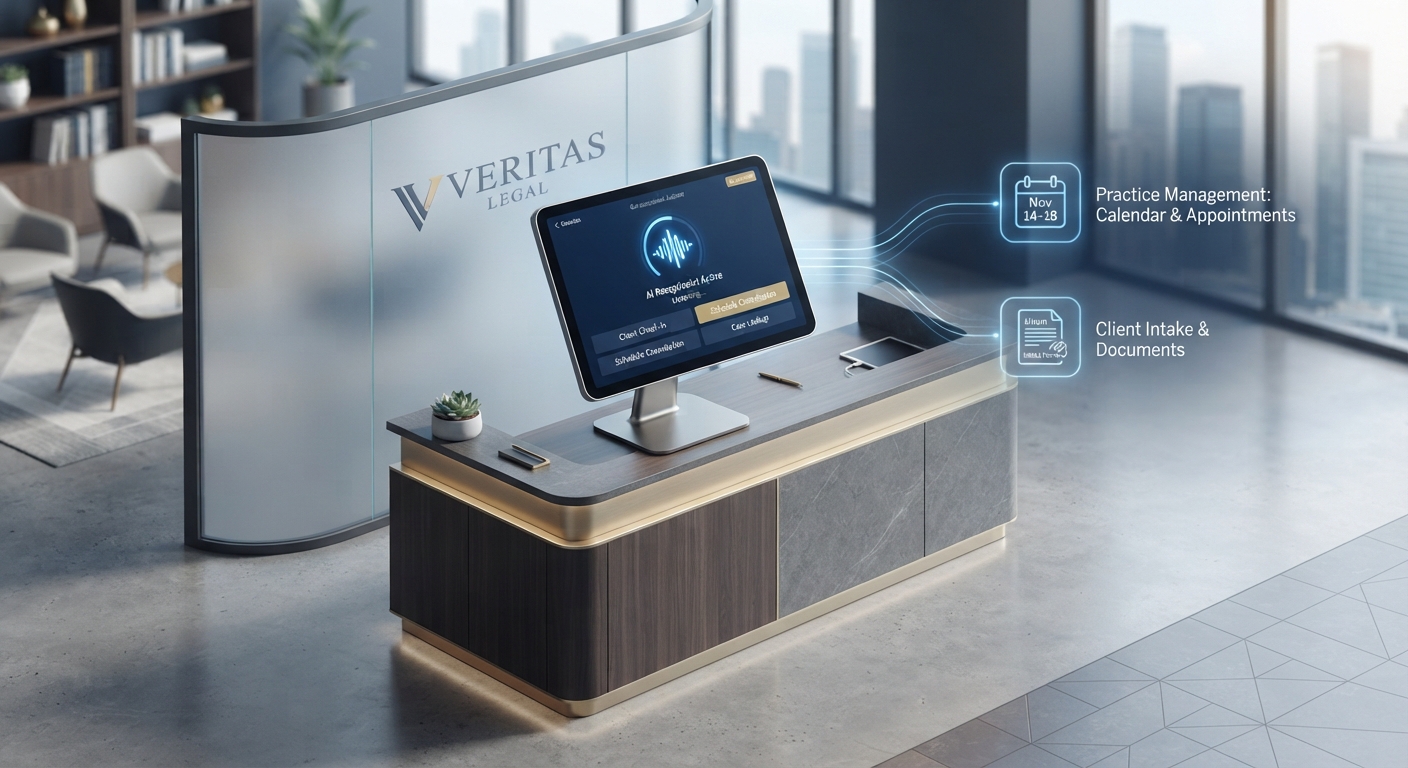
A virtual receptionist is a remote service that answers your business calls and handles front-desk tasks without sitting in your office. Instead of hiring someone to staff a physical desk, you route your phone line to a provider whose human agents, AI software, or both pick up on your behalf.
The category covers a wider range than most owners expect. At one end sits a traditional call-answering service that takes a message and emails it to you. At the other sits an AI voice agent that qualifies the caller, checks your calendar, and books the appointment before the call ends. What unites them is the model: someone (or something) other than an in-house employee is the voice a caller hears when they dial your number. The distinction between a virtual receptionist, a plain answering service, and an AI receptionist gets blurry fast, which is why it helps to read a side-by-side breakdown like Voksha's guide on an AI receptionist versus a virtual receptionist versus an answering service before you shop.
The reason the category exists at all is simple math. According to the Voksha After-Hours Economy Report, built on more than 1,000,000 Voksha calls, 32% of calls arrive outside 9-to-5 weekday hours and 23% at weekends, and 86-90% of recovered callbacks go on to call a competitor. A missed call is rarely a delayed sale. It is usually a lost one.
How Does a Virtual Receptionist Service Work?
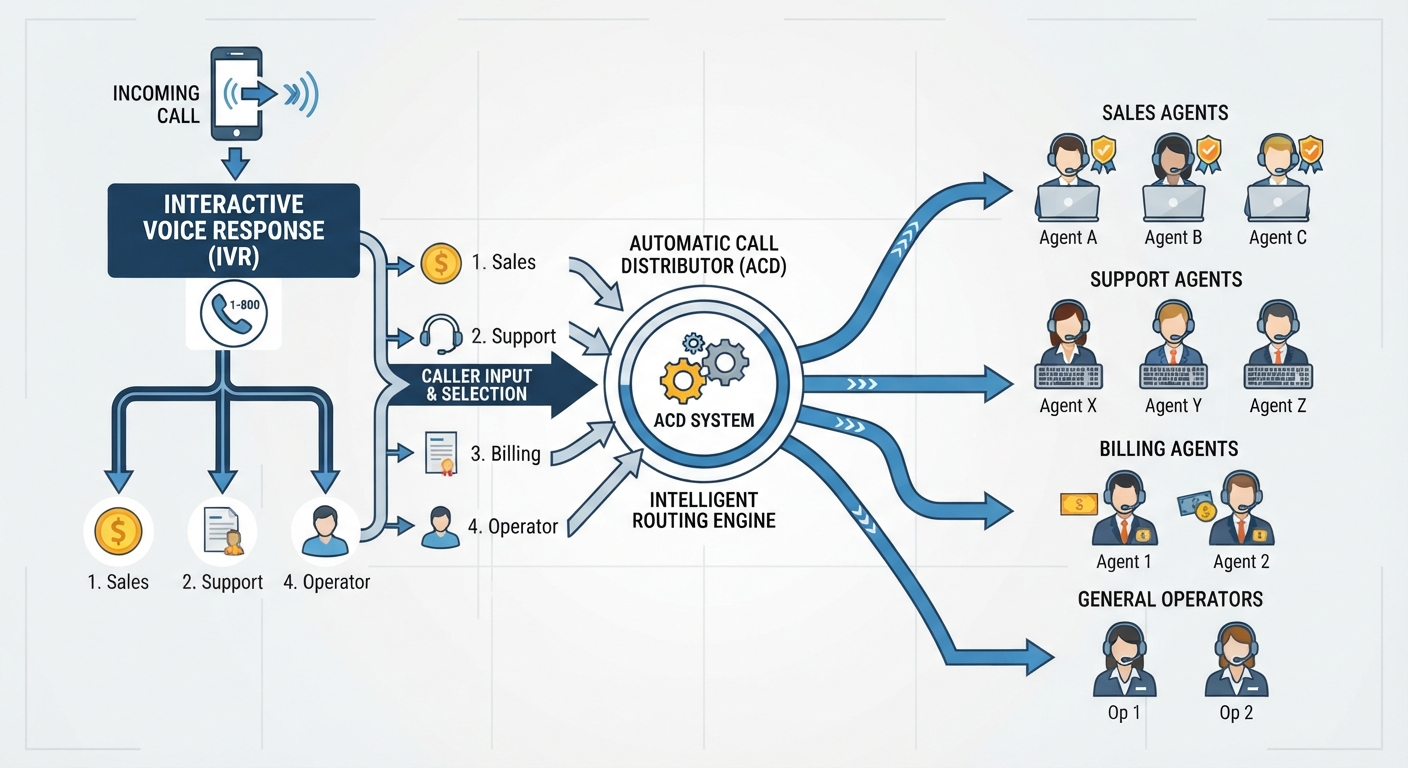
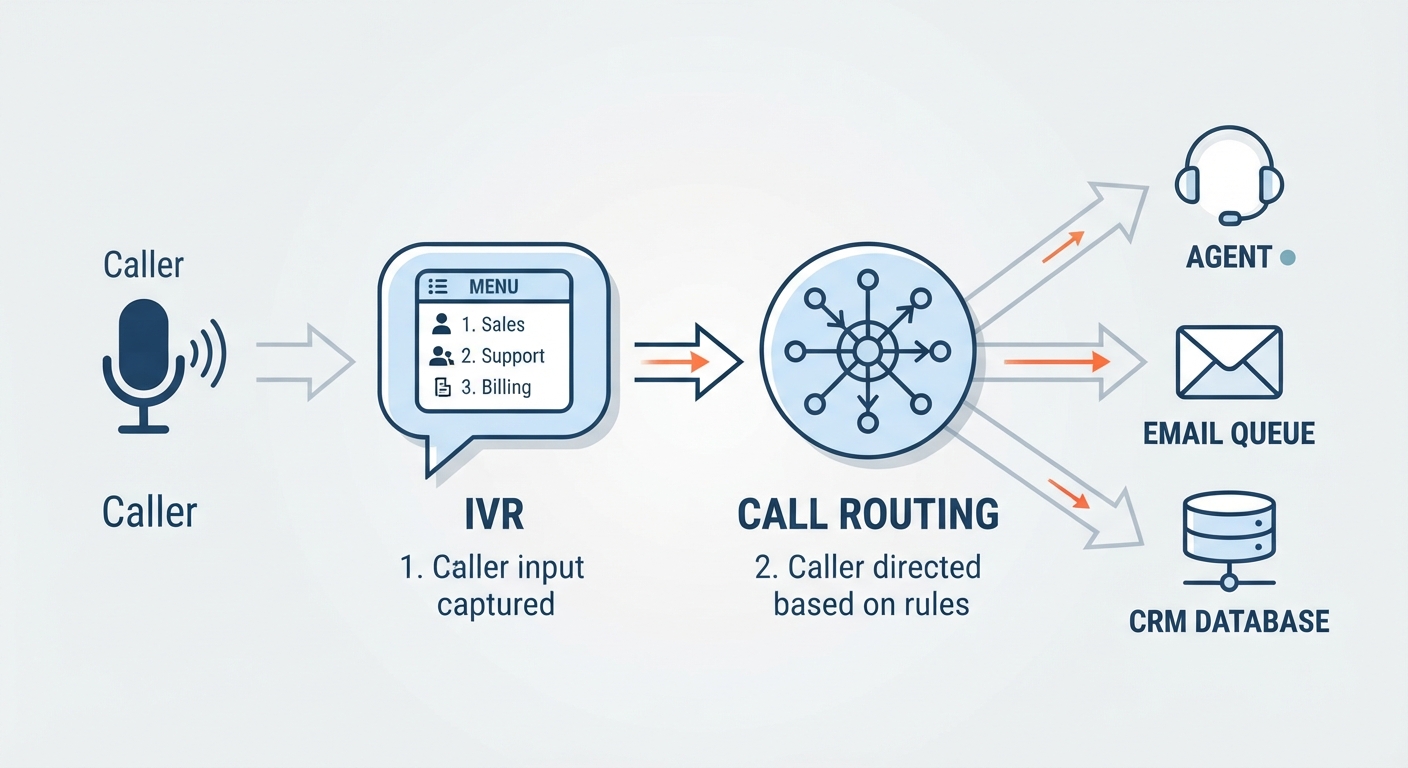
A virtual receptionist works by forwarding your existing business number to the provider, who then answers under your company name using a script or set of rules you define. You do not change your number, reprint anything, or install hardware. You point your line, hand over your greeting and a few instructions, and the service takes it from there.
The setup is a configuration task rather than an installation. You give the provider your business name, hours, common questions, and what to do with different call types: which calls to book, which to transfer, which to take a message on. Human services train their agents on that script; AI services encode it as rules and connect to your calendar. From then on, a caller who dials your number reaches a receptionist who greets them, works through your instructions, and either books them, routes them, or logs the call for follow-up. If you want the mechanical layer of how the speech, routing, and booking steps fit together on the AI side, Voksha's explainer on how AI receptionists work walks through the full flow. The practical upshot for an owner is that calls get answered whether or not anyone on your team is free.
What Are the Three Types of Virtual Receptionists?
There are three types: live (human), AI, and hybrid. They differ on who answers the call, how many calls they can handle at once, and how they are priced. Picking the right one comes down to how complex your calls are and how much of your volume lands outside office hours.
A live virtual receptionist uses trained human agents, usually from a shared pool, who answer under your brand. Humans handle nuance, emotion, and unusual requests well, which matters for a law firm intake or a sensitive medical call. The trade-offs are cost and capacity: agents can only take one call at a time, most plans meter minutes, and true 24/7 human coverage carries a premium.
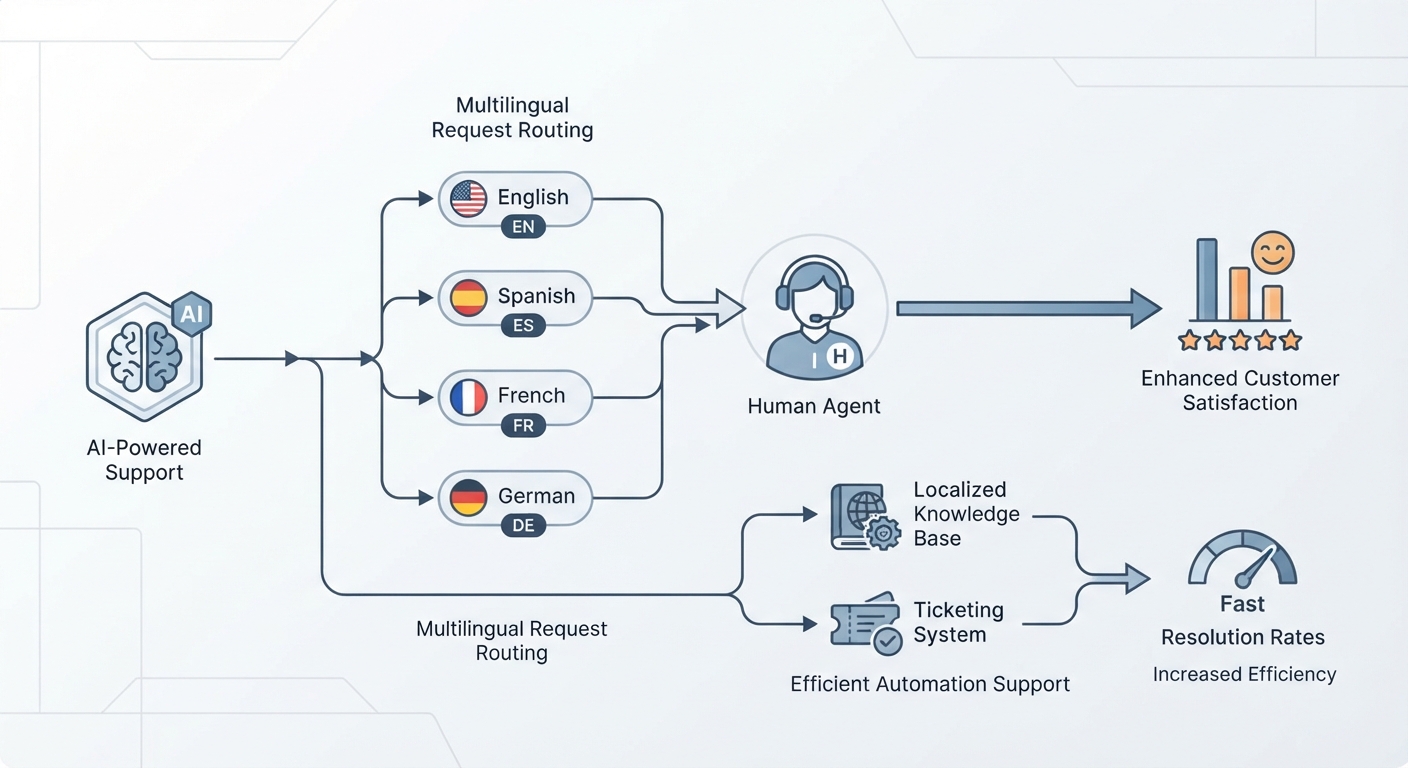
An AI virtual receptionist uses a voice agent that understands natural speech and completes tasks like booking and qualifying. It answers every call instantly, handles unlimited simultaneous calls, and runs 24/7 by default with no night or weekend surcharge. Voksha's agent, for example, answers in under 200 milliseconds and has handled more than 10,000 calls at 99.9% uptime. The honest limitation is that a genuinely unusual or emotionally charged call is still better served by a person, which is why good AI systems transfer to a human when the situation calls for it. For a closer look at where each fits, see the deep dive on a live versus an AI virtual receptionist.
A hybrid blends the two: AI takes routine and after-hours calls, and a human steps in for complex ones. It can be a sensible middle path for a business with a genuinely mixed call profile, though you pay for both layers.
How Much Does a Virtual Receptionist Cost in 2026?
Pricing splits cleanly along the three types. Live human services run from a few hundred dollars a month to well over a thousand; AI receptionists charge a flat $25 to $300 a month; hybrids sit in between. What you pay tracks two things: your call volume and whether coverage runs 24/7.
For live human services, the two most-cited providers set the benchmark. Ruby's call plans run from a Starter tier at $250 a month for 50 receptionist minutes up to $1,725 a month for 500 minutes, with every plan carrying the same features and overage billed around $4.70 per minute (Ruby plans and pricing, verified 2026-09-02). Smith.ai prices per call instead of per minute, starting at $292.50 a month for 30 calls, roughly $9.75 a call, and scaling to $1,950 a month for 300 calls (Smith.ai receptionist pricing, verified 2026-09-02). Across the market, live per-minute rates commonly land between $1.00 and $3.50 a minute (Alice Receptionist, 2026). The pattern is consistent: with a human service, the more you get answered, the more you pay.
For AI receptionists, pricing is flat and volume-independent. Market plans generally run $25 to $300 a month, and Voksha sits in that band at $14 for Starter and $99 for Premium, with a custom Enterprise tier for high-volume and multi-location operators (Voksha pricing, verified 2026-09-02). Because the AI handles unlimited simultaneous calls, a busy week does not spike your bill. If you want a fuller breakdown of what drives the number up or down, Voksha keeps a dedicated AI receptionist pricing guide. The short version: a live service that would run $400 to $700 a month at 100-plus calls often maps to a flat $14 to $99 on the AI side.
None of these figures should be treated as final. Providers change plans, and minute allowances, overage rates, and add-ons vary. Verify the current number on the provider's own page before you commit.
What Does a Virtual Receptionist Actually Do?
A virtual receptionist answers calls, but the useful ones do four jobs: greet and screen callers, answer routine questions, qualify and capture leads, and book or route the call. The difference between a message-taker and a revenue tool is how many of those jobs it finishes without kicking work back to you.
Call answering and greeting is the baseline. Beyond that, a capable service qualifies leads by asking the questions your team would ask, so a serious buyer is flagged and a tire-kicker is filtered. It captures every call as a lead with a transcript and summary, so nothing depends on a scribbled note. Most importantly, it closes the loop by booking the appointment directly into your calendar rather than promising a callback; on the AI side, that runs through native appointment booking that syncs with Google Calendar, Outlook, and CRMs like HubSpot and Salesforce. For the full inventory of what belongs in a modern service, the companion guide on what a virtual receptionist service includes lays it out task by task. The test to apply: does the caller hang up with a confirmed time, or with a promise that someone will get back to them?
How Do You Choose Between a Live and an AI Virtual Receptionist?
Choose based on call complexity, call volume, and coverage hours. If most of your calls are routine (booking, hours, basic questions, lead intake) and a meaningful share land after hours, an AI receptionist answers all of them 24/7 for a flat fee. If your calls are frequently complex, emotional, or high-stakes, a live human service, or a hybrid that escalates to one, earns its higher cost.
Run the decision through three questions. First, when do your calls come in? If a quarter of your volume lands on nights and weekends, which matches the 32% of calls that arrive outside 9-to-5 hours and 23% on weekends in the Voksha After-Hours Economy Report, 2026, then business-hours-only human coverage leaves money on the table. Second, how complex is a typical call? A restaurant reservation or a service booking is a clean fit for AI; a nuanced legal intake may not be. Third, does the call end in a booking or a message? If your goal is a filled calendar, you want a system that books on the spot, not one that logs a callback. Owners weighing an AI receptionist against a pure calendar tool should also read an AI receptionist versus a scheduling app, because a scheduling link only helps the callers who never needed to talk to you. Multi-location and higher-volume operators can compare structured options on the Voksha enterprise page.
When Is a Virtual Receptionist Worth It?
A virtual receptionist is worth it the moment the revenue you recover from answered calls exceeds the monthly plan, which for most service businesses happens quickly. The economics are driven by how expensive a missed call really is. Across more than 1,000,000 calls, the Voksha After-Hours Economy Report found 32% arriving outside 9-to-5 weekday hours and 23% at weekends, and 86-90% of recovered callbacks going on to connect and convert.
Set that against the price. A single captured job worth a few hundred dollars can cover a $14 to $99 AI plan for the month, and after-hours coverage tends to catch exactly the high-intent callers a closed office would lose. For a business that already answers most calls in real time and only needs help with sensitive or complex conversations, a live service can still be the right call. The break-even math simply favors 24/7 answering the more of your demand arrives when your team is unavailable, which is where reliable after-hours answering pays for itself.
Frequently Asked Questions
What is a virtual receptionist and how does it work?
A virtual receptionist is a remote service that answers your business calls using trained human agents, AI voice software, or a blend of both. You forward your existing phone number to the provider, give it your greeting and call-handling rules, and it then greets callers, answers routine questions, qualifies leads, and books appointments or routes urgent calls. You keep your number and pay a monthly plan instead of hiring an in-house front-desk employee.
How much does a virtual receptionist cost per month?
It depends on the type. Live human services run from about $250 a month at Ruby's Starter tier up to $1,725 a month for higher minute allowances, and Smith.ai starts at $292.50 a month for 30 calls (both verified 2026-09-02). AI virtual receptionists are flat and cheaper, roughly $25 to $300 a month, with Voksha at $14 for Starter and $99 for Premium.
What is the difference between a live and an AI virtual receptionist?
A live virtual receptionist uses human agents who handle nuance and complex calls well but take one call at a time and are metered by minutes or calls. An AI virtual receptionist answers every call instantly, handles unlimited simultaneous calls, runs 24/7 by default, and charges a flat monthly rate. Humans suit sensitive or unusual calls; AI suits high-volume, routine, and after-hours coverage, and good AI systems transfer to a person when a call needs one.
Do I need to change my phone number to use a virtual receptionist?
No. A virtual receptionist works through call forwarding from your existing business line, so your number stays the same on your website, signage, and listings. You decide whether the service answers only after-hours and overflow calls or every call during the day too.
Is a virtual receptionist the same as an answering service?
Not exactly. A traditional answering service typically takes a message and relays it, while a full virtual receptionist can qualify the caller, answer questions, and book appointments directly into your calendar. An AI virtual receptionist sits at the more capable end, completing the task on the call rather than just recording it.
Can a virtual receptionist book appointments?
Yes, a capable one can. AI virtual receptionists like Voksha connect to Google Calendar, Outlook, Calendly, and CRMs such as HubSpot and Salesforce, so the agent offers real open slots and books the job during the call. Many live services can also schedule if you give them calendar access, though availability and setup vary by provider.
Final Thoughts
A virtual receptionist is no longer a single thing. It is a live human team, an AI voice agent, or a hybrid, priced anywhere from $14 to well over $1,725 a month depending on which you pick and how many calls you get. For most service businesses with routine, high-volume, or after-hours calls, an AI receptionist answers everything 24/7 for a flat fee and books straight into the calendar you already use. Ready to try? Sign up for Voksha.