Fine-tuning domain-specific voice models for legal intake accuracy

TL;DR
- This article covers the technical and practical steps for law firms to optimize voice ai for legal intake. We explore how fine-tuning models on specific legal jargon and case types reduces missed calls and improves lead qualification. You will learn the cost breakdown of ai versus traditional receptionists and a step-by-step setup guide to ensure your phone system handles complex client inquiries with high accuracy.
Why general ai fails at legal intake
Ever tried explainin' the difference between a "tort" and a "tart" to someone who isn't a lawyer? It’s a nightmare, right? Now imagine that "someone" is a generic ai bot trying to handle your firm's new client leads—it’s basically a recipe for losing business before you even say hello.
General voice models are built to talk about the weather or order pizza, not to navigate the high-stakes world of legal intake. They usually trip over their own feet the second a caller mentions something specific like a "subpoena" or "pro se" litigation.
The big issue is that these basic models don't have the "brain" for legal jargon. When a bot hears "I need to file a motion," it might just get confused or, worse, misclassify the whole case type.
- Jargon Blindness: General models don't understand terms like "tort," "pro se," or "deposition." They just hear noise.
- Robotic Vibes: If the bot sounds like a 1990s movie villain, people hang up. High voicemail drop-off rates happen because callers don't trust a machine with their legal problems.
- Lead Disqualification: If the ai can't tell a personal injury case from a traffic ticket, your intake pipeline gets clogged with junk.
According to DigitalOcean, while base models are powerful, they often fall short for specific domains. Fine-tuning is what lets you "infuse domain knowledge" so the ai actually sounds like it knows what it's talking about.
Law firms are losing a ton of money—up to 30% of new business, actually—just because of missed calls or bad first impressions. (Law firms losing cases due to poor intake and staffing - Facebook) If the person on the other end of the line (even if it's a bot) doesn't seem to get the urgency of the situation, that lead is going straight to the competitor down the street.

It’s not just about answering the phone; it’s about intelligent intake. As noted in the DigitalOcean guide, fine-tuning a model on legal Q&A pairs is the only way to build a real assistant that doesn't hallucinate or give "generic" advice that could land you in hot water.
I've seen firms try to use basic api calls for their phones, and it’s messy. A caller says they have a "medical malpractice" claim, and the bot categories it as "general health query." That’s a six-figure lead just vanishing because the ai wasn't specialized.
"A well-curated, representative training dataset... are the top drivers of success for fine-tuning." — DigitalOcean
Honestly, if you aren't training your voice model on actual legal conversations, you're just playing a very expensive game of telephone. We're gonna look at how to actually fix this by prepping your data the right way next.
The technical side of fine-tuning for lawyers
So you want to know how the sausage actually gets made? Fine-tuning sounds like some high-level magic, but it's really just teaching a "smart" computer to speak your specific brand of lawyer-talk without it costing you a literal fortune in server fees.
When we talk about "domain adaptation," we're basically taking a model that's already been through high school (pre-training) and sending it to law school. You aren't teaching it how to speak English from scratch; you're just giving it a very specific vocabulary and a set of rules for how to behave during a phone call.
- Legal Q&A Pairs: This is the bread and butter. You feed the ai thousands of examples where a human asks a question—say, about a "statute of limitations"—and show it exactly how a top-tier paralegal would answer.
- PEFT and LoRA: These are acronyms you’ll hear a lot. According to Anindyadeep on Medium, techniques like LoRA (Low-Rank Adaptation) let you tweak the model by only changing a tiny fraction of its "brain" cells—sometimes less than 1%—which keeps the computation costs low enough that you don't need a nasa supercomputer.
- Workflow Teaching: It’s not just words; it’s the dance. You’re training the bot to know that if a caller mentions an "accident," the next step is always to ask for the date and location, not to jump straight to talking about fees.

Garbage in, garbage out—that’s the golden rule here. If you feed your ai messy, unorganized call logs, it’s going to sound like a drunk intern. You gotta clean that data until it shines, and in the legal world, there’s no room for "oopsies" with privacy.
- Cleaning Call Logs: You take your historical recordings and turn them into text. But you have to strip out the "umms," the "ahhs," and the three-minute story about the caller's cat before the ai sees it.
- Compliance is King: You absolutely cannot forget about hipaa or attorney-client privilege. According to Amazon SageMaker AI documentation, you need to ensure all personally identifiable information (pii) is scrubbed or anonymized before it ever touches a training bucket in s3.
- Formatting for the SFTTrainer: Most of these tools expect a specific format, usually JSON or CSV. You’re basically creating a script where the "Human" speaks and the "Assistant" responds in the perfect, professional tone you want your firm to project.
Wait, what is SFTTrainer? Basically, it stands for Supervised Fine-Tuning. It's a standard library (usually from Hugging Face's TRL) that makes it easy to feed your cleaned data into the model using those LoRA techniques we talked about. It's the "teacher" that makes sure the model learns the right lessons.
Here is a quick look at how you might format a single training example in Python before sending it off to the trainer:
training_data = [
    {
        "instruction": "Classify this legal inquiry and extract the incident date.",
        "input": "I was rear-ended on I-95 last Tuesday and my neck really hurts.",
        "output": "Category: Personal Injury | Incident Date: 2024-05-07"
    }
]
Honestly, the hardest part isn't the code—it's the data. I've seen firms try to rush this by using generic internet datasets, and the result is an ai that tries to give legal advice instead of just doing the intake job. You want a receptionist, not a robot trying to pass the bar exam.
"Domain adaptation... is the only way to get your model working with industry jargon and technical terms." — Amazon SageMaker AI
If you get the data right, the rest of the tech stack usually falls into place. But if you're sloppy with your labels or skip the anonymization step, you're just building a liability.
Stopping the "Hallucination" problem with RAG
So, once you got your data clean and your model "educated," the next big hurdle is making sure it doesn't just make stuff up when it gets a hard question. In the ai world, we call this "hallucination," and in law, it's a fast track to a malpractice suit.
You can't just rely on fine-tuning alone. Even a fine-tuned model can get "creative" if it doesn't know the answer. That's where RAG (Retrieval-Augmented Generation) comes in. Think of RAG as giving your ai an open-book exam. Instead of the bot guessing based on its memory, it actually looks up your firm's specific policies or state laws in a "knowledge base" before it speaks.
- Grounding: This is the process of forcing the ai to only use the facts you provide. If a caller asks, "Do you handle dog bites?", the ai checks your internal list of services. If it's not there, it says "I'm not sure, let me check with an attorney," instead of saying "Sure, we do everything!"
- Vector Databases: You store your firm's handbooks and faq docs in a special database. When a question comes in, the system "retrieves" the relevant paragraph and hands it to the LLM to summarize for the caller.
By combining fine-tuning (for the "voice" and jargon) with RAG (for the "facts"), you create a system that is both professional and accurate. It’s the only way to sleep soundly knowing your bot isn't promising free settlements to everyone who calls.
AI receptionist cost vs hiring receptionist in 2026
Once the cost-benefit of having a reliable, non-hallucinating assistant is clear, the next step is looking at the actual architectural setup and how it hits your bottom line.
Let’s be real for a second—hiring a full-time person to sit at the front desk in 2026 isn't just about the paycheck anymore. Between the constant "quiet quitting" trends, the cost of health insurance, and the fact that nobody wants to work the 6 PM to 2 AM shift, keeping a law firm or a dental clinic staffed is becoming a massive headache.
You aren't just paying for someone to say "hello." You're paying for their desk space, their laptop, the time it takes to train them on your specific intake software, and the inevitable 20% of the day they spend scrolling TikTok (we all do it, let's be honest). When you crunch the numbers, the gap between a human and a fine-tuned ai is getting pretty wild.
Most practice managers look at a salary—say $45,000 a year—and think that's the cost. But it never is. You gotta add on the "burdened" costs: payroll taxes, 401k matching, and the literal weeks of lost productivity when they're out sick or on vacation.
- Training and Turnover: It takes about three months for a new hire to actually get good at legal intake or medical scheduling. (How to Train Intake Staff for Success in 3-6 Months - LinkedIn) If they leave after a year, you just flushed thousands of dollars in "training time" down the toilet.
- 24/7 Coverage: If you want to catch leads at 9 PM on a Saturday, you need three humans working in shifts. That $45k just tripled to $135k real quick.
- The "Voksha AI" Factor: Now, you might be wondering—do I build this from scratch on sagemaker or just buy a tool? Specialized SaaS solutions like Voksha AI start as low as $14/mo. Voksha basically acts as the "wrapper" for all the fine-tuning and RAG tech we've been talking about. It's for the firm that wants the power of a custom model without needing a full-time data scientist on staff.
According to DigitalOcean, fine-tuning a smaller, specialized model is often way cheaper than constantly calling a massive, generic api like GPT-4 for every single phone call.
The math for a law firm is even simpler because your "Lead Value" is so high. If an ai receptionist catches just one personal injury lead that would've gone to voicemail at 8 PM, it literally pays for itself for the next five years.

Honestly, the biggest risk isn't the tech failing; it’s the "soft cost" of a bad human interaction. A tired receptionist might be rude to a high-value caller. A fine-tuned ai is programmed to be perfectly polite, 100% of the time, even on a Monday morning before coffee.
Step by step guide to setting up your AI receptionist
So you’ve got your model all "law-schooled" up and ready to go. Now comes the part where we actually make it useful for your office by plugging it into the real world—basically giving your ai a desk, a phone line, and a login to your calendar.
1. The Voice Component (TTS/STT)
Before your model can talk, it needs "ears" and a "mouth." You'll need a Speech-to-Text (STT) engine like Deepgram or OpenAI Whisper to turn the caller's voice into text for the LLM. Then, you need a Text-to-Speech (TTS) engine like ElevenLabs or Cartesia to turn the LLM's response back into a human-sounding voice.
2. Connecting to the Phone Line
To actually get the ai on a phone call, you use a VoIP provider. Most developers use Twilio or a specialized voice-ai platform like Vapi or Retell AI. These tools act as the bridge—they answer the call, stream the audio to your model, and play back the response in real-time. You'll need to set up a "Websocket" connection so the audio flows back and forth without a five-second delay (which makes people hang up).
3. Logic and Routing
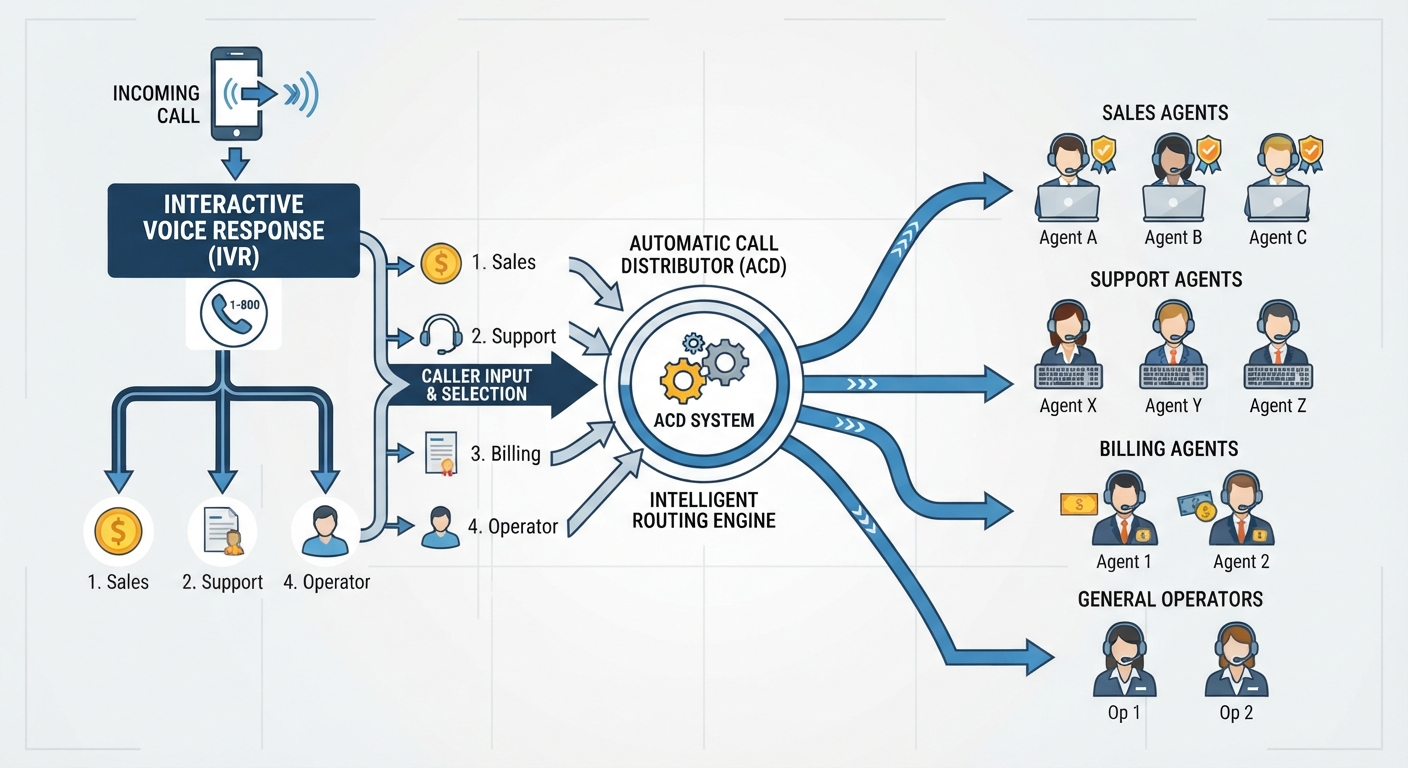
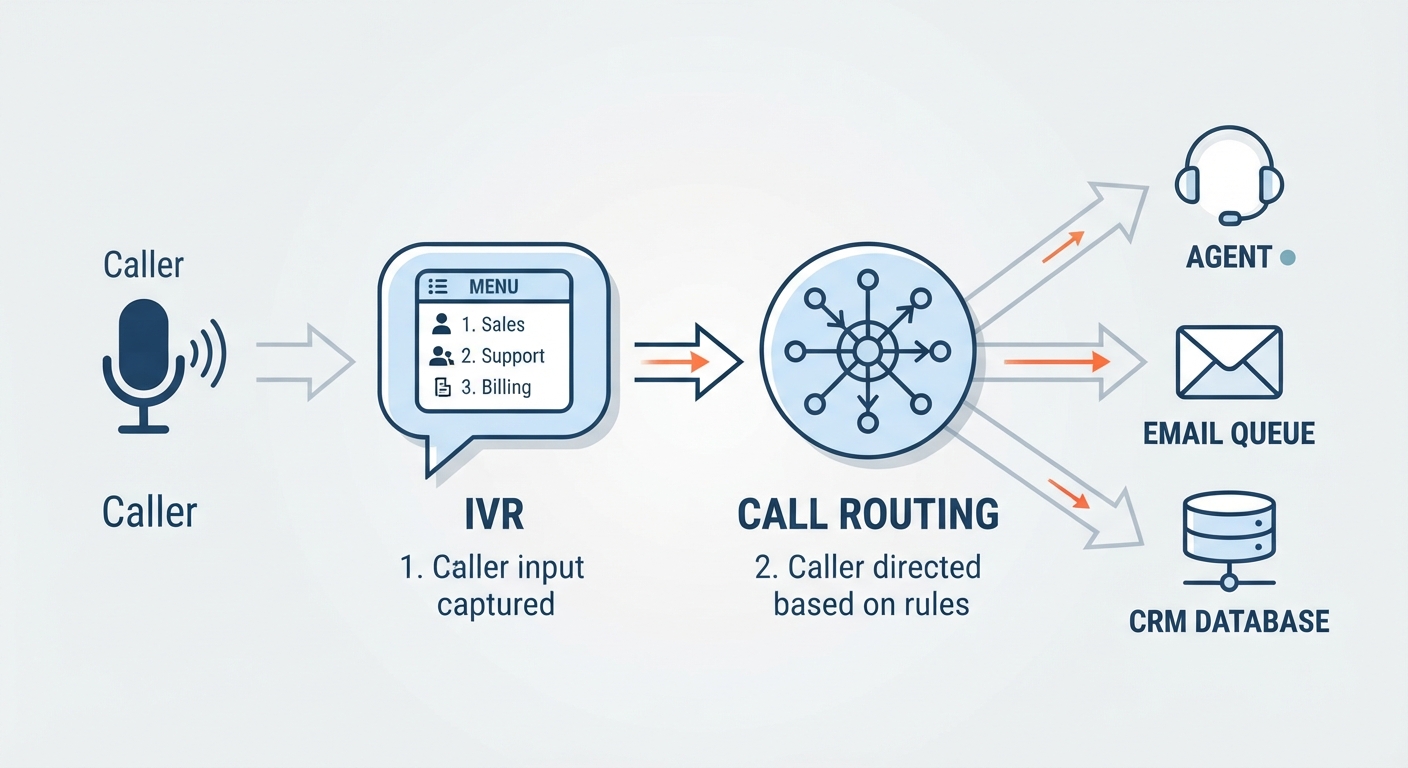
An ai receptionist shouldn't just be a fancy voicemail; it needs to be a traffic cop that knows exactly where to send people based on what they say.
- Intent-Based Routing: This is the big one. Your ai needs to distinguish between a "new client" and an "existing client." If it's a new lead for a car accident, the ai should follow a specific "Personal Injury" script.
- Custom Scripts for Different Practice Areas: You wouldn't use the same questions for a bankruptcy case as you would for family law. You need to build "branches" in your logic.
- Lead Qualification: Don't let your ai book just anyone. Set up "deal-breaker" questions. For example, if a law firm doesn't take cases outside of California, the ai should politely let the caller know before they even get to the calendar.

4. Integration with your CRM
This is where the magic happens. If your ai can't book a meeting or update a file, it's just a glorified answering machine. You want this thing talking to tools like Clio, HubSpot, or even just a basic Google Calendar.
- Automated Booking: When the ai finds a qualified lead, it should pull real-time availability from your calendar.
- Data Syncing: Every detail the ai collects—phone number, email, case details—should automatically populate a new lead entry in your crm.
Here is a tiny snippet of what a simple api call might look like when your ai tells your calendar to book a spot. Don't worry, most platforms do this with "no-code" buttons now, but it's good to see what's under the hood:
def book_appointment(client_name, time_slot):
    payload = {
        "summary": f"Intake Call: {client_name}",
        "start": {"dateTime": time_slot},
        "description": "Auto-booked by AI Receptionist"
    }
    # This sends the data to your calendar api
    response = calendar_api.create_event(payload)
    return response.status_code
Comparing virtual receptionists vs AI receptionists
If you’ve ever been stuck on hold with a "virtual" service while your plumbing is literally exploding, you know that "human" doesn't always mean "fast." In 2026, the gap between a human answering service and a fine-tuned ai is becoming a chasm that most small businesses can't afford to ignore.
Let's talk about the "Zero Second" rule. When a lead calls your law firm or dental clinic, they're usually in some kind of distress. A virtual receptionist service—basically a call center—often has "ring time" or hold queues because one person is trying to handle five different clients at once. An ai receptionist answers on the first ring, every single time.

I get a lot of questions about hipaa and data security, especially from my friends in healthcare and law. There's a common misconception that humans are "safer" than bots, but overseas call centers are actually a huge security risk. You're effectively trusting a stranger with sensitive pii (personally identifiable information) over an unencrypted line.
According to the Amazon SageMaker AI documentation discussed earlier, using secure cloud models or self-hosting your ai allows you to keep data entirely in-house. You can set up strict "scrubbing" rules where the ai automatically anonymizes names or social security numbers before the transcript even hits your crm.
Conclusion and next steps for your firm
Look, nobody likes to think about their law firm as a "leaky bucket," but if you're still relying on a standard voicemail or a generic answering service, you're basically watching potential cases walk right out the door. The move to a specialized, fine-tuned voice model isn't just some tech flex—it's about making sure that when someone in crisis calls, they actually get heard.
Getting your firm automated doesn't have to happen overnight, and honestly, it shouldn't. You gotta crawl before you can run.
- Start with the "Missed Call" safety net: You don't need to replace your whole front desk on day one. Just set up a basic ai follow-up for when the lines are busy.
- Iterate based on what callers actually say: Once you have your system running, look at the logs. If people keep asking about "retainer fees" and your bot gets confused, that's your signal to add more Q&A pairs to your training data.
- Scale across practice areas: A bot that handles divorce leads might need a totally different "vibe" than one handling corporate litigation.
The world is moving fast, and by 2026, clients are gonna expect instant answers. If you're still telling people "we'll call you back in 24 hours," you've already lost.
Anyway, the goal here isn't to build a "perfect" robot—it's to build a reliable assistant that never sleeps and never forgets a detail. If you get the data right and keep tweaking the model based on real feedback, you'll be lightyears ahead of the firm down the street. It's time to stop letting those calls go to voicemail and start turning them into clients.