Solo Operator's Guide to Phone Answering: Never Miss a Call While You Work

TL;DR
- ✓ Missed calls act as a silent killer for solo operator revenue and growth.
- ✓ Voicemail creates friction that drives potential customers straight to your competition.
- ✓ AI receptionists provide an affordable alternative to hiring full-time administrative staff.
- ✓ Hybrid routing models allow you to maintain professional standards while working uninterrupted.
You’re deep in the weeds. Maybe you’re elbow-deep in a client’s engine, hunched over a complex design file, or halfway through an install on a job site. Then, your phone buzzes. You can’t touch it. You’re covered in grease, or you’re in the flow state, or you’re simply up a ladder.
By the time you wipe your hands and call back ten minutes later, that potential client has already moved on. They’ve scrolled to the next name on Google. They’ve hired your competition.
This is the "missed call" epidemic. For a solo operator, it’s a silent killer. Every time you send a caller to voicemail, you aren’t just missing a message; you’re telling a prospective customer that your business isn’t ready for them. It sounds harsh, but it’s the truth. Modern AI receptionists aren't some sci-fi luxury anymore—they are the only bridge between a struggling one-person shop and a professional operation that actually captures the leads you're currently throwing away.
The Brutal Math of a Missed Call
Let’s look at the numbers. Research on the hidden cost of missed calls shows that small businesses lose a staggering amount of revenue—often tens of thousands of dollars a year—simply because they fail to pick up in those first thirty seconds.
We live in the "Amazon Effect" era. Customers want instant gratification. If they don’t get a human—or at least a helpful response—they assume you’re out of business, disorganized, or just too busy to care.
Voicemail is essentially a "Do Not Disturb" sign for your bank account. When you rely on a recording, you’re dumping all the work onto the customer. They have to leave a message, wonder if you got it, and wait for a callback that might never come. When you switch to an AI-driven system, that dynamic flips. The customer gets an immediate response. Their intent is logged. And you get to keep working, knowing your pipeline is being managed even when you’re heads-down in the dirt.
Why We Cling to Voicemail (And Why It’s Holding You Back)
There’s a psychological hurdle here. Solo operators love the "I have to do it all myself" trap. We think if we aren't the ones answering every single ring, we aren't "running" the business.
Then there’s the hiring alternative. We look at Bureau of Labor Statistics data on receptionist salaries and realize that a full-time hire is a massive financial anchor—$35,000 to $45,000 a year, plus the headache of benefits and management. For a solo operator, that math is a non-starter.
But here’s the secret: you aren't being "cheap" by avoiding a human hire, but you are being short-sighted if you think your only choice is voicemail. Most of us fear that automation will strip the "human touch" from our brand. But let’s be real—a missed call has zero "human touch." A polite, efficient AI assistant is infinitely more professional than the sound of a beep. The goal isn't to replace you; it's to replace the friction that keeps you from growing.
The "Hybrid Routing" Model
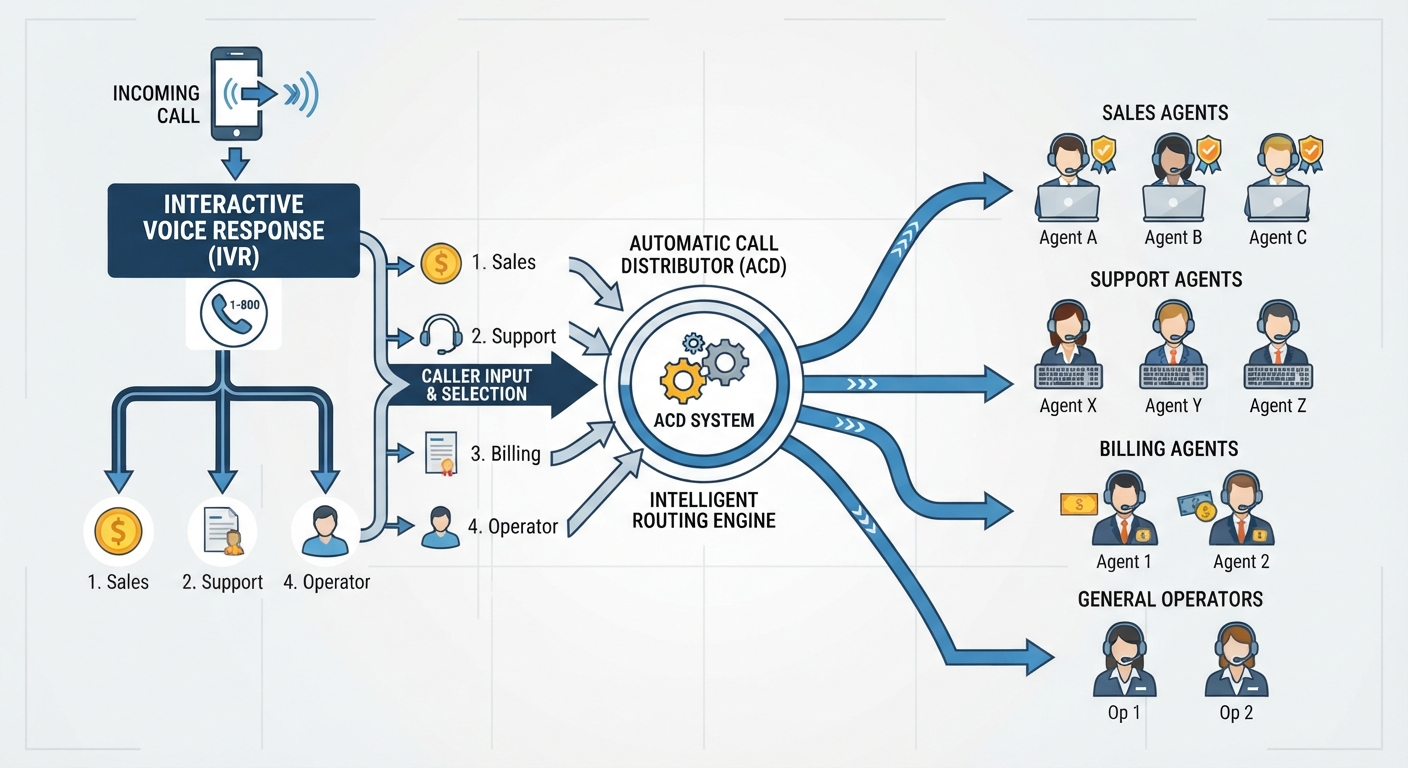
The best way to do this is the "Hybrid Routing" model. It’s simple: let the AI handle the boring, routine stuff and flag the high-value moments for you. It’s the difference between a chaotic one-man show and a streamlined business.
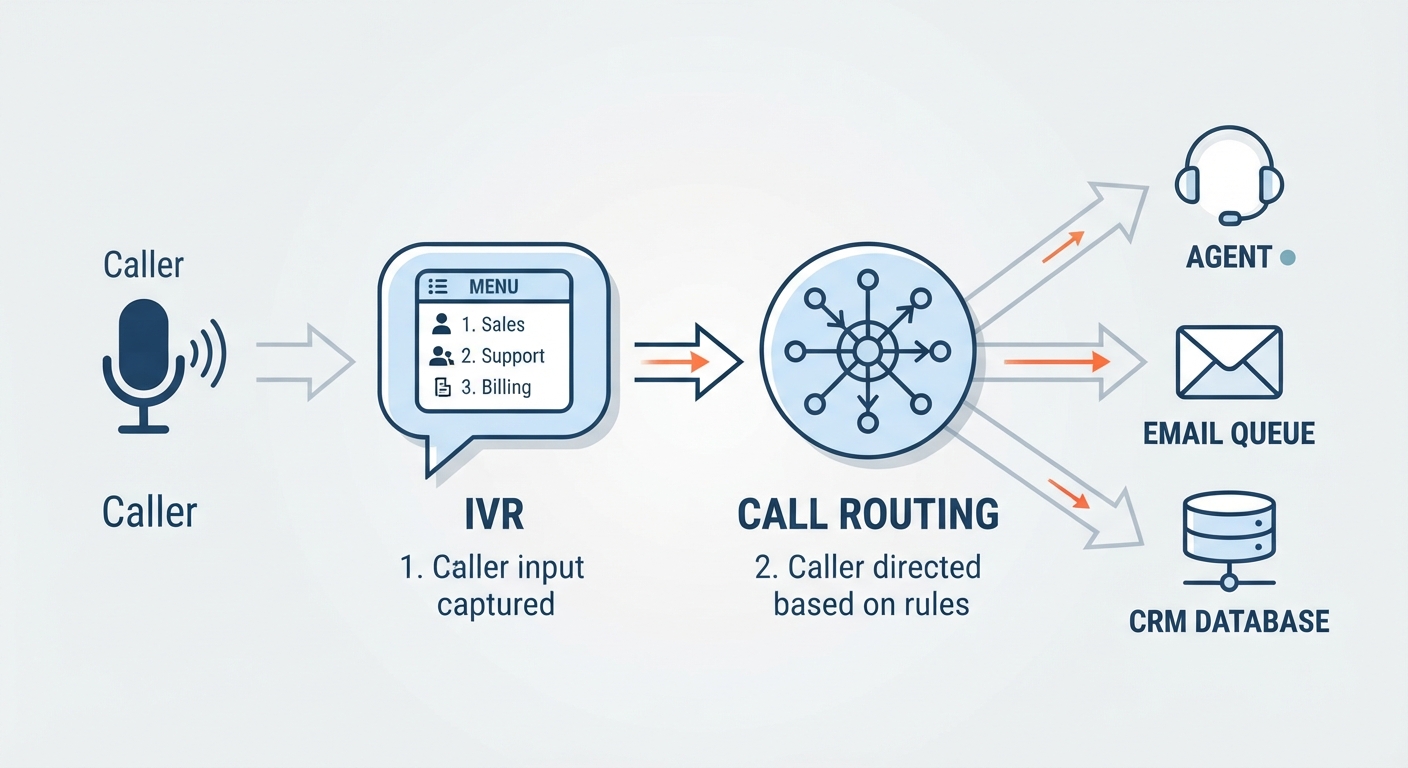
In this setup, the AI acts as your bouncer. If someone calls to ask about your general pricing or office hours, the AI handles it instantly. It logs the contact. It answers the question. But if a high-value prospect calls to discuss a major project? The system knows. It routes that call to you, or sends a "hot" notification so you can step away and take the call. You’re never interrupted by noise, but you never miss the signal.
AI vs. Traditional Answering Services
If you’ve ever used a traditional answering service, you know the pain. Wait times, high per-minute costs, and call center agents who sound like they’re reading a script written by a robot. It’s often worse than the voicemail.
Conversely, as market growth reports on AI agents show, this technology is evolving fast. We’re talking natural, conversational flows that don't feel like a 1990s telemarketing firm. When you keep a "human-in-the-loop," you control the knowledge base. The AI sounds like you because it’s trained on your standards. You aren't handing your brand over to a machine; you’re just giving yourself a better megaphone.
How to Get Set Up (Without an IT Degree)
You don’t need to be a tech wizard. Most operators are up and running in an afternoon.
- Forwarding: You just set up call forwarding from your current business number. It’s as easy as flipping a switch.
- Training: You don't write code. You just upload your FAQs, pricing sheets, and contact preferences. If you need a hand, Voksha’s solutions are designed to streamline this specific workflow by turning your messy documents into a clean, conversational script.
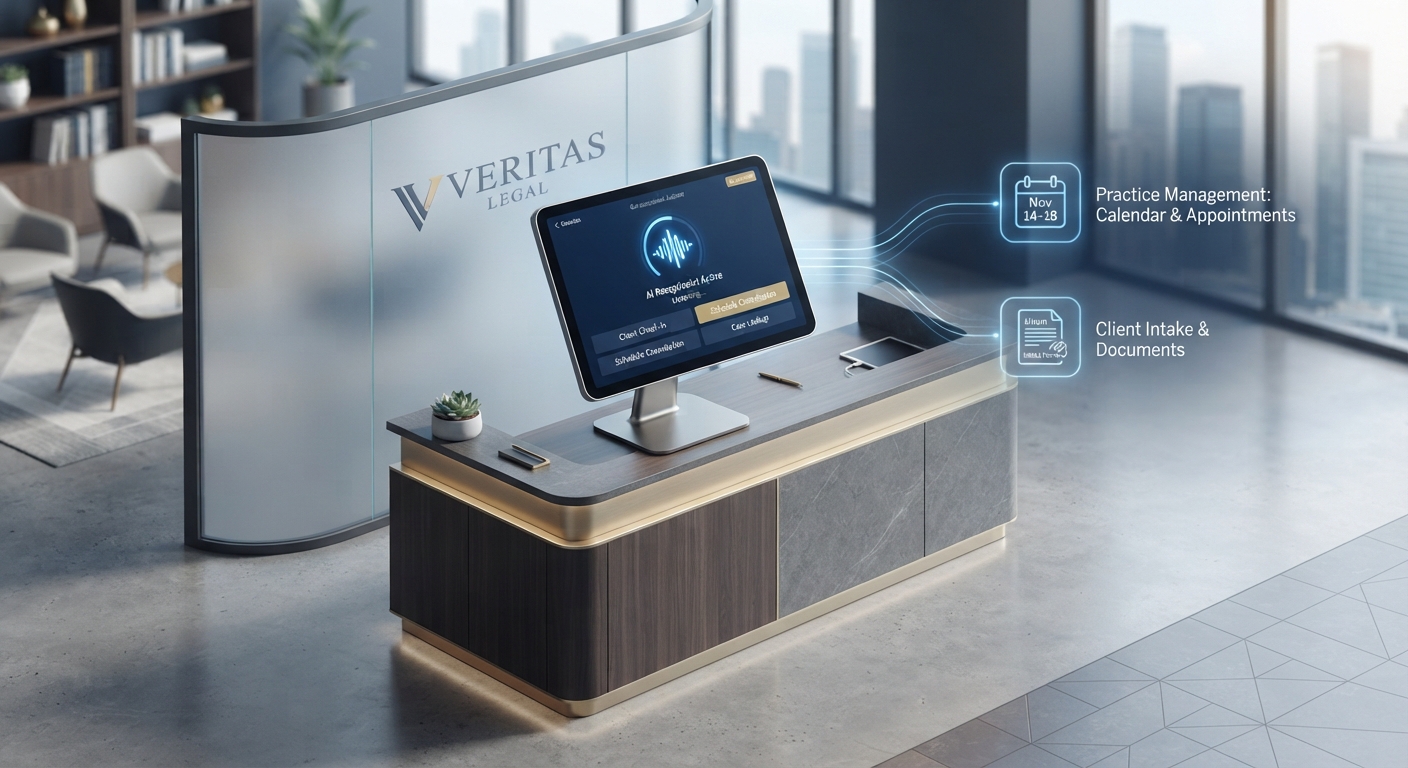
- Integrations: This is the magic. The AI talks to your calendar. It checks your availability. It books the meeting. You wake up to a calendar that filled itself while you were sleeping.
The ROI: What’s It Actually Worth?
Think about the cost. A typical AI subscription is maybe $200 a month. Now, consider the value of just one lost job. If you lose one project a month because you were too busy to answer, you’ve already lost ten times the cost of that subscription.
Beyond the money, there’s the peace of mind. When you know your phone is being handled by a system that never gets tired, never takes a day off, and never forgets to follow up, your mental bandwidth expands. You get to focus on the actual work—the craftsmanship—instead of the administrative nightmare of your inbox.
The Anti-Voicemail Manifesto
Voicemail is a relic. It belongs in the same museum as the fax machine. Your clients are comparing you to competitors who are using every tool available to make their lives easier. If you’re still hiding behind a "please leave a message after the beep," you are actively handing your customers to the guy down the street.
Automating your booking flow isn't just about "tech." It’s about respect. You’re telling your customer that their time matters. If you’re ready to stop chasing leads and start closing them, contact our team for a custom setup. Let’s get your system configured to handle your business exactly the way you would, every single time.
Frequently Asked Questions
Will customers know they are talking to an AI, and will they hang up?
Modern AI is remarkably natural, and most customers are less concerned with who they are talking to than with how quickly their problem is solved. Transparency is key; if the AI identifies itself immediately and provides a fast resolution, customers are generally satisfied and appreciative of the efficiency.
How hard is it to set up an AI receptionist if I'm not tech-savvy?
It is designed to be plug-and-play. If you can copy and paste your business information into a document, you can train your AI receptionist. Most users find that the initial setup takes less than two hours to complete.
What happens if the AI doesn't know the answer to a specific question?
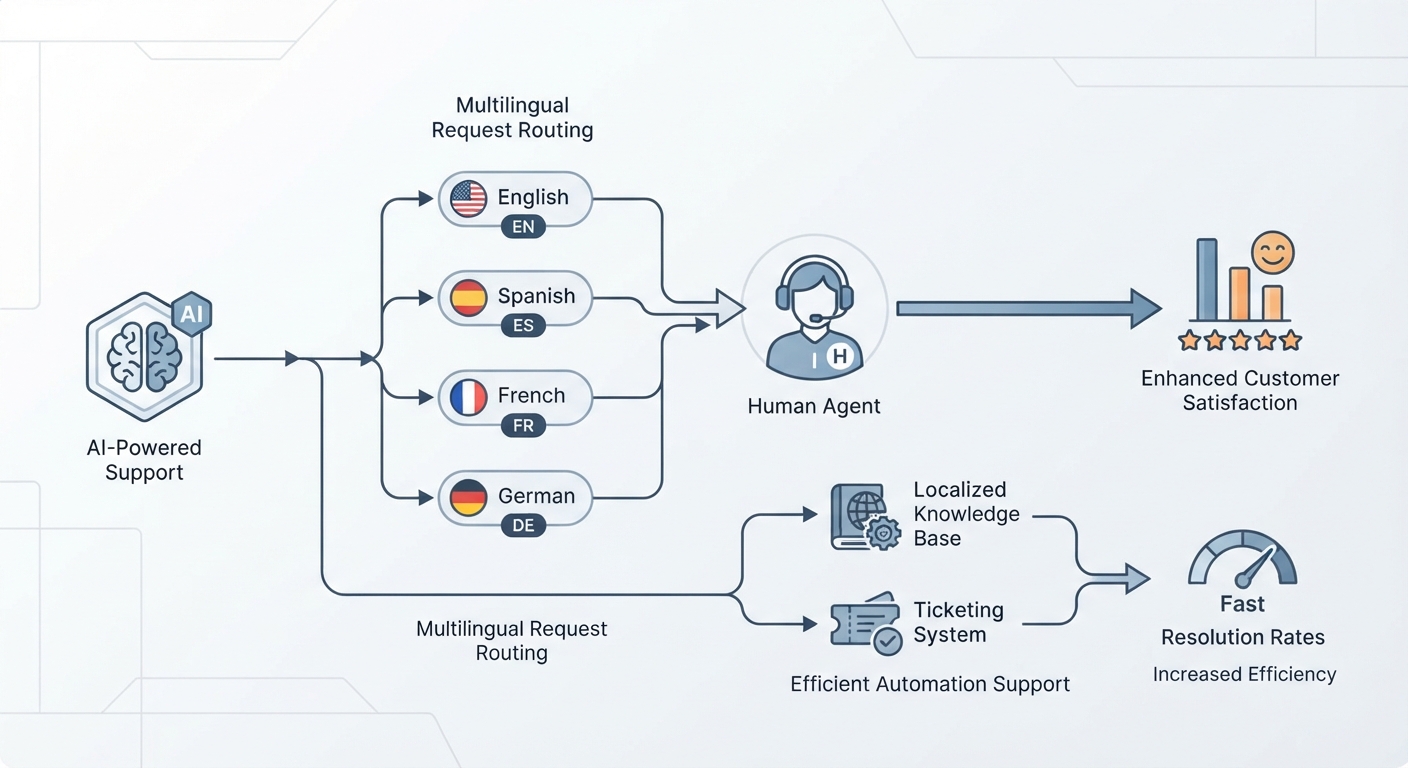
The system is built with "fallback" routing. If a question falls outside the programmed knowledge base, the AI is trained to politely take a message or escalate the call to you directly, ensuring no lead is ever left in the dark.
Does this work if I have a really specific, custom booking process?
Yes. Modern AI receptionists are designed to integrate with your existing CRM and scheduling software. Whether you use a specific industry-standard tool or a custom calendar, the AI can be configured to navigate your specific booking logic just as a human assistant would.