How to Reduce Missed Calls: Proven Appointment No-Show Reduction Strategies for 2026
TL;DR
- ✓ Stop losing revenue by replacing voicemail with automated Missed Call Text Back systems.
- ✓ Implement reminder stacking to keep appointments top-of-mind and reduce client no-shows.
- ✓ Leverage AI-first workflows to provide instant gratification and capture leads before competitors do.
- ✓ Transition from human-dependent phone handling to scalable, automated scheduling infrastructure.
Every time your phone rings and hits voicemail, you aren’t just missing a chat. You’re handing a paycheck to your competition.
In 2026, a missed call is a silent revenue killer. The true cost of a missed call is rarely just the price of a service; it’s the lifetime value of a client you just insulted. When a lead hits your voicemail, they don’t think, "Oh, they must be busy." They think, "They don't care." And they’re gone.
If your intake process relies on "leave a message and we'll get back to you," you might as well put a "Go to our competitor" sign on your front door. The modern standard isn't just answering the phone—it’s an AI-first workflow that treats friction like the enemy it is.
The Anatomy of the Lost Lead
Why do they hang up? Because we’re all addicted to instant gratification.
When a client calls a law firm, a salon, or a contractor, they have a problem right now. If they hit a machine, that intent evaporates. The "Voicemail Dead-Zone" is where 80% of your growth goes to die.
The friction is psychological. Leaving a voicemail is a chore. It’s a one-sided conversation that leaves the caller wondering if—or when—you’ll actually bother to call back. In the ten seconds it takes for your greeting to finish, your prospect has already opened their browser, searched for your competitor, and clicked "Book Online." If your scheduling process requires a human to play "phone tag," you are fighting a losing battle against the convenience of self-service.
The 2026 Tech Stack: Automating Your Way to Growth
If you want a near-zero no-show rate, your infrastructure needs a total overhaul. Stop being reactive. Start being proactive.
The bedrock of this shift is the "Missed Call Text Back" (MCTB) system. The second a call goes unanswered, your system should fire a personalized SMS to the caller. It acknowledges their attempt and immediately drops a link to your calendar.
Beyond that first touch, you need "Reminder Stacking." This isn't just one email. It’s a calculated, subtle cadence that keeps you top-of-mind without acting like a stalker.
This stack works because it attacks the three horsemen of the no-show: forgetfulness, lack of confirmation, and last-minute chaos. By the time that two-hour reminder hits, the client has interacted with your brand three separate times. By then, the appointment feels like a real commitment, not just a suggestion they made on a whim.
The Economic Reality: AI vs. The Human Receptionist
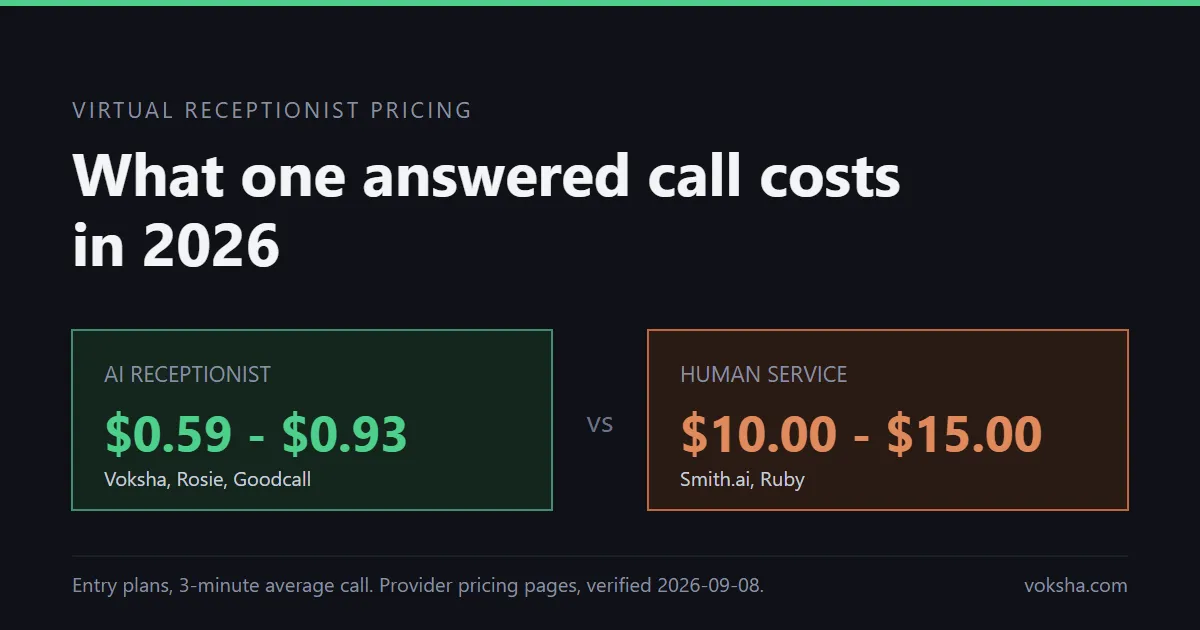
Many managers cling to the myth that a human receptionist is the only way to seem "professional." But look at the AI receptionist cost vs. hiring a human: a 2026 salary breakdown. The math is brutal.
A full-time human receptionist? You're looking at $45,000+ a year once you factor in taxes, benefits, training, and the inevitable turnover. An AI receptionist costs about $300 a month. It doesn't take lunch breaks, it doesn't get sick, and it doesn't have a bad day.
The goal isn't to fire your staff. It’s to stop wasting their human potential on calendar tetris. Use AI for the machines: the FAQs, the scheduling, the boring reminders. Use your humans for the "warm transfers"—the high-ticket leads that actually need a human touch to close. Your team should be closing deals, not checking calendars.
Implementing Your No-Show Defense Policy
Tech is only half the battle. You need a policy that respects your time. If you don't have a "No-Show" policy, you're telling clients your time is disposable.
Be transparent. Communicate the policy at the point of booking. Frame it as a way to ensure quality for everyone. For example: "To ensure we can provide the best service to all our clients, we require a 24-hour notice for cancellations. Appointments cancelled within this window or missed without notice are subject to a [X] fee."
For high-value services, demand a deposit. Even a small, refundable fee creates "skin in the game." For a deeper look at the psychology behind these policies, check out these 15 proven strategies to reduce no-shows.
Industry Playbooks: Tailoring the Strategy
Every industry has its own quirks. You need to play to yours.
- Law Firms: It’s all about trust and compliance. Use AI designed for HIPAA compliance or legal intake to ensure data is handled safely while screening leads.
- Salons and Spas: You’re in a high-churn game. "Reminder Stacking" is your lifeline. Lean hard into SMS; your clients live on their phones.
- Home Services: Speed-to-lead is your entire business model. If you aren't responding within 60 seconds, you’ve lost. Use an MCTB system to get that booking link in their hand before they call the next guy on the list.
The ROI of Efficiency
Let’s look at the numbers. If you miss 10 calls a week and your average client is worth $200, you’re hemorrhaging $2,000 in potential revenue every single week. That’s over $100,000 a year left on the table.
| Weekly Missed Calls | Avg. Revenue Per Lead | Potential Annual Loss |
|---|---|---|
| 5 | $200 | $52,000 |
| 10 | $200 | $104,000 |
| 20 | $200 | $208,000 |
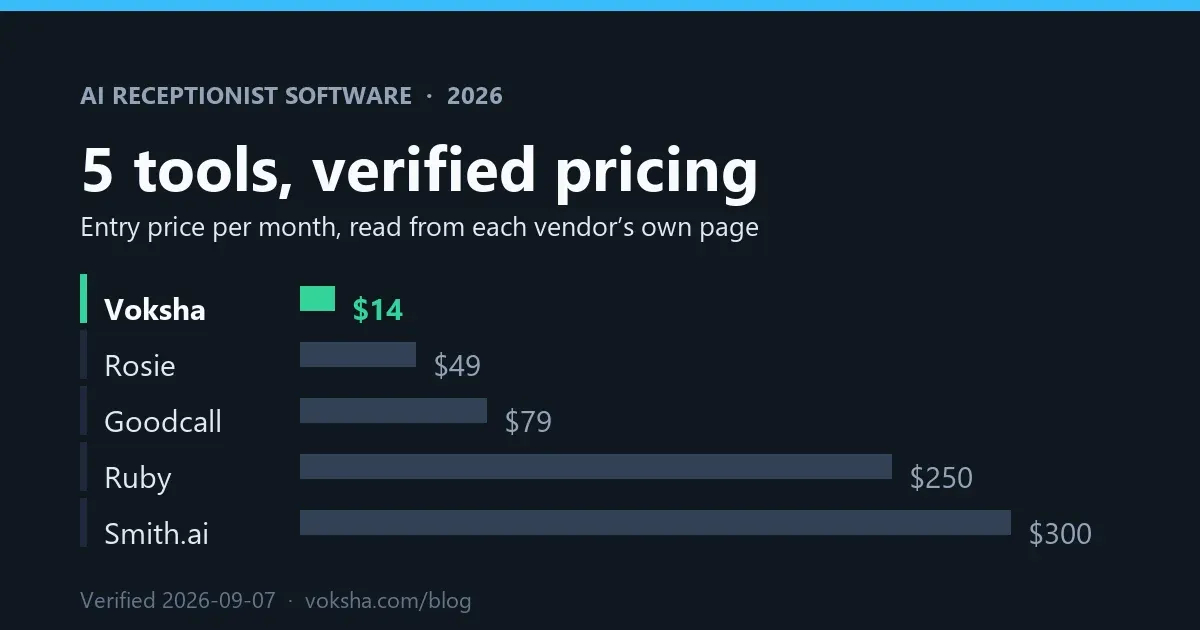
When you compare these losses to the AI receptionist pricing guide 2026, the investment pays for itself in days, not months.
Frequently Asked Questions
Is an AI receptionist really professional enough for my clients?
Modern AI has moved far past the robotic, monotone scripts of the past. Today’s systems use advanced natural language processing that allows for tone customization and complex FAQ handling. Most clients won't even realize they are speaking to an AI—they’ll just appreciate how quickly their question was answered or their appointment was booked.
How much does it actually cost to switch from a human answering service to AI?
The transition typically results in an 80-90% cost reduction. By eliminating the overhead of training, payroll, and benefits, you shift from a high-fixed-cost model to a low-variable-cost model that scales as your business grows.
Will an automated system hurt my customer relationship?
Quite the opposite. An automated system ensures that every single client gets an immediate response. It removes the frustration of being put on hold or sent to voicemail. By using the "human-in-the-loop" model, you ensure that complex, emotional, or high-value inquiries are still handled by your best people, while the AI handles the friction of the logistical heavy lifting.
What is the best way to handle a client who is a repeat no-show?
Implement an automated "strike" system within your CRM. After the first no-show, send a polite, automated reminder of your policy. After the second, require a non-refundable deposit for all future bookings. If they continue to no-show, the system can be configured to automatically restrict their ability to book online, forcing them to call manually—or simply blacklisting them from your calendar.
Does 24/7 self-scheduling actually reduce the workload on my team?
Yes, dramatically. By allowing clients to book, reschedule, or cancel on their own terms, you eliminate the "phone tag" cycle that consumes hours of administrative time every week. Your staff is then freed up to focus on high-priority tasks that actually drive revenue, rather than playing secretary for a calendar that should be managing itself.