Dental Office Phone Automation: Tips for Seamless Scheduling and Patient Care
TL;DR
- ✓ Automate routine calls to stop losing revenue from missed practice opportunities.
- ✓ Replace outdated answering services with intelligent AI for real-time patient triage.
- ✓ Empower your front desk team to focus on high-touch patient experiences.
- ✓ Use AI to eliminate the phone tag cycle and increase appointment bookings.
Every missed call is a punch to the gut of your practice’s bottom line. You know the drill: your front desk is swamped, the phone rings, it goes to voicemail, and that patient—the one who was ready to book—just calls the office down the street instead.
In 2026, silence is the most expensive sound in a dental practice. Research into the true cost of missed calls shows that practices are hemorrhaging up to $150,000 annually just because no one was available to pick up the receiver. It’s not just lost revenue; it’s lost trust. When you don't answer, you’re telling the patient their time isn't a priority.
But here’s the fix: stop treating your front desk like a call center. By moving to a human-AI hybrid model, you stop the bleeding. You reclaim your team’s sanity and finally give them the space to do what they were hired for: looking patients in the eye and providing real, high-touch care.
Why "Answering Services" Are Dead
Remember those old-school answering services? The ones where a bored operator takes a message, promises a callback, and then... nothing happens for six hours? That model is ancient history.
Today, 91% of top-tier practices have ditched the manual relay. They’re using conversational AI that actually gets dentistry. This isn't about robotic scripts. It’s about smart, real-time triage. When you automate the grind—confirming cleanings, moving routine check-ups, or answering the same five insurance questions for the hundredth time—you change the job description. Your front desk staff stops being administrative firefighters and starts being Patient-Experience Coordinators.
Think about it: who would you rather have greeting a patient at the door? Someone frazzled and stressed from playing phone tag all morning, or someone who’s had the time to focus entirely on the person standing right in front of them?
Solving the "Phone Tag" Nightmare
The "phone tag" cycle is a momentum killer. Patient calls. You’re busy checking out a patient. They leave a voicemail. You call back. They’re in a meeting. Nobody wins.
AI automation slices through this like a scalpel. It’s an extension of your office that never sleeps, never takes a lunch break, and never gets overwhelmed.
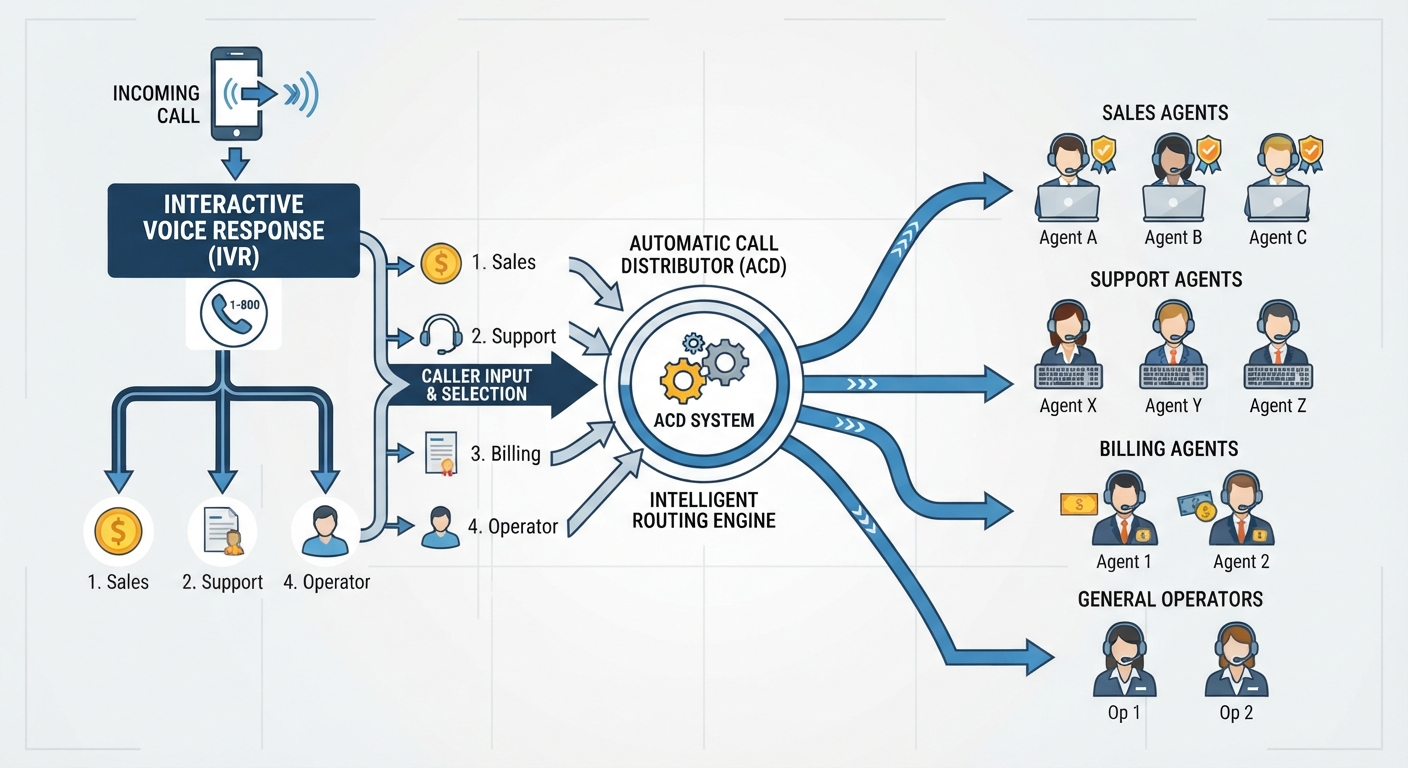
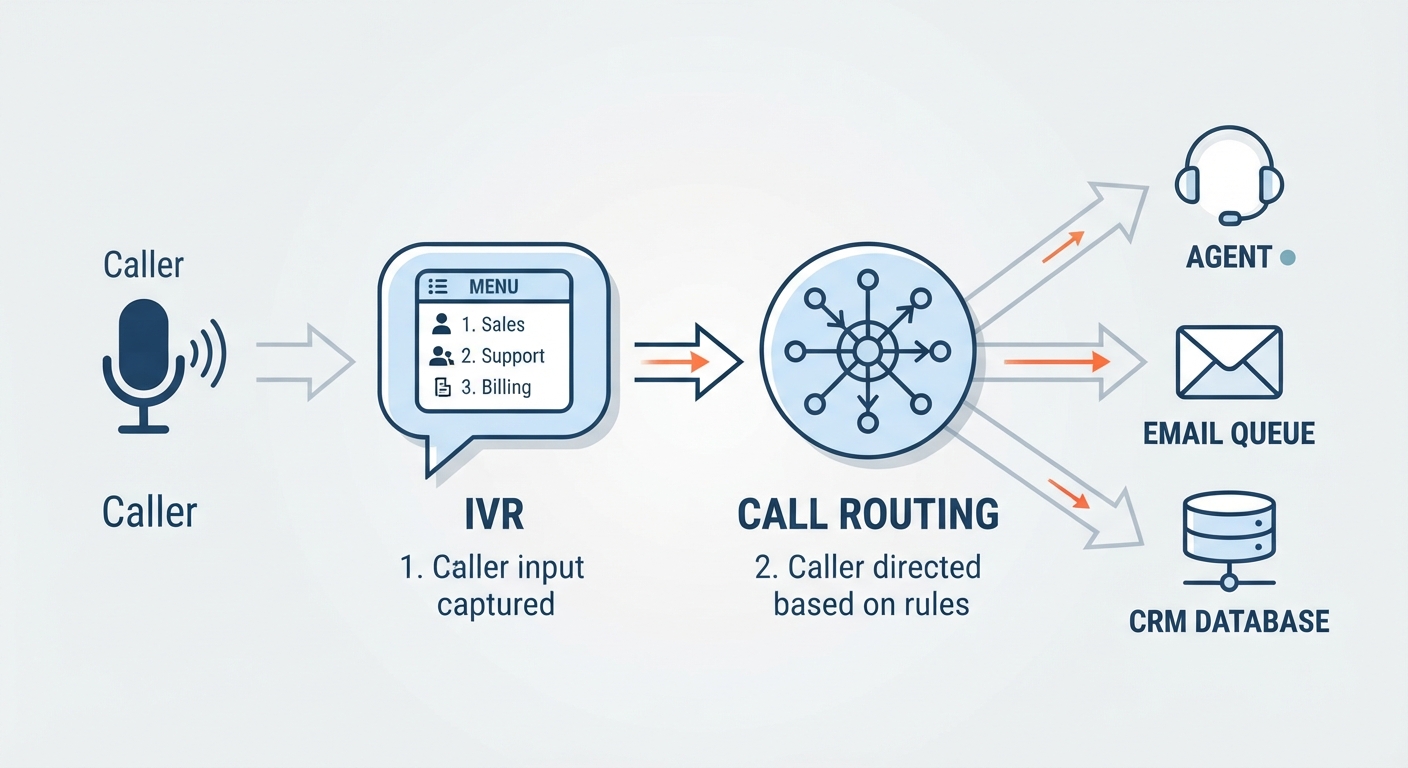
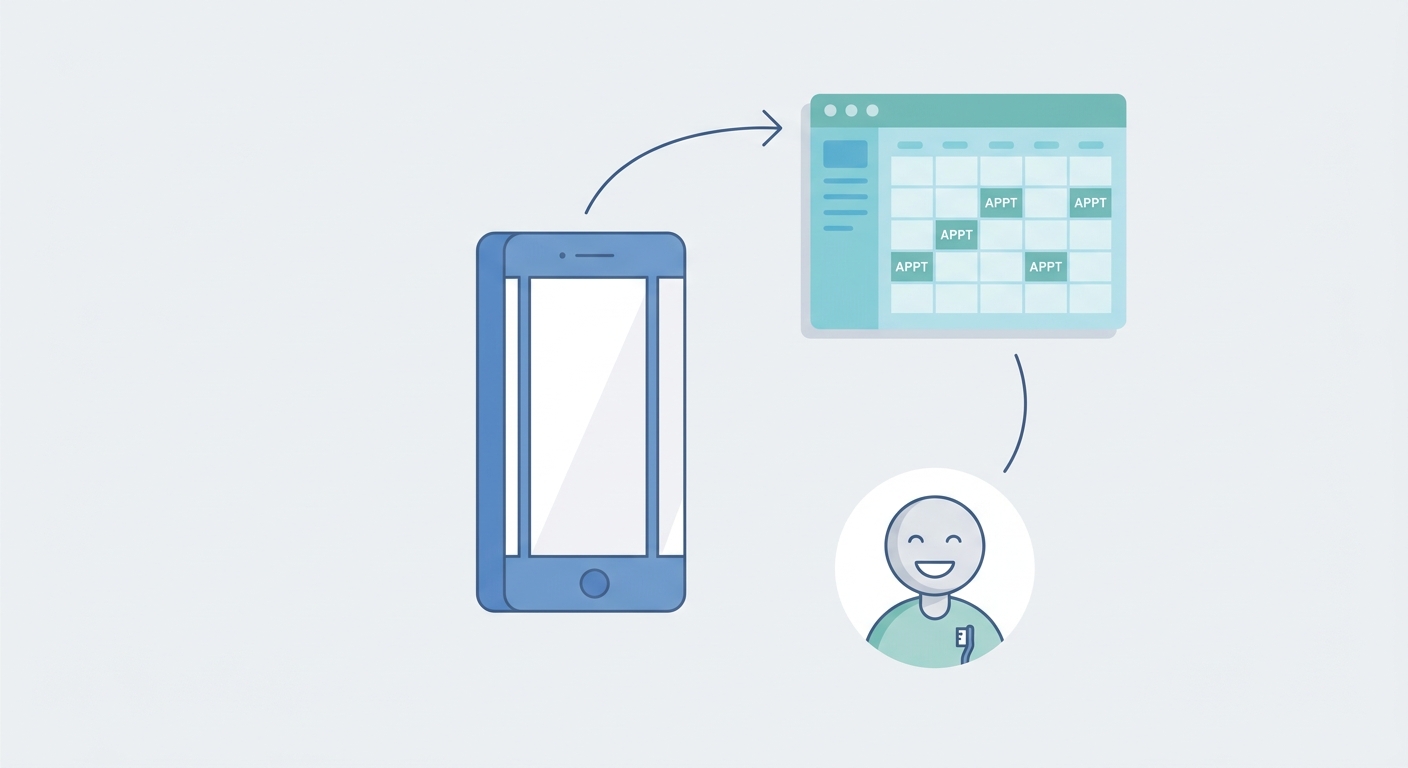
As the flow above shows, the AI acts as your first line of defense. It handles the routine stuff instantly. But when things get serious—like a patient in real agony—it flags the team immediately. You aren't losing the human touch; you’re making it more precise.
The Non-Negotiables for 2026
Don't buy a gadget that doesn't talk to your tech stack. If your AI isn't deeply integrated with your dental practice management software, you’re just creating a new headache.
1. Real-time integration: If the AI can't see the open chair in Dentrix, Open Dental, or Eaglesoft, it’s useless. It needs to book in real-time, or don't bother.
2. HIPAA compliance: This isn't optional. If your vendor doesn't provide a signed Business Associate Agreement (BAA) and ironclad encryption, walk away. Period. Check the official guidance on HIPAA compliance for AI in healthcare if you need a reminder on why this matters.
3. Emergency logic: Your system must know the difference between "I need a cleaning" and "I’m in so much pain I can’t sleep." The latter should trigger an immediate alert to your staff, bypassing the booking flow entirely.
Your 90-Day Transition Plan
Don't try to change everything overnight. Roll this out in stages so your team doesn't revolt.
Phase 1 (Days 1–30): The Cold, Hard Truth. Audit your calls. How many are you missing? What times are you busiest? This data is your baseline. You can’t fix what you haven’t measured.
Phase 2 (Days 31–60): The Rollout. Connect the AI to your PMS. Use intelligent appointment solutions to sync the calendars. This is when you train your team. Show them how the AI takes the busy work off their plate.
Phase 3 (Days 61–90): The Polish. Listen to the transcripts. Is the AI sounding like you? Tweak the tone. Compare your current capture rate against the data from Phase 1. That’s your ROI right there.
The "Human-AI Hybrid" Advantage
Here’s a secret: patients don't care if they’re talking to a machine, as long as the machine is fast and helpful. They do care if they feel ignored.
The "Warm Hand-off" is your best friend. If a patient asks a question the AI can’t answer, or if they just want a human, the AI should say, "Let me get Sarah, our coordinator, on the line for you." It’s seamless. It’s professional. By streamlining your patient communication, you keep the high-level care that defines your practice while dumping the scheduling drudgery on the software.
The Hidden Math of ROI
Stop looking at the monthly subscription fee. Look at the cost of a lost crown or a missed implant consultation. If this system saves you three "lost" appointments a month, it has already paid for itself. The rest is pure profit.
Future-Proofing Your Practice
The industry is shifting. Patients are used to booking Ubers and ordering food at 10 PM. They expect the same convenience from their dentist. If you aren't offering 24/7 booking, you’re losing patients to the practice that is.
Audit your phone data today. You’ll be shocked at how much revenue is slipping through your fingers while your team is busy answering the same five questions for the hundredth time.
Frequently Asked Questions
Is an AI receptionist HIPAA compliant?
Yes, provided the AI vendor provides a signed Business Associate Agreement (BAA) and utilizes end-to-end encryption to protect sensitive patient information.
Will AI replace my front desk staff?
No. AI is designed to handle repetitive, time-consuming tasks like scheduling and routine inquiries, which allows your staff to transition into higher-value roles as Patient-Experience Coordinators.
How does AI handle dental emergencies?
Modern AI systems use logic-based triage to identify urgent keywords—such as "pain," "swelling," or "trauma"—and immediately alert your staff via SMS or email to ensure the patient is prioritized.
Does AI integrate with my current dental software (PMS)?
Yes, most enterprise-grade AI solutions for dentistry are built to integrate directly with major practice management software like Dentrix, Open Dental, and Eaglesoft to ensure real-time scheduling accuracy.
What is the primary difference between a traditional answering service and an AI receptionist?
A traditional answering service is a manual relay, where a person takes a message for you to act on later. An AI receptionist is an interactive, automated system that can query your schedule, book appointments, and handle patient inquiries in real-time without manual intervention.