Best AI Phone Answering Solutions for Law Firms: HIPAA Compliance and Efficiency

TL;DR
- ✓ Speed of response is the primary predictor for converting legal leads into clients.
- ✓ Modern AI mimics empathy to validate distressed callers and gather critical case details.
- ✓ Ensure your AI vendor provides a signed BAA to maintain strict HIPAA compliance.
- ✓ AI intake solutions prevent revenue loss by eliminating the dreaded one-and-done voicemail.
In 2026, if your law firm makes a potential client listen to a generic ringtone, you’re essentially handing a paycheck to your competition. The modern legal consumer—especially those calling in a panic about a personal injury or a messy divorce—doesn't have the patience for "your call is important to us." They want an answer, and they want it yesterday.
If your intake strategy is still the "one-and-done" voicemail trap, you’re bleeding revenue. It’s that simple. According to Clio’s Legal Trends Report, how fast you respond is the single biggest predictor of whether a lead actually becomes a client. By implementing AI Intake Solutions for Law Firms, you aren't just buying software. You’re building a digital front door that never closes, ensuring no distressed prospect hits a dead end.
Why Your "One-and-Done" Call Strategy is Costing You Millions
The "Lead Penalty" isn't a myth; it’s a brutal reality. When someone is searching for a lawyer, they’re usually having the worst day of their life. They’re stressed, they’re scared, and they have three or four tabs open in their browser. If they call your office and hit a voicemail, they aren't waiting for a callback. They’ve already moved on to the next search result before your phone stops ringing.
This is about more than just losing a single case. It’s about the massive, compounding loss of lifetime value. Partners often worry that automation feels "cold" or "robotic," but let’s be honest: what’s colder than ignoring a potential client in crisis? A modern, AI-driven intake system provides the validation a caller needs right out of the gate. It keeps them on the line, builds initial trust, and gathers the critical details your paralegals need to make a truly informed follow-up.
What Defines "Law-Firm Grade" AI?
There is a world of difference between a retail-grade chatbot and a tool built for the courtroom. A generic bot is fine for answering "What are your hours?" but it’ll fall flat when someone is crying on the other end of the line.
The secret sauce is the "Empathy Factor." Modern Large Language Models (LLMs) used in legal-specific tech aren't just reciting scripts. They’re tuned to detect distress. When a caller is frantic, the AI shifts its tone. It validates their situation, listens actively, and extracts the facts—incident dates, nature of the dispute, urgency—without sounding like a calculator. This filters out the "tire-kickers" and ensures your human team spends their energy on the cases that actually matter.
The Compliance Deep Dive: Is Your AI Actually HIPAA Compliant?
The gold rush to adopt AI has led a lot of firms into a trap. Many vendors slap a "HIPAA-compliant" sticker on their product, but they fall apart the moment you ask for a signed Business Associate Agreement (BAA).
If a vendor can’t provide a BAA that covers their entire stack—telephony, speech-to-text, LLM processing, and text-to-speech—you are standing on thin ice. The HHS HIPAA Breach Notification Rule is unambiguous: the buck stops with you. If you’re using a "Bring Your Own Key" (BYOK) model, you’re basically acting as your own security architect. That’s a liability nightmare. A real provider handles the BAA, the encryption, and the data protocols as part of the service. If they don't, run.
How Does AI Intake Integrate with Your Practice Management Software?
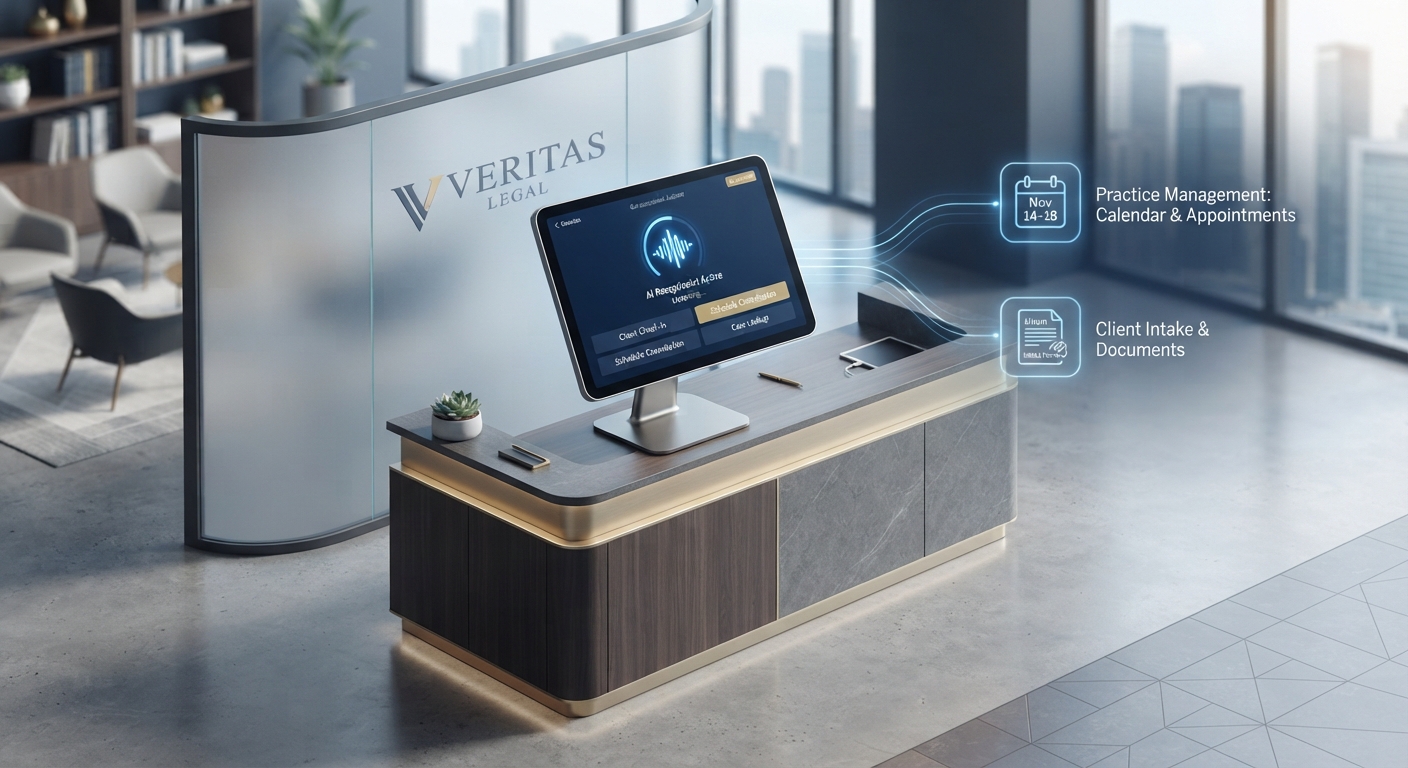
The real magic of AI isn't the phone call—it's the data that follows. Manual data entry is a tax on your firm’s productivity. By piping your AI receptionist directly into your Practice Management Software (PMS) like Clio or MyCase, you bridge the gap between the first ring and the first billable hour.
When the AI finishes an intake call, it doesn't just save a transcript. It performs real-time qualification. If the caller checks out, the AI maps the name, the case type, and the urgency directly into your PMS. Your paralegal gets a notification with the full context before they ever pick up the phone to confirm the retainer.
The ROI Calculation: Hiring vs. AI Automation
When you’re looking at the bottom line, don't just look at the monthly subscription fee. Look at the cost of missing just one high-value case per month. Now compare that to the overhead of a 24/7 human answering service.
| Metric | Human Staff (24/7 Coverage) | Legal-Grade AI Automation |
|---|---|---|
| Monthly Cost | $4,000 - $6,000+ | $300 - $800 |
| Availability | Limited (Business Hours) | 24/7/365 |
| Risk Profile | Human Error/Burnout | Compliance/System Logic |
| Data Entry | Manual/Delayed | Instant/Automated |
How to Evaluate Your Next AI Vendor (The Liability Checklist)
Treat your AI vendor like a law firm partner, not a utility company. According to the ABA Legal Technology Survey Report, security is the biggest hurdle for firms—and for good reason. Use this checklist before you sign anything:
- The BAA Test: "Will you sign a BAA that covers the LLM, the transcription service, and the cloud data storage?" If they hesitate, walk away.
- Data Residency: Where does the data live? Can they show you a SOC2 Type II certification?
- The Exit Strategy: What happens to your data when you leave? Is it wiped, or does it live forever in their training set?
- Human-in-the-Loop: Can your staff review the transcripts before they hit your PMS? You want oversight, not a black box.
Human vs. AI: Dispelling the "Personal Touch" Myth
There’s a pervasive fear that AI strips the "humanity" from a law firm. I’d argue the opposite. When your staff is buried under the administrative grind of taking basic messages, they don't have the mental bandwidth for the deep, high-empathy work of actual case management. By automating the routine intake, you give your team the time and space to actually be human with the clients who need them most. AI doesn't replace the personal touch; it clears the clutter so your team can focus on the people.
Conclusion: The Future of Legal Intake
The legal landscape of 2026 is all about accessibility. The firms that win are the ones that make the path from "first contact" to "consultation" seamless. Audit your intake workflow today. If you’re ready to see how modern, compliant automation can transform your firm, explore The Future of Legal Automation to see how these tools are shaping the next decade.
Frequently Asked Questions
Can an AI receptionist really sound human enough for a sensitive legal call?
Yes. Modern voice synthesis has evolved far beyond the robotic, monotone delivery of the past. By using prosody-aware models and empathy-first training modules, an AI can mirror the emotional state of a caller, providing the necessary reassurance and professional decorum required for sensitive legal intake.
If I use ChatGPT/OpenAI for my law firm, is it HIPAA compliant?
No. Public, consumer-facing versions of LLMs, such as the standard version of ChatGPT, lack the necessary BAA and the hardened security architecture required to store or process Protected Health Information (PHI). Using these tools without an enterprise-grade, BAA-covered wrapper exposes your firm to significant HIPAA liability.
How does an AI receptionist integrate with my current Practice Management Software?
Legal-grade AI utilizes API-driven workflows to communicate directly with platforms like Clio, MyCase, or Smokeball. Once a call ends, the system automatically parses the conversation, extracts key data fields (such as incident date, opposing party, or injury details), and pushes that data into the appropriate lead or matter record in your PMS.
What happens if the AI misses a critical detail during an intake call?
Reliable legal AI systems employ "Human-in-the-Loop" protocols. This includes confidence scoring on every transcript and automated flagging for manual review if the AI detects ambiguity. Furthermore, the system alerts your staff immediately, providing a full transcript so they can address any gaps in information before the follow-up.
What is the biggest risk of choosing an "off-the-shelf" AI answering service?
The primary risk is a violation of the HIPAA Breach Notification Rule. Non-legal-specific tools often handle data in ways that are opaque or insecure, frequently failing to sign a BAA. If a data breach occurs—or if PII/PHI is processed in an unencrypted environment—the legal and financial repercussions fall entirely on your firm.