Redefining Legal Operations: Embracing Hybrid Models and AI
TL;DR
- This article examines the shift toward hybrid legal operations, where AI handles administrative layers like 24/7 intake and document classification while humans focus on complex legal reasoning. It provides a breakdown of the modern 'Legal Ops Stack' and offers actionable insights on reducing firm overhead through automation and strategic resource allocation. Readers will learn how to integrate AI tools to prevent lead loss and maintain profitability amidst rising operational costs.
The Operational Layer: Where Automation Thrives
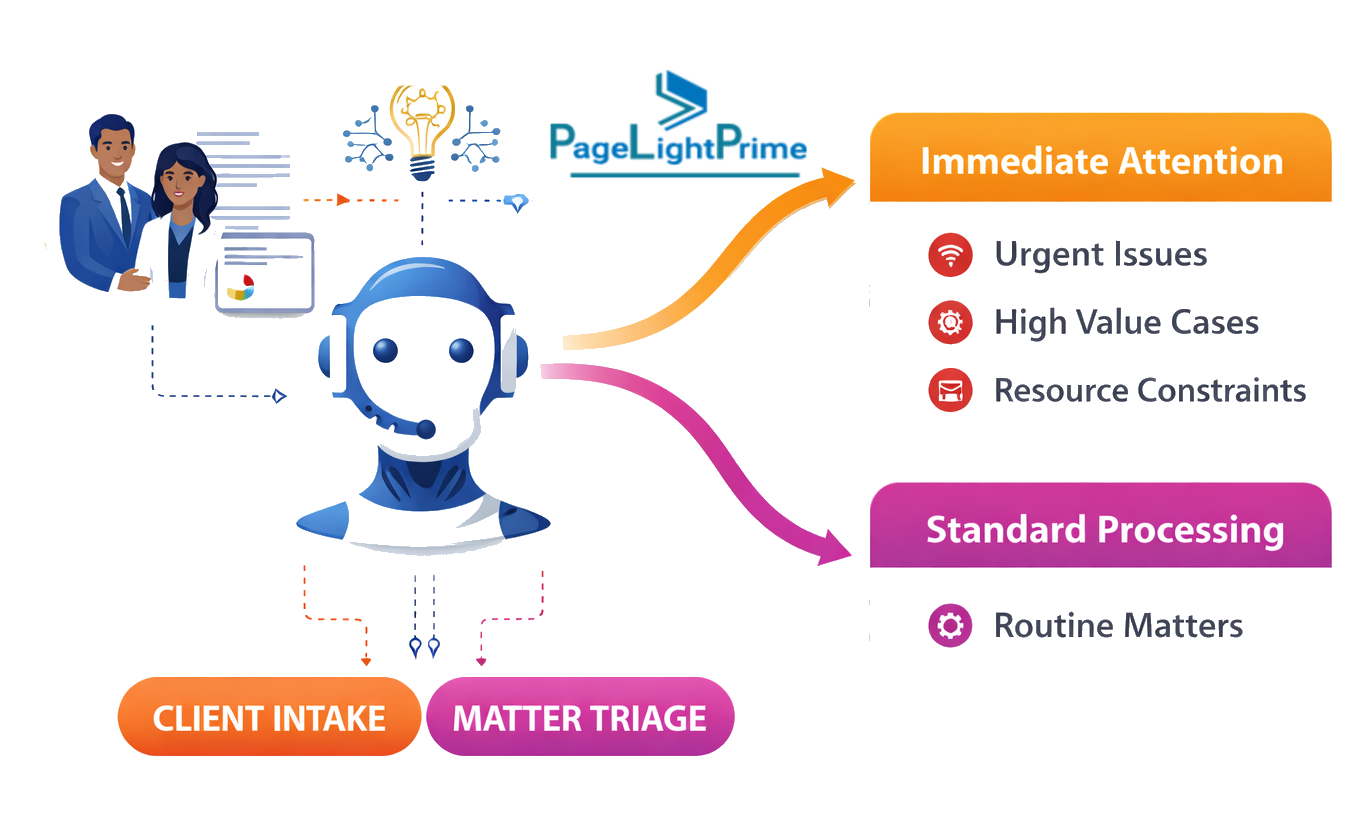
The clearest gains in modern legal practice are found in intake and operations. New client inquiries now flow through web forms, chat tools, and call tracking systems that automatically capture information and trigger follow-ups. This reduces missed opportunities and ensures that every prospective client receives a timely response. For small firms, Voksha provides an AI receptionist for small businesses that answers calls 24/7 with natural voice AI, ensuring no lead is lost to voicemail.
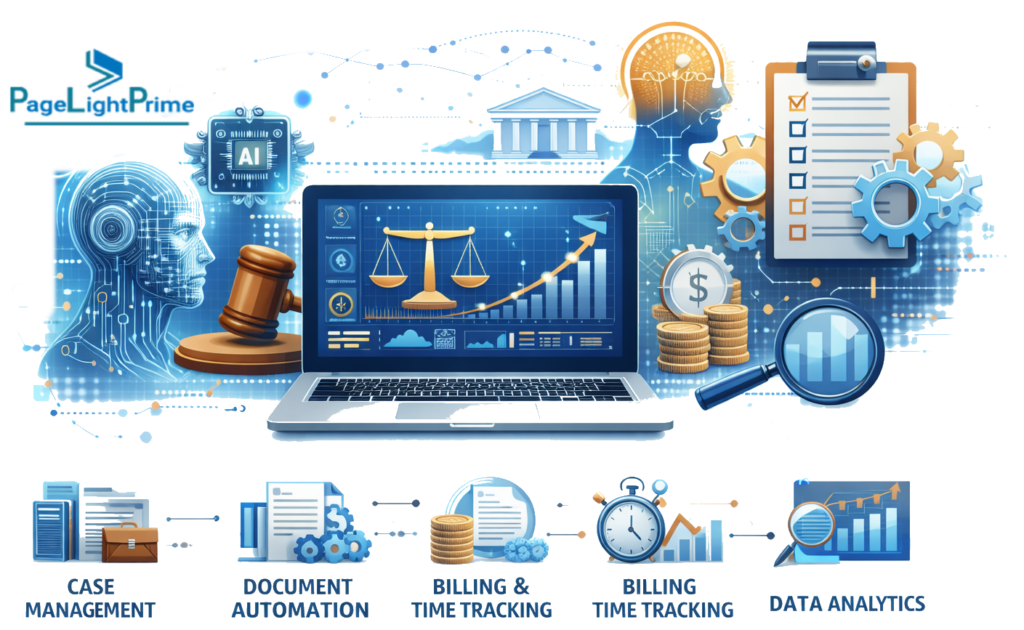
Once a matter is opened, workflow automation takes over. Tasks are generated, deadlines are calculated, and responsibilities are assigned without relying on memory. This creates a predictable process where cases move through defined stages. Billing and communication have also been streamlined; automated reminders and scheduled invoices reduce the administrative burden. Tools like Clio Manage AI and Thomson Legal Tracker help firms maintain this consistency across their financial and operational systems.

The New Workload Equation Inside Law Firms
Legal work no longer fits the traditional staffing model. Evidence volume, regulatory load, and procedural complexity now move faster than lawyer capacity. Litigation databases no longer fit into binders; complex civil matters routinely involve terabytes of material spanning email, messaging platforms, and medical files. In FY 2023, USCIS processed more than 10 million filings, the highest volume in its history, illustrating the massive documentation pressure.
This environment is where hybrid legal operations originated. Strategic decisions stay with partners, while automated tools handle call answering and lead qualification at the front end. According to the 2024 Georgetown–Thomson Reuters report, efficiency gains have largely stalled because attorneys are absorbing more hours to compensate for process friction. Hybrid models solve this by separating judgment from administrative load, preventing the most expensive roles from being buried in paperwork.
Where Humans Fit in a Hybrid Model
Technology has changed how legal work is processed, but it has not replaced the human skill required to reconstruct a case file from incomplete sources. Software can search and classify, but it cannot reconcile contradictory emails or judge whether an inconsistency reflects a material problem. In the 2023 National Federation of Paralegal Associations survey, more than 70 percent of respondents reported correcting attorney-prepared or client-submitted information.
Paralegals stabilize ambiguity while AI operates on structure. This interpretive role is vital in practice areas like family law, where a Tulsa divorce attorney may use automation for intake but must manually review pleadings for case-specific nuances. Human staff still own the legal reasoning that technology cannot replicate.
AI Integration and Pattern Acceleration
AI has settled into legal operations as a structural layer, absorbing pattern-heavy work that scales poorly with people. Platforms such as Relativity, Everlaw, and DISCO apply machine learning to document coding and prioritization, reducing review time significantly. These tools perform best when files are stable and consistent.
In the front office, a HIPAA-compliant voice AI for medical and legal clinics can capture structured call data that a firm's CRM, such as Clio, uses once it is set up. This helps ensure the data AI analyzes later is clean and structured. According to the Verizon Data Breach Investigations Report 2023, internal process failures drive most incidents in professional services, making standardized AI workflows a security necessity.
Redefining Cost Efficiency for U.S. Law Firms
In 2025, average overhead at U.S. law firms rose by 7.9%, putting immense pressure on profit margins. The Thomson Reuters Institute Q2 2025 Snapshot confirmed that firms are seeking new resourcing models to combat these rising costs. A hybrid model allows firms to replace expensive in-house overhead with flexible solutions.
For instance, a mid-sized firm can save hundreds of thousands of dollars by shifting from traditional staffing to a mix of remote support and AI tools. Voksha's Starter plan is $14/month for 15 calls, then $1 per call after that, offering a lower-cost virtual receptionist alternative that provides 24/7 coverage without the cost of a full-time salary. This allows firms to channel investments back into client strategy while Voksha handles after-hours answering and lead capture.
The Hybrid Legal Ops Stack: Who Owns What
The hybrid stack restores balance by assigning each layer of work to the role best equipped to handle it. This prevents judgment, analysis, and operational continuity from competing for the same time.
| Layer of Work | Primary Owner | Responsibility |
|---|---|---|
| Judgment | Partners | Strategy, negotiation, and risk decisions |
| Analysis | Associates | Legal research, drafting, and argumentation |
| Structure | Paralegals | Resolving inconsistencies and validating facts |
| Continuity | Voksha | 24/7 call answering, lead qualification, and booking |
| Acceleration | AI Tools | Classification, extraction, and summarization |
Firms using this stack move matters forward with cleaner records and fewer interruptions. Pairing automation with tools like Microsoft 365 legal technology or SharePoint Online helps law offices move from reactive cost centers to efficient, strategic engines.
What This Means for Small Businesses
A hybrid model works for a solo practitioner the same way it works for a large firm: keep judgment with people, and give repetitive front-end work, like after-hours call answering and intake, to automation. Voksha's Starter plan runs $14/month for 15 calls, less than the cost of even part-time reception staff, with SOC 2 Type II compliance and HIPAA-compliant handling (BAAs available on the Enterprise plan). Clio's own Legal Trends data shows law firms miss about 35% of inbound calls, which is worth checking against your own phone data before deciding what to automate first. See the Voksha AI receptionist for law firms page and the connectors directory for how a Clio matter gets set up.
Stop losing clients to voicemail. Visit Voksha's pricing page to start with a free demo call, and see the blog's guide to AI receptionists for law firms for a deeper walkthrough.