Appointment No-Show Reduction: How AI Scheduling Wins Back Revenue

TL;DR
- ✓ Manual scheduling causes a massive revenue leak for professional practices and healthcare providers.
- ✓ High no-show rates often stem from administrative friction rather than patient or client malice.
- ✓ Predictive AI analyzes behavioral data to identify high-risk appointments before they occur.
- ✓ Implementing AI-driven engagement replaces static reminders with personalized, proactive communication workflows.
The most expensive appointment on your calendar? The one that never happens.
Every time a patient or client ghosts you, it’s not just a missed billing cycle. You’re burning through overhead, wasting staff time, and—worst of all—denying service to the person who actually wanted that slot. In today’s economy, this isn't just a nuisance. It’s a $150 billion revenue leak draining healthcare and professional services dry. Practices that cling to reactive, manual scheduling are bleeding out. Those pivoting to proactive AI engagement? They’re finally reclaiming the hours and dollars lost to administrative friction.
The $150 Billion Revenue Leak
We’ve spent decades treating the "no-show" as an inevitable cost of doing business. You send a generic text 24 hours out, cross your fingers, and shrug when the chair sits empty. This complacency costs the average practice roughly $97,000 every single year.
When you factor in the ripple effects—the "phone tag" marathon, chasing confirmations, and the empty chair—the financial hemorrhage is staggering. The problem isn't that patients don't want to show up. It’s that your infrastructure is stuck in the 1990s. Manual booking is high-friction, relying on human availability, office hours, and the patient’s willingness to navigate a soul-crushing phone tree. According to recent patient no-show statistics, the lack of immediate, personalized confirmation is the single greatest predictor of a missed appointment. If your scheduling system is static, your revenue is fragile. Period.
Why Are No-Shows Still Crippling Your Bottom Line?
To fix the leak, stop blaming the patient. It’s rarely malice. It’s a barrier to entry. If a patient has to call during 9-to-5 hours, wait on hold, and talk to a harried receptionist just to move their slot, they often won't bother. They’ll forget. Or they’ll just decide the friction isn't worth the effort.
When you rely on manual processes, you create a "black box." You send a message into the wind and hope it lands. By the time your staff realizes someone isn't coming, it’s too late to fill the slot. The revenue is gone. The day’s productivity has taken a permanent hit.
How Does Predictive AI Turn "High-Risk" Patients into Confirmed Appointments?
Modern AI isn't just a digital secretary; it’s a behavioral analyst. Instead of blasting the same "Please confirm" SMS to everyone, AI assesses the risk profile of each individual. It looks at lead times, historical attendance, and even time-of-day preferences.
If the AI tags a patient as "high-risk"—maybe they have a history of last-minute cancellations—it triggers a different workflow. It reaches out earlier. It provides clearer logistics. It uses a conversational tone that actually invites a response. This shift from "broadcast" reminders to "behavioral" nudges is exactly how you turn a potential no-show into a confirmed attendee.
What is "Real-Time Schedule Adaptation" and Why is it the 2026 Gold Standard?
The 2026 gold standard is simple: never let a slot stay empty. "Real-Time Schedule Adaptation" means using AI to monitor your calendar in milliseconds, not hours. When a cancellation hits, the AI doesn't wait for a human to notice. It instantly cross-references your waitlist and reaches out to the next person in line.
Manual rebooking is a losing game. It typically yields a 15% success rate because the window of opportunity closes while your staff is busy with other tasks. AI-driven rebooking, however, hits waitlisted patients via their preferred channel the moment a cancellation occurs, achieving up to 95% success. As highlighted in this AI patient scheduling guide, the speed of the follow-up is the primary variable that determines whether that revenue is recovered or lost forever.
AI vs. Human Receptionist: Is it a Zero-Sum Game?
There’s a pervasive myth that AI is coming to replace the front desk. That’s a fundamental misunderstanding of what makes a practice successful. The goal isn't to remove the human; it’s to remove the drudgery.
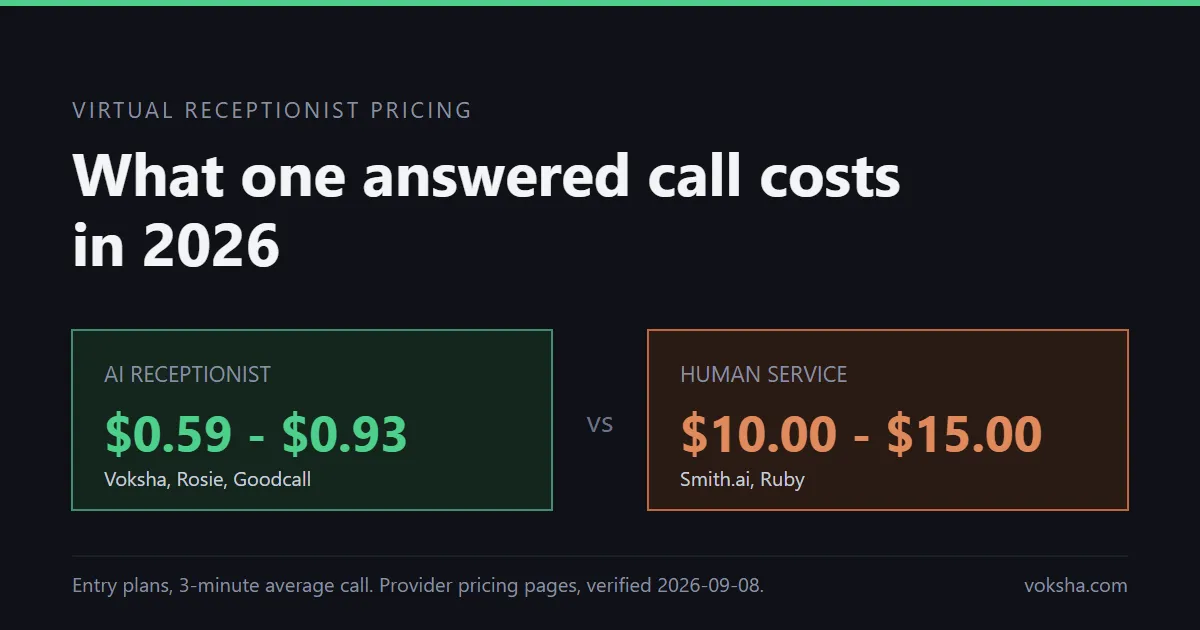
Think of it as the "AI-Empowered Human" model. Your AI handles the 24/7 routine—the "I need to reschedule," the "What are your hours," and the automated confirmations. This frees your staff to handle the high-empathy work that actually requires a heartbeat: managing distressed patients, handling complex billing disputes, and building real relationships. For a deep dive into the math behind this transition, see this AI receptionist vs. human cost breakdown. When you compare the real cost of human receptionists, the ROI of automating the routine becomes undeniable.
The Financial Case: Calculating Your Practice’s ROI
To calculate your true ROI, you have to look at the "Hidden Cost Calculator." A missed appointment isn't just a lost fee. It’s:
- Direct Revenue: The fee you would have collected.
- Operational Overhead: The cost of the lights, the rent, and the salary of the staff member who was sitting there ready to serve.
- Lost Momentum: The delay in the patient’s care or service progress.
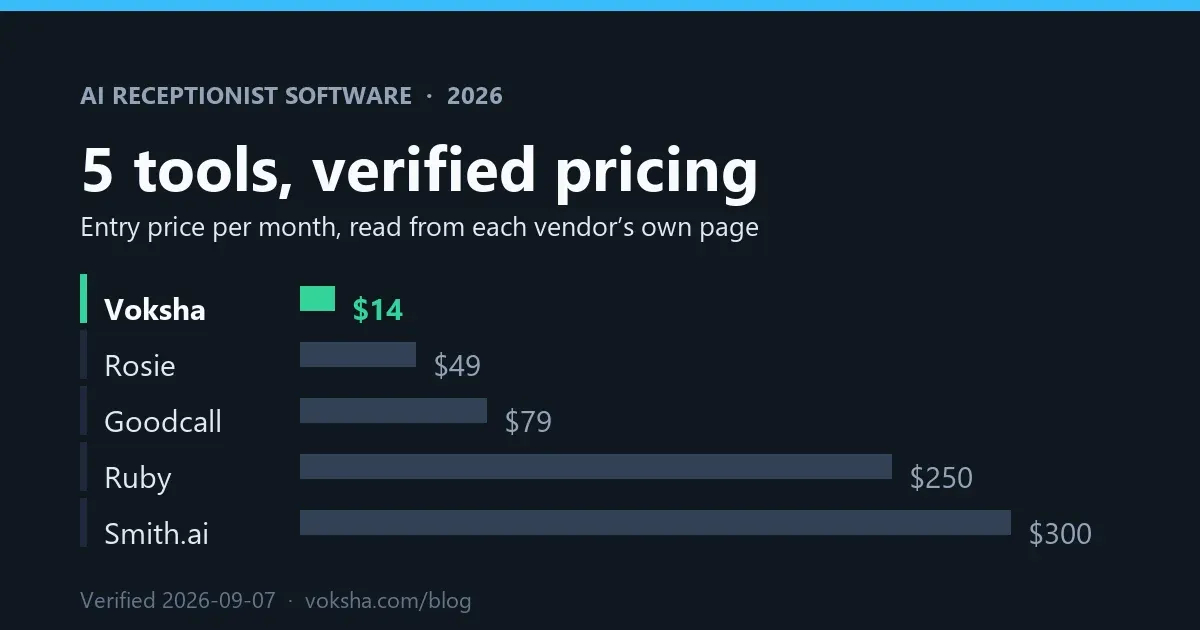
When you spend $200 a month on an AI solution, you’re paying for a 24/7 employee that never takes a vacation and never forgets to follow up. If that AI recovers just two appointments a month that would have been no-shows, the system has already paid for itself.
How Do You Integrate AI Scheduling into Your Existing Workflow?
Integration is often the biggest fear for practice managers, but the tech has matured significantly. Modern AI platforms use robust API connectors to sync directly with your EHR or CRM. The goal is "silent" integration—the AI reads your master calendar, understands your availability, and writes back the appointment details the second they are confirmed.
The key is to prioritize natural-language booking. Patients despise static forms that force them to navigate drop-down menus and captcha challenges. They want to text or speak like they’re talking to a person. By choosing a system that supports natural language, you remove the friction that causes patients to abandon the booking process entirely.
Conclusion: Future-Proofing Your Practice
The transition to AI-driven scheduling isn't a luxury; it’s a survival tactic. In a world where patients demand 24/7/365 accessibility, the practice that relies on office hours and manual phone calls will inevitably lose to the one that is always "open." By automating the repetitive, high-friction tasks, you aren't just saving money—you’re reclaiming your focus. Whether you’re looking to scale your operations or just stop the daily drain on your revenue, Voksha services offer the tools to turn your calendar into your most efficient asset.
Frequently Asked Questions
Does an AI receptionist sound like a robot?
Modern AI has moved far beyond the monotone, robotic voices of the past. Using advanced Natural Language Processing (NLP) and sentiment analysis, current AI agents can mimic human conversational flow, including pauses, tone adjustments, and empathy, making the interaction feel natural and professional.
How do I integrate AI scheduling with my existing calendar?
Most AI scheduling platforms utilize API integrations or middleware to sync with industry-standard EHRs and CRM systems. This allows the AI to see your real-time availability and write confirmed appointments directly into your master calendar without manual data entry.
Is AI scheduling HIPAA and privacy compliant?
Yes, provided you select a platform designed for professional use. Reputable AI scheduling services implement end-to-end encryption, strict data residency protocols, and the specific compliance standards required for medical and legal sectors to ensure patient and client data remains secure.
What happens if a caller has a complex or emotional issue?
Leading AI systems are built with "Smart Routing." If the AI detects urgency, confusion, or emotional distress, it immediately triggers a live-transfer to a human staff member, ensuring that sensitive situations are handled with the necessary human touch.
Can AI handle scheduling across different time zones and service types?
Absolutely. AI systems excel at multi-calendar management. They can automatically adjust for time zone differences, handle varying service durations, and respect complex provider availability settings, ensuring that your bookings are always accurate regardless of complexity.