Voice AI Agents Market Set to Reach $47.5 Billion by 2034
TL;DR
- This article examines the rapid expansion of the Voice AI Agents market, which is expected to reach $47.5 billion by 2034. It covers critical adoption statistics across the BFSI and healthcare sectors, the shift toward on-premises deployment for data security, and the technical advancements in natural language processing. Readers will gain insights into how businesses are achieving 30% cost reductions through automated appointment booking and 24/7 lead capture.
Voice AI Agents Market and Industry Growth
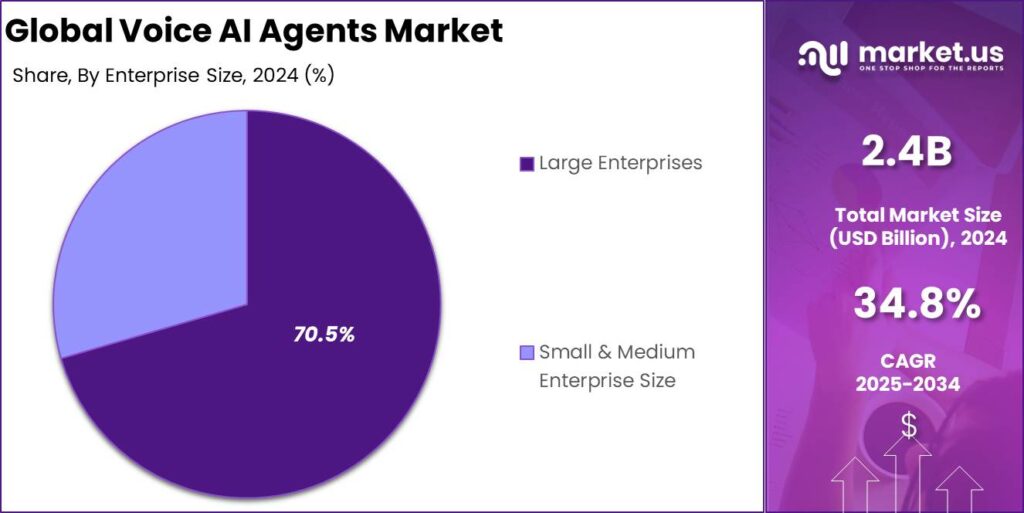
The global Voice AI Agents market was valued at USD 2.4 billion in 2024 and is projected to reach approximately USD 47.5 billion by 2034. This represents a compound annual growth rate (CAGR) of 34.8%. This rapid expansion is driven by the need for 24/7 automated call answering and the shift toward voice-enabled automation across industries. Organizations are deploying these agents to handle customer interactions and reduce reliance on traditional, expensive human support infrastructure. Advances in natural language processing and neural speech synthesis have allowed agents to handle complex, multi-turn conversations with human-like accuracy.
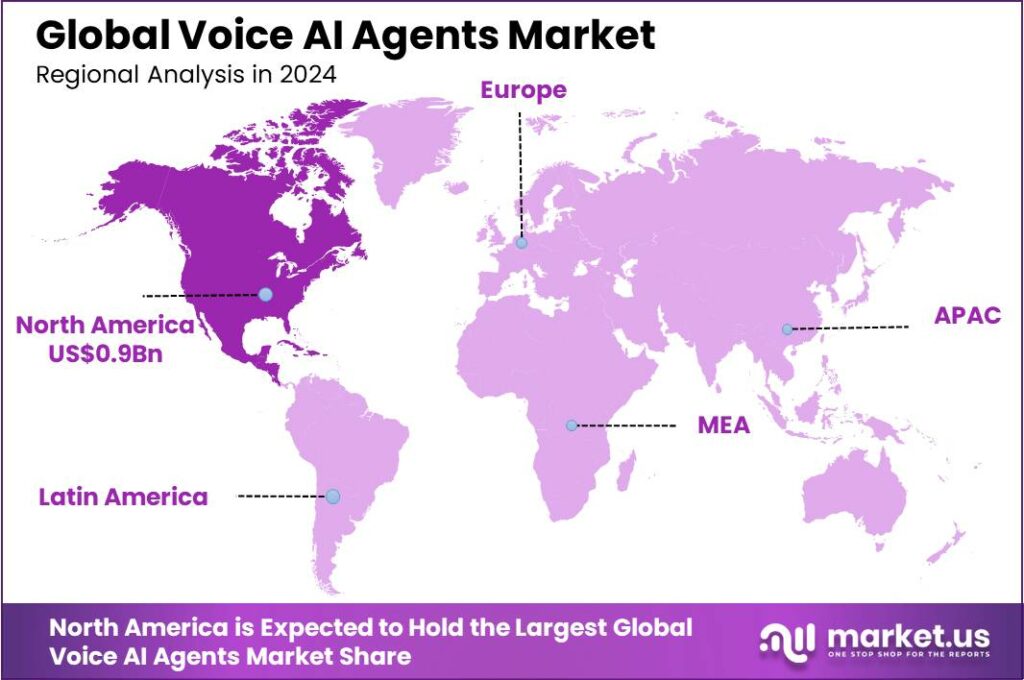
!Voice AI Agents Market Image courtesy of Market.us
Key Market Statistics and Adoption Trends
In 2024, North America led the market with a 40.2% share, generating USD 0.9 billion in revenue. The United States market alone reached USD 1.2 billion, reflecting high demand for AI receptionist solutions. Large enterprises currently hold 70.5% of the market, focusing on streamlining high-cost contact center operations. However, adoption is growing among smaller firms; nearly 31% of SMBs plan to invest in AI voice solutions to recover missed calls and automate AI appointment booking.
For a real-world reference point, Voksha's own analysis of 1,000,000+ calls found that AI resolved 85% of them without a human, and that calls arriving outside 9-5 weekday hours made up 32% of volume (Voksha Call Intelligence Report; Voksha After-Hours Economy).
Component and Deployment Analysis
The Voice AI Platform segment dominated the market in 2024 with a 76.4% share. Enterprises prefer integrated platforms that combine speech recognition, dialogue management, and analytics. On-premises deployment accounted for 62.6% of the market, driven by industries like BFSI and healthcare that require high levels of data security and HIPAA-compliant voice AI. These organizations prioritize data sovereignty and the ability to maintain system availability without constant internet connectivity.
Industry-Specific Use Cases
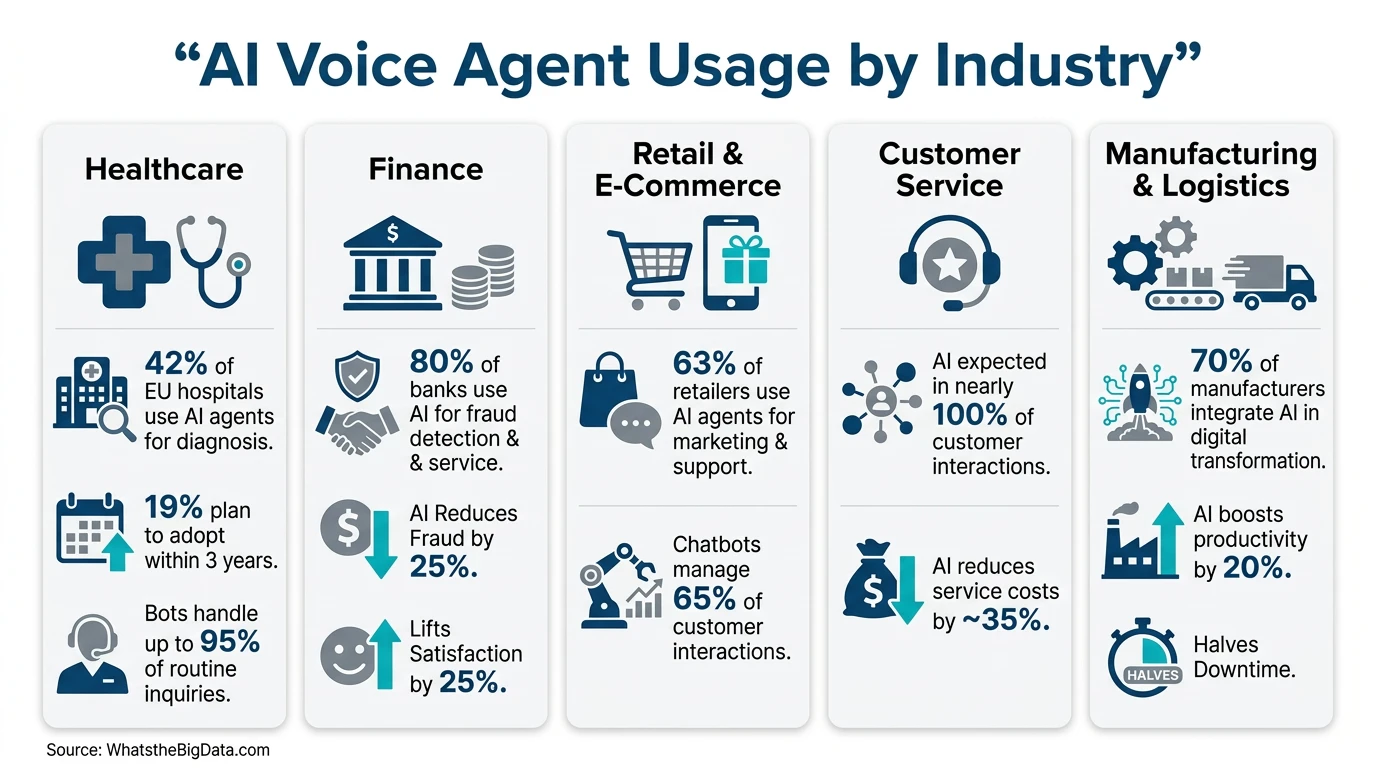
The BFSI sector was the top adopter in 2024, contributing 32.9% of market revenue. Banks use voice AI for account inquiries, fraud alerts, and secure authentication. In the healthcare sector, AI agents manage up to 95% of routine inquiries, such as scheduling appointments and providing medication reminders. Retailers use these tools for lead capture and qualification and personalized marketing, with AI-powered bots now handling 65% of customer interactions effectively.
Technical Drivers and Challenges
A primary driver for the market is the integration of Generative AI, which allows for context-aware, dynamic conversations rather than scripted responses. Systems now offer sub-second latency and human-like turn-taking, handling background noise and interruptions seamlessly. However, challenges remain regarding data privacy and the complexity of Natural Language Understanding (NLU) across diverse accents and dialects. Continuous model training is essential to maintain high accuracy and social engineering protection.
Integration and Workflow Automation
Modern AI receptionists are designed to connect with existing tech stacks. Voksha, for example, lets you connect Google Calendar, Outlook, or Apple iCloud calendars directly from the dashboard, while CRMs like Salesforce, HubSpot, and Clio are set up with Voksha's support team. These systems perform real work such as updating records, sending follow-up call summaries, and intelligent call forwarding. Workflow automation includes pre-call intelligence (knowing the caller's history), in-call actions (booking a meeting), and post-call transcripts that can be shared with tools like Zendesk.

Regional Market Insights
North America remains the most mature market for enterprise voice AI adoption. The U.S. market value of USD 1.2 billion is supported by heavy investment from sectors like legal, medical, and home services. Growth in the Asia Pacific and European regions is also accelerating as multilingual voice interfaces become more sophisticated; Voksha, for instance, supports 200+ languages, with full multilingual answering on its Enterprise plan.
What This Means for Small Businesses
The voice AI market's growth is mostly enterprise dollars today, but the same technology is now priced for a single-location business. Compare AI receptionist pricing against hiring a person in Voksha's 2026 pricing guide, and see Voksha's connector directory for which calendars and booking tools connect without extra setup.
Stop losing customers to voicemail and start capturing every lead with Voksha, the 24/7 AI receptionist built for small businesses. Get started for $14/month and set up your automated office in under 5 minutes at https://voksha.com/.